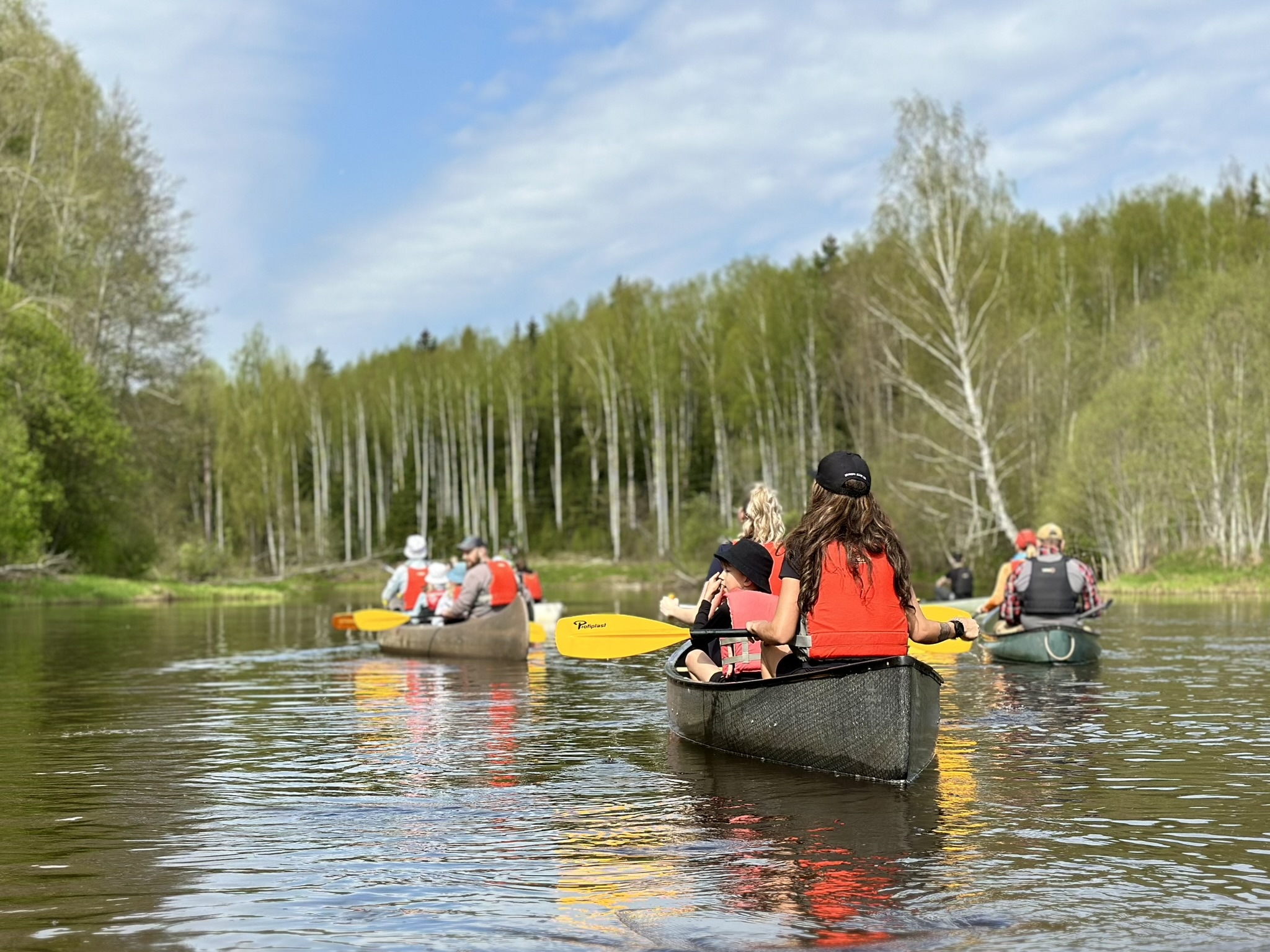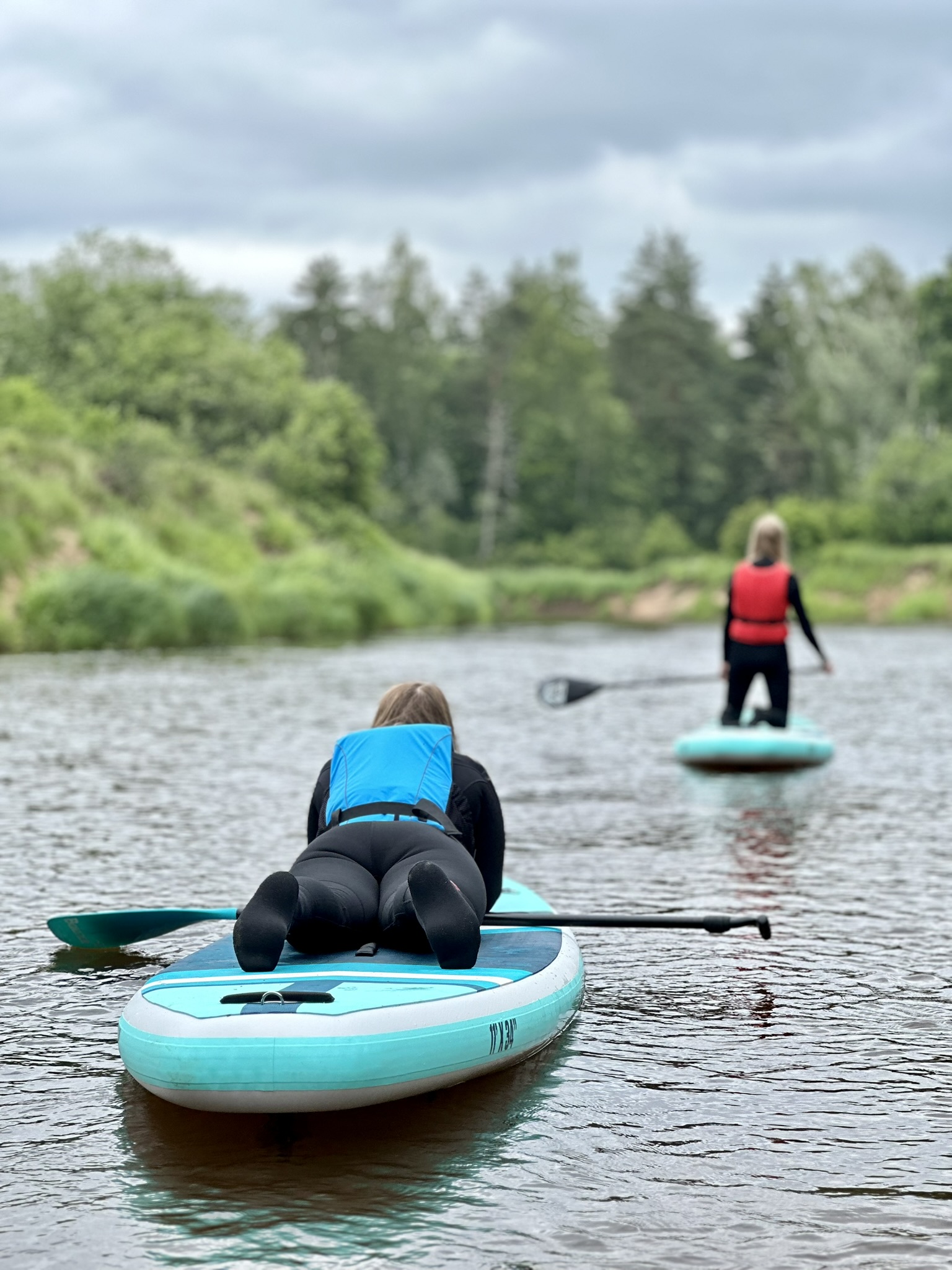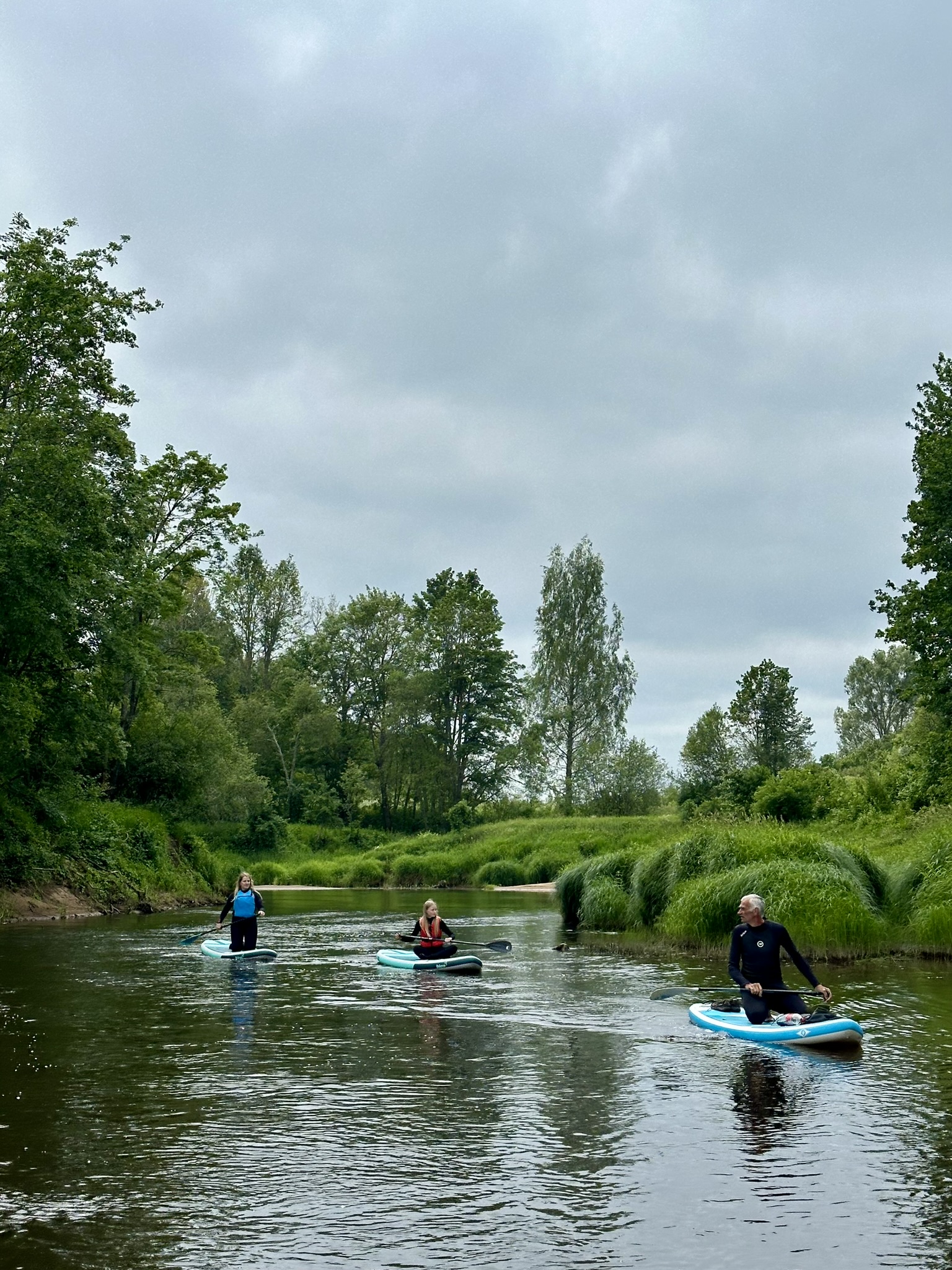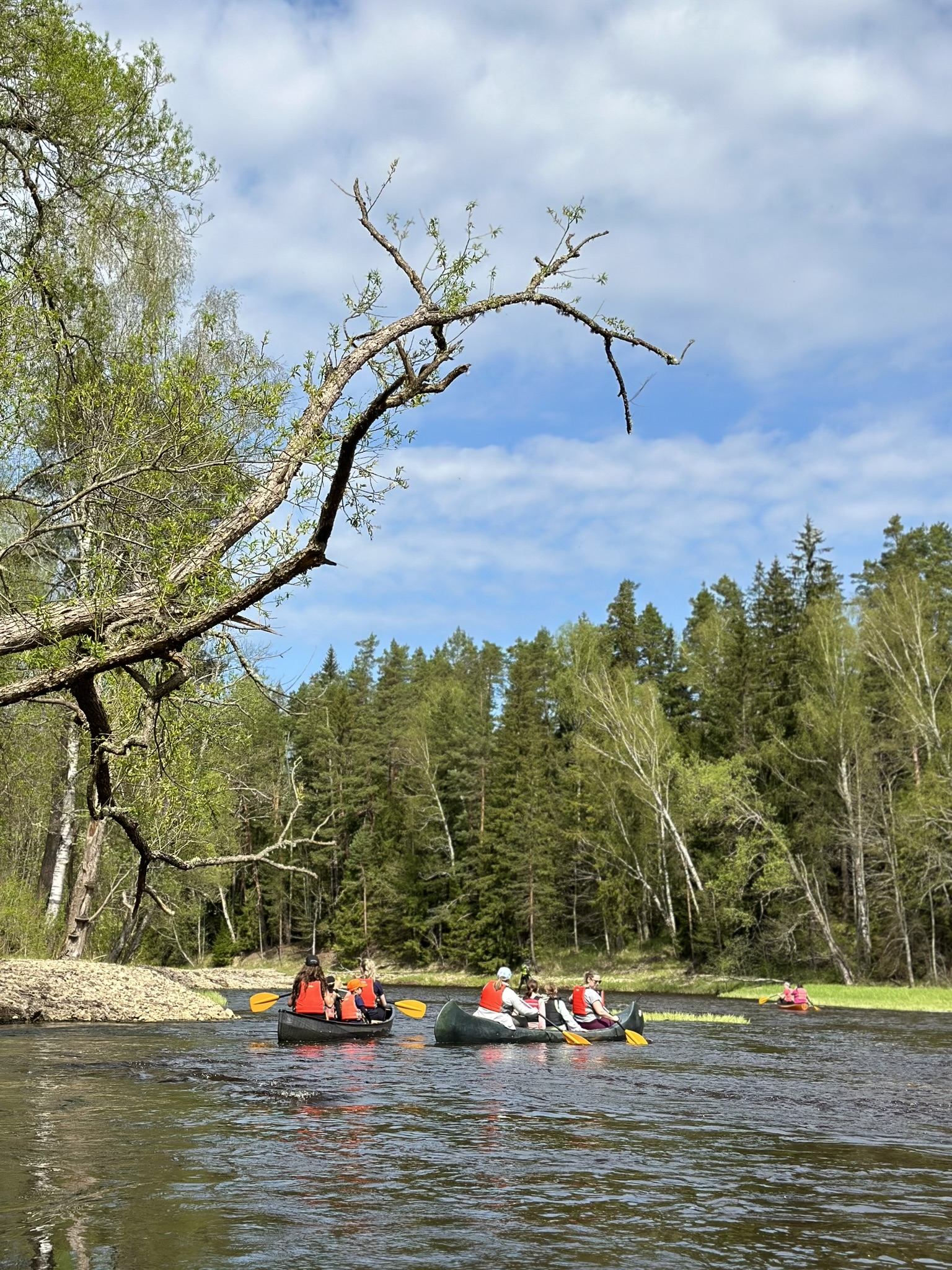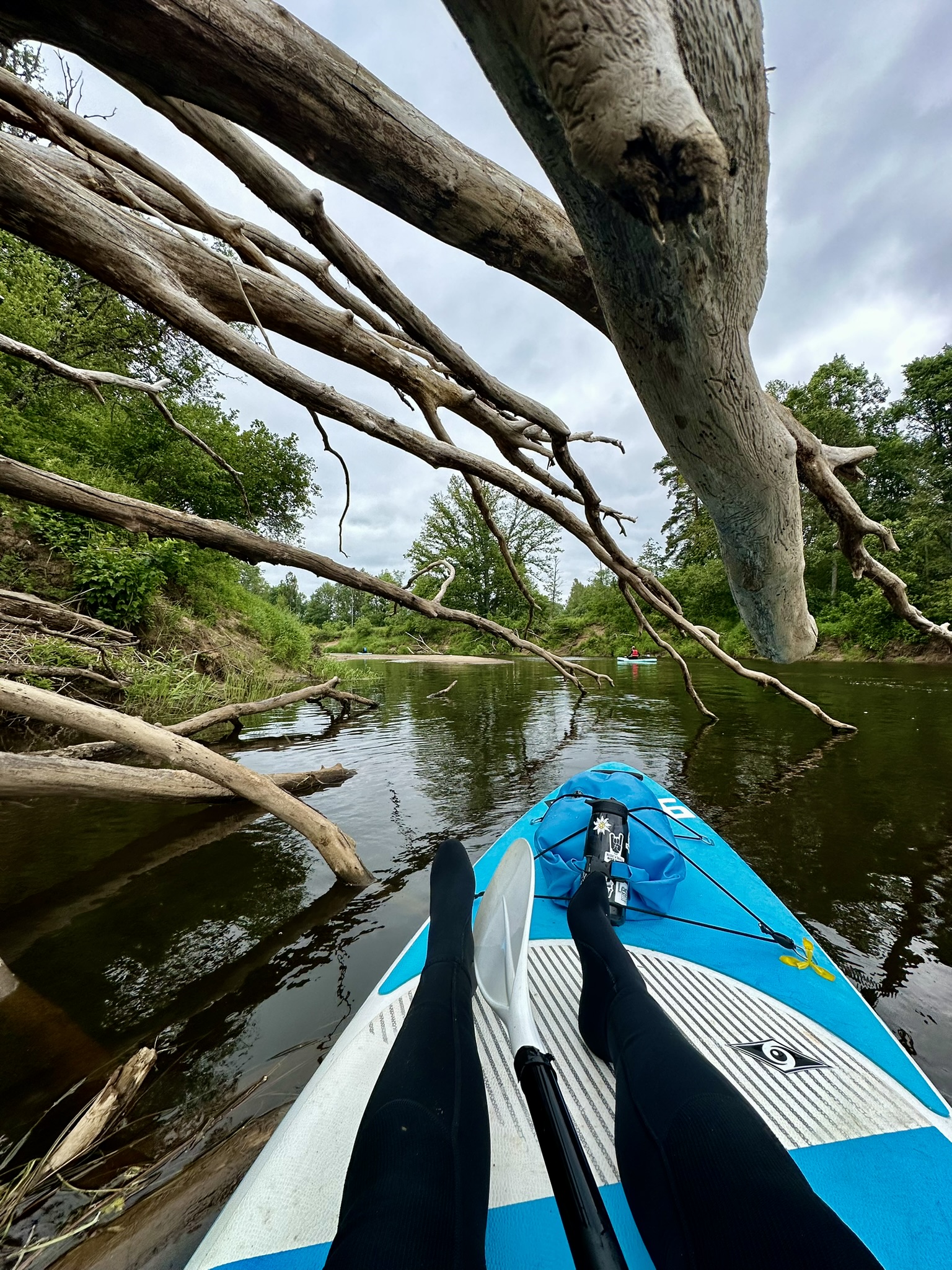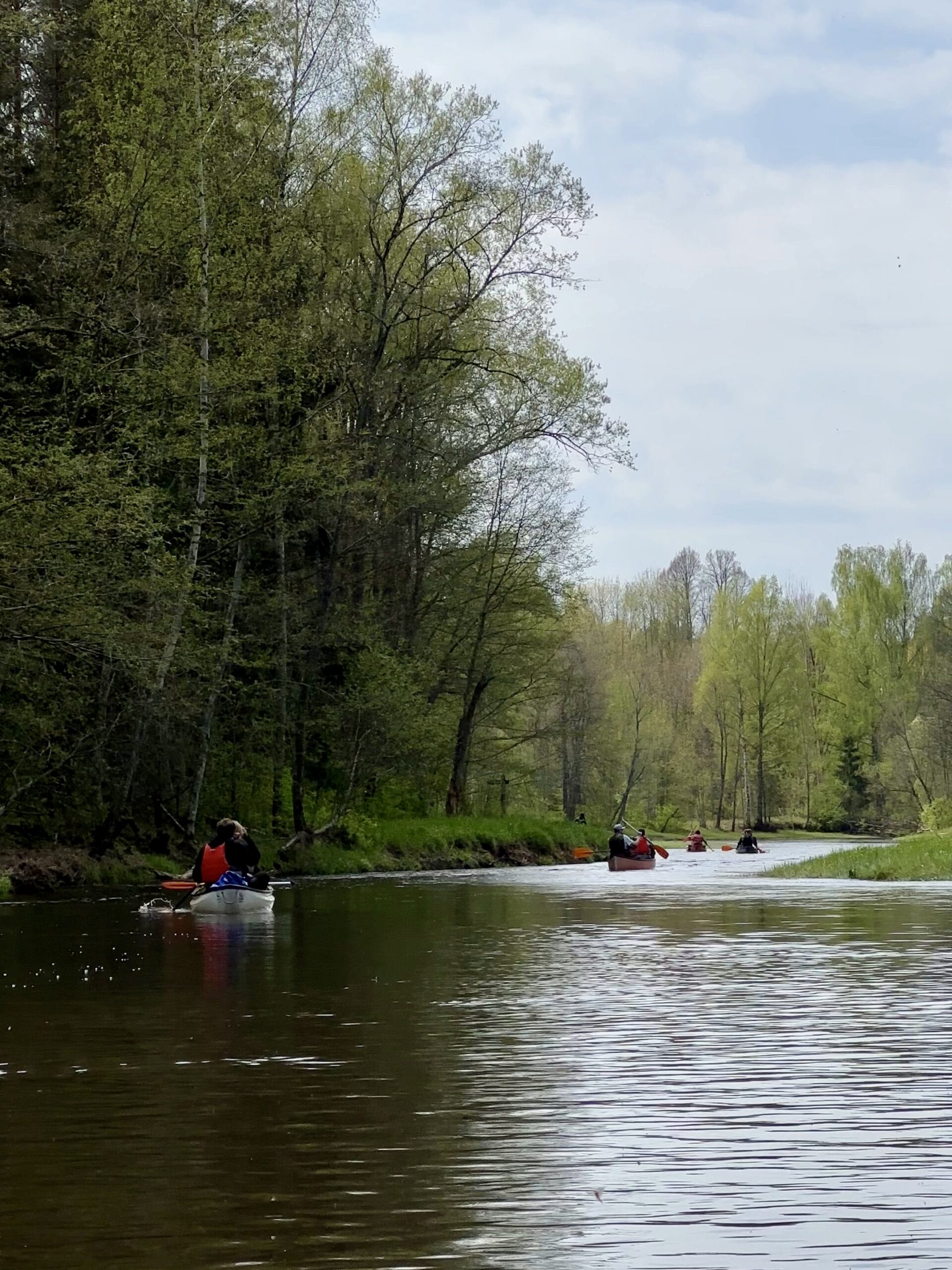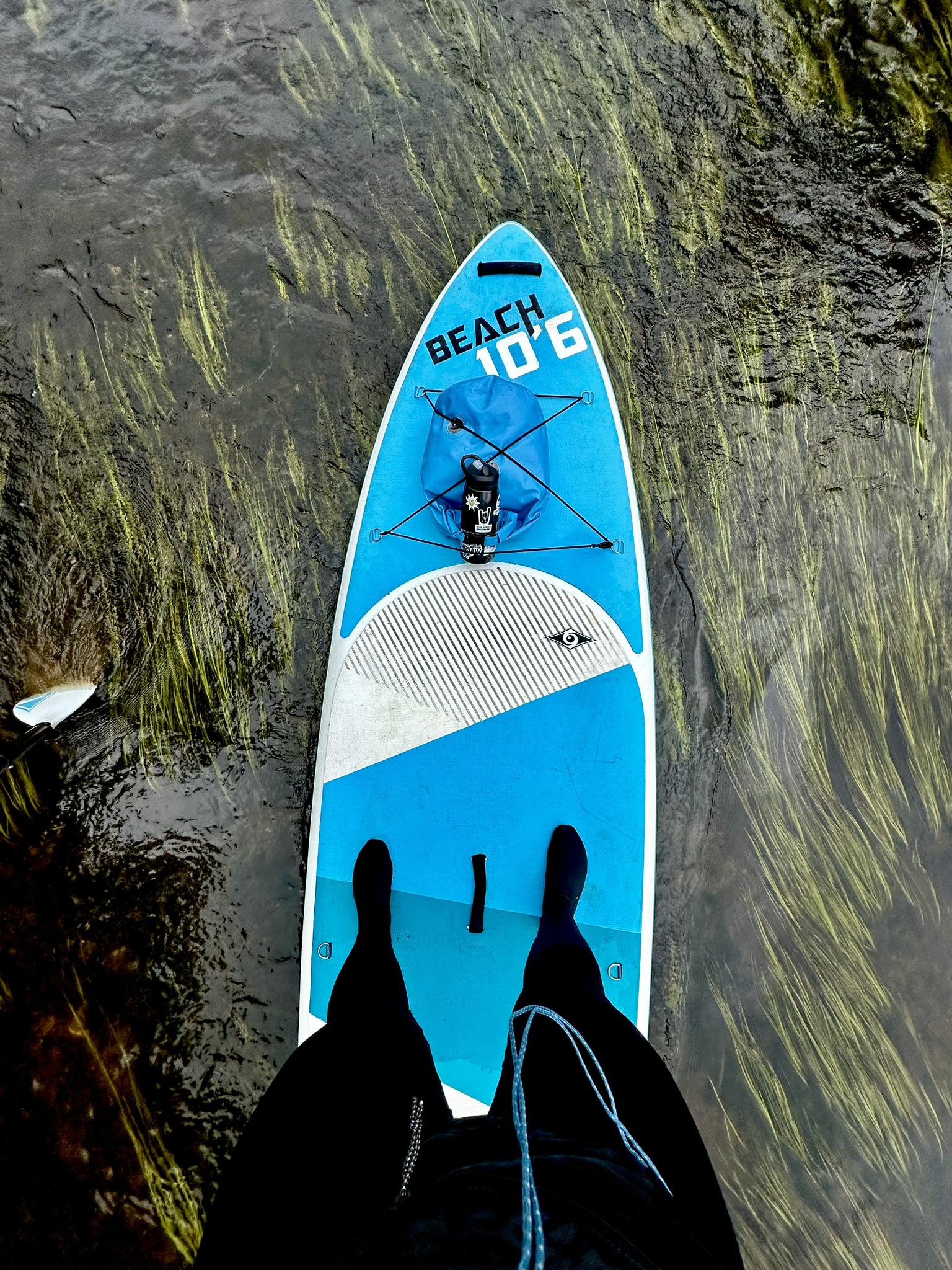


Boating along the River Gauja
About the River Gauja within Smiltene Municipality:
- Length within Smiltene Municipality: 42 kilometres
- Border with Valka Municipality: 3.3 kilometres
- Border with Gulbene Municipality: 3.6 kilometres
- Settlements along the River Gauja: Līves, Vidaga, Vireši, Gaujiena
- Points of interest along the riverbanks: Sikšņi Dam, Sikšņi Rapids, the pedestrian suspension bridge in Vidaga, Randati Cliffs and Nature Trail, Tilderi Quarries and Nature Trail, Vizla Nature Trails, Gaujiena Manor, Atzele Castle Ruins, and Jāzeps Vītols Memorial Museum “Anniņas”.
- The most popular boating stretch in Smiltene Municipality runs from the River Tirziņa confluence to the recreation area “Luikas” or Gaujiena.
Tirziņa River Mouth – Gaujiena (26 kilometres)
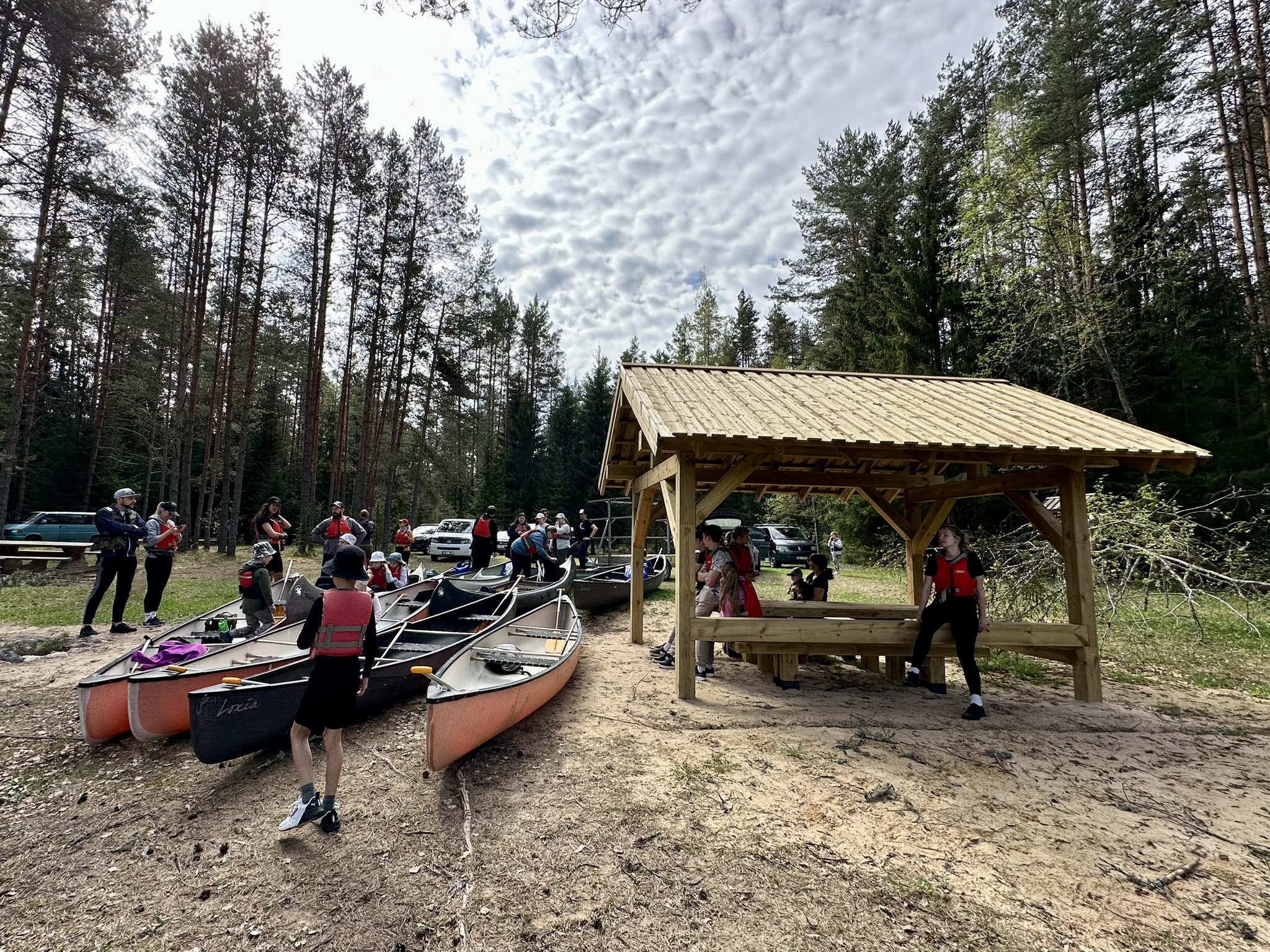
The route begins at Latvia’s State Forests recreation area “Garā Gauja”, which offers a shelter, fire pits, picnic tables, and a toilet.
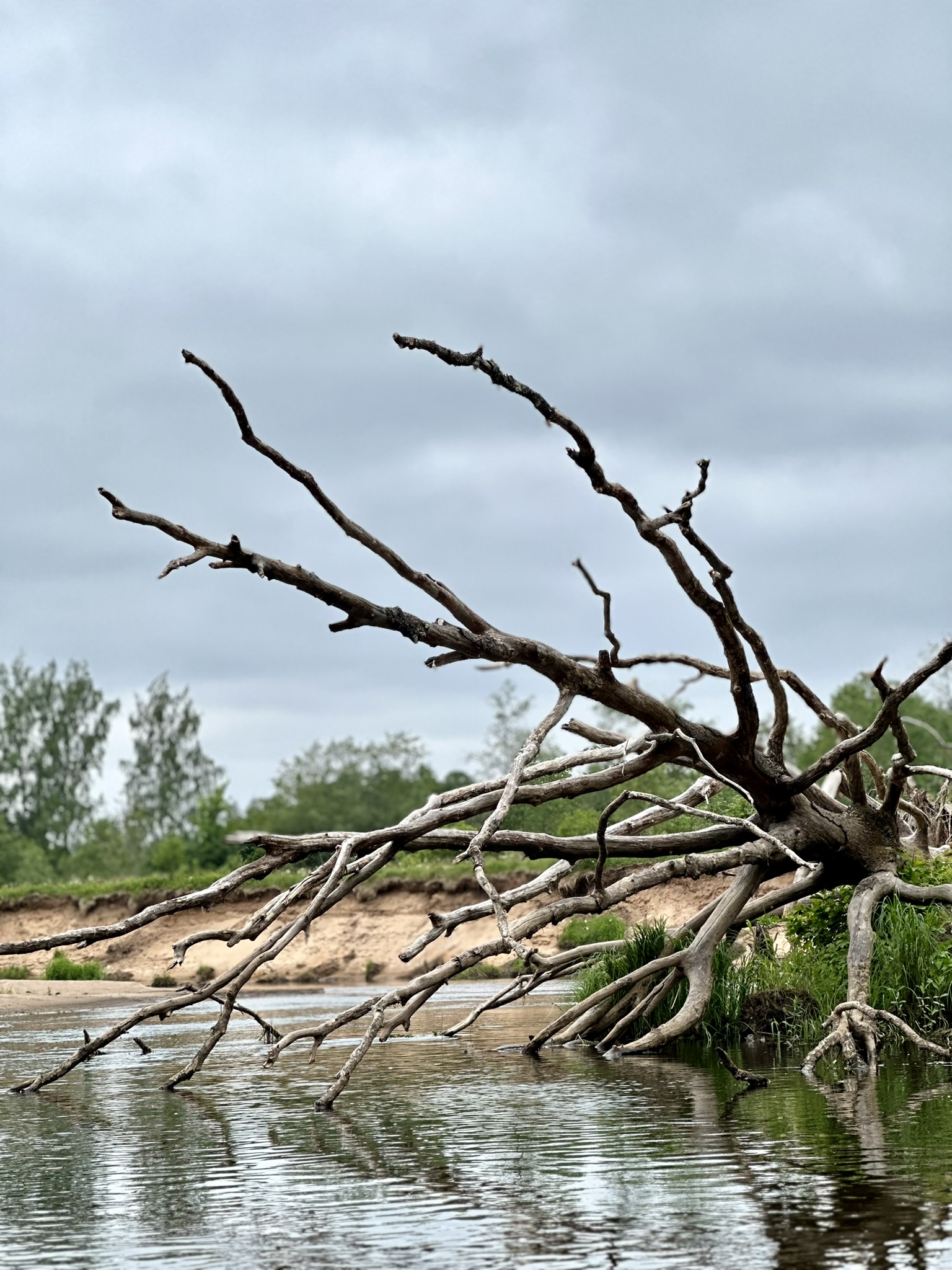
For the first 2 kilometres, up to Sikšņi Dam, the River Gauja flows calmly. Immediately after the dam, the Sikšņi Rapids begin. Although these rapids are the largest along this stretch, smaller rapids occasionally appear all the way to Vireši Bridge. At the River Vidaga, the riverbanks are connected by a pedestrian suspension bridge, and shortly afterwards, the River Vizla flows into the River Gauja. Just beyond the recreation area “Luikas”, dolomite outcrops and the Randati Cliffs can be observed along the riverbanks. On the right bank lies the Randati Nature Trail, while on the left bank, you will find the Tilderi Nature Trail and ancient dolomite quarries. Immediately after Vireši Bridge, the Žagati Cliffs rise on the left bank and can only be observed from the river. There are no more rapids ahead, and the River Gauja regains its calm flow. The most convenient place to finish the boat trip is near the Egļukalns open-air stage in Gaujiena. Here, it is easy to exit the boats, and the area can be accessed by car. Picnic tables and benches are available for relaxation.
This route is suitable for boating at both high and low water levels. However, during prolonged periods of drought, water levels may drop significantly in certain sections, increasing the risk of boats grounding on stones or shallow areas.