

Blome Mill Lake
About the lake:
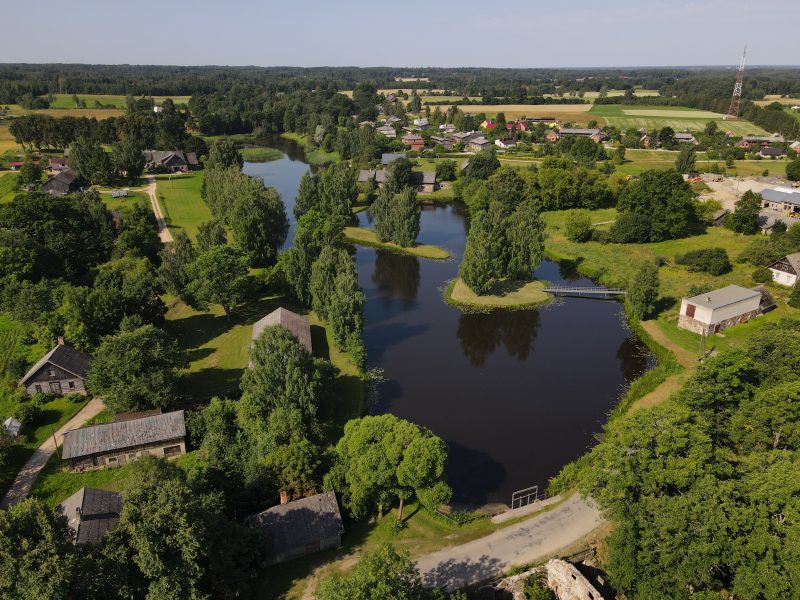
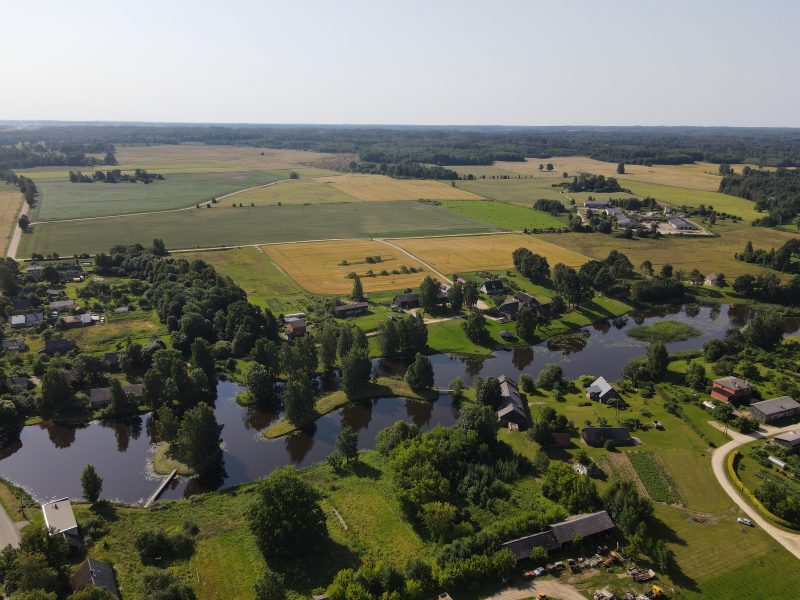
- Blome Mill Lake is located in the centre of Blome Village, near the culture centre and apartment buildings.
- At the end of the 18th century, the lake was artificially created by damming the River Nigra (formerly known as Labzna or Blomupe) to power a water mill.
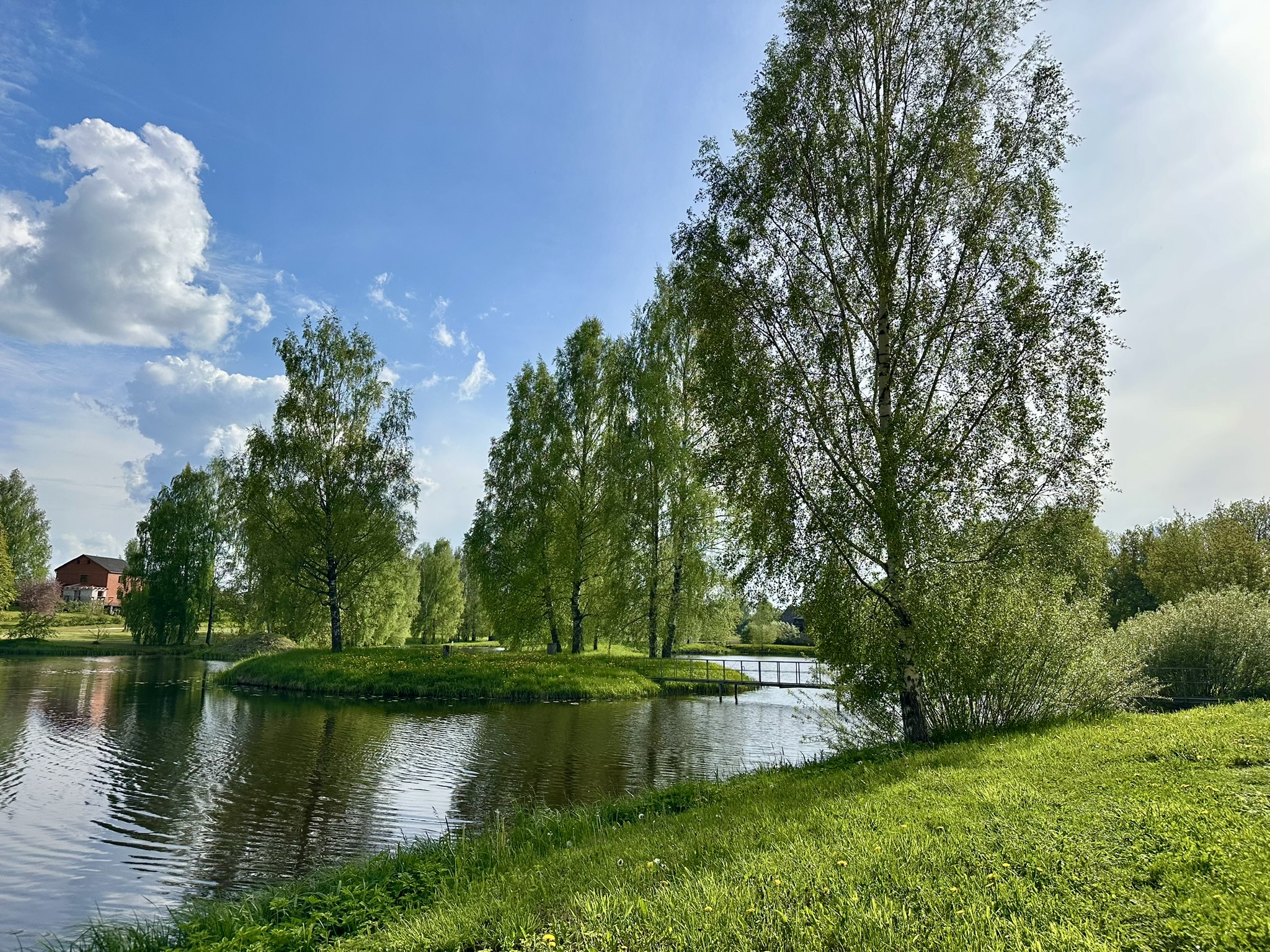
- The surface area of the mill lake is 3.36 hectares, with a shoreline length of 1.41 km. The lake contains four islands, and the total catchment area covers 152 hectares.
The average depth of Blome Mill Lake is 1.6 m, and the maximum depth does not exceed 2.5 m. Water levels fluctuate depending on the operation of the sluice regulator. - The lakebed is predominantly sandy and silty. Water transparency averages 1.0 m.
- The vegetation of the mill lake is typical of Latvian eutrophic lakes and includes sweet flag, horsetails, cattails, yellow water lilies, water lilies, pondweeds, arrowheads, elodea, bur-reeds, water buttercups, milfoils, and hornworts. The fish population is mainly composed of bream, silver bream, roach, perch, rudd, and tench. In accordance with the lake’s management plan, fish stocks have been supplemented several times.
- Flour was still being milled at the Blome Watermill in the 1970s. At the end of the 19th century, the mill was leased by J. Krebs. Near the Mūrnieki homestead where the miller lived, there was also a windmill. Blome Rural Territory is also home to the Muinieši Watermill, which burnt down in the 1980s, and the Strantes Windmill, which has now been restored.
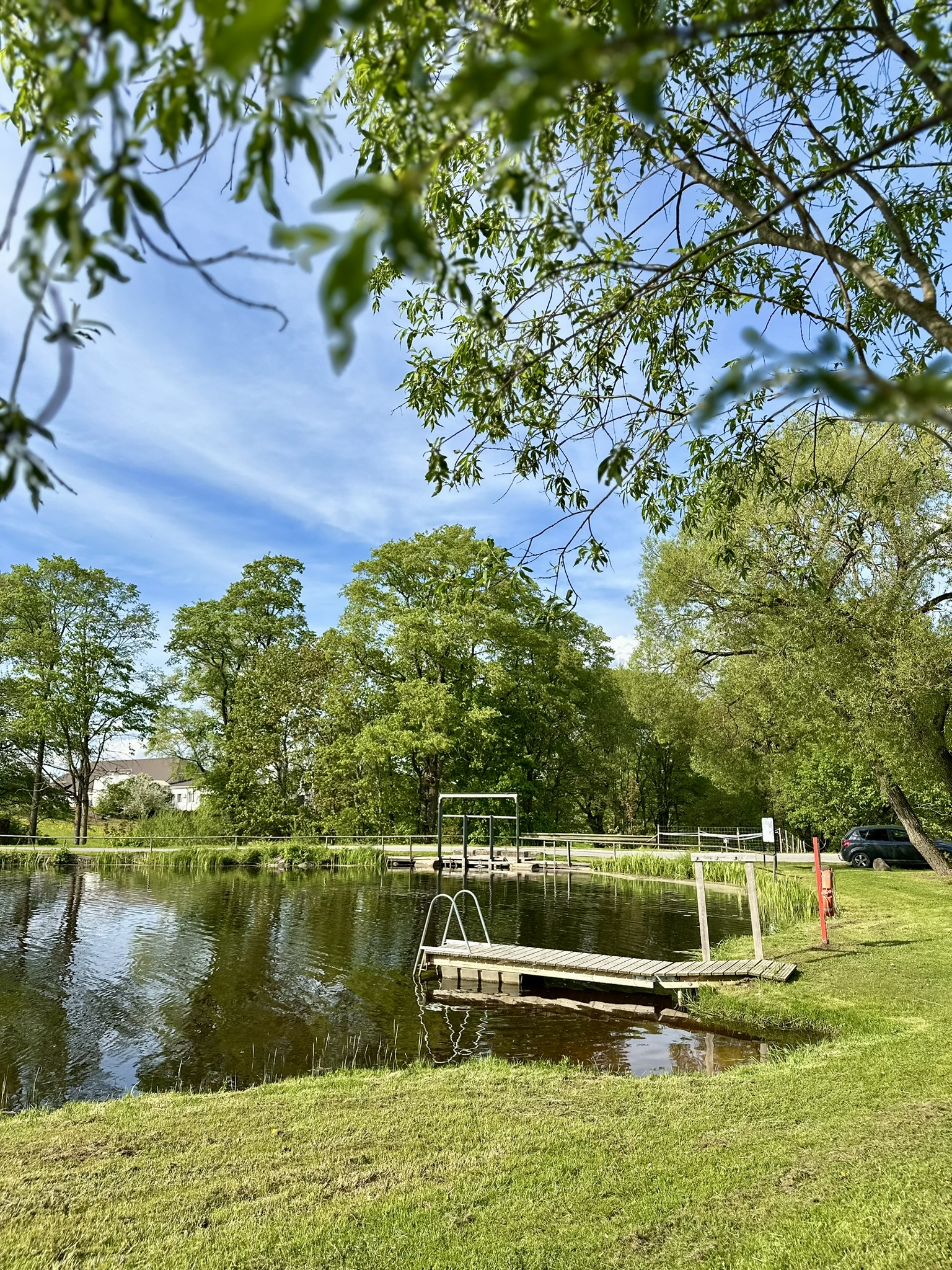
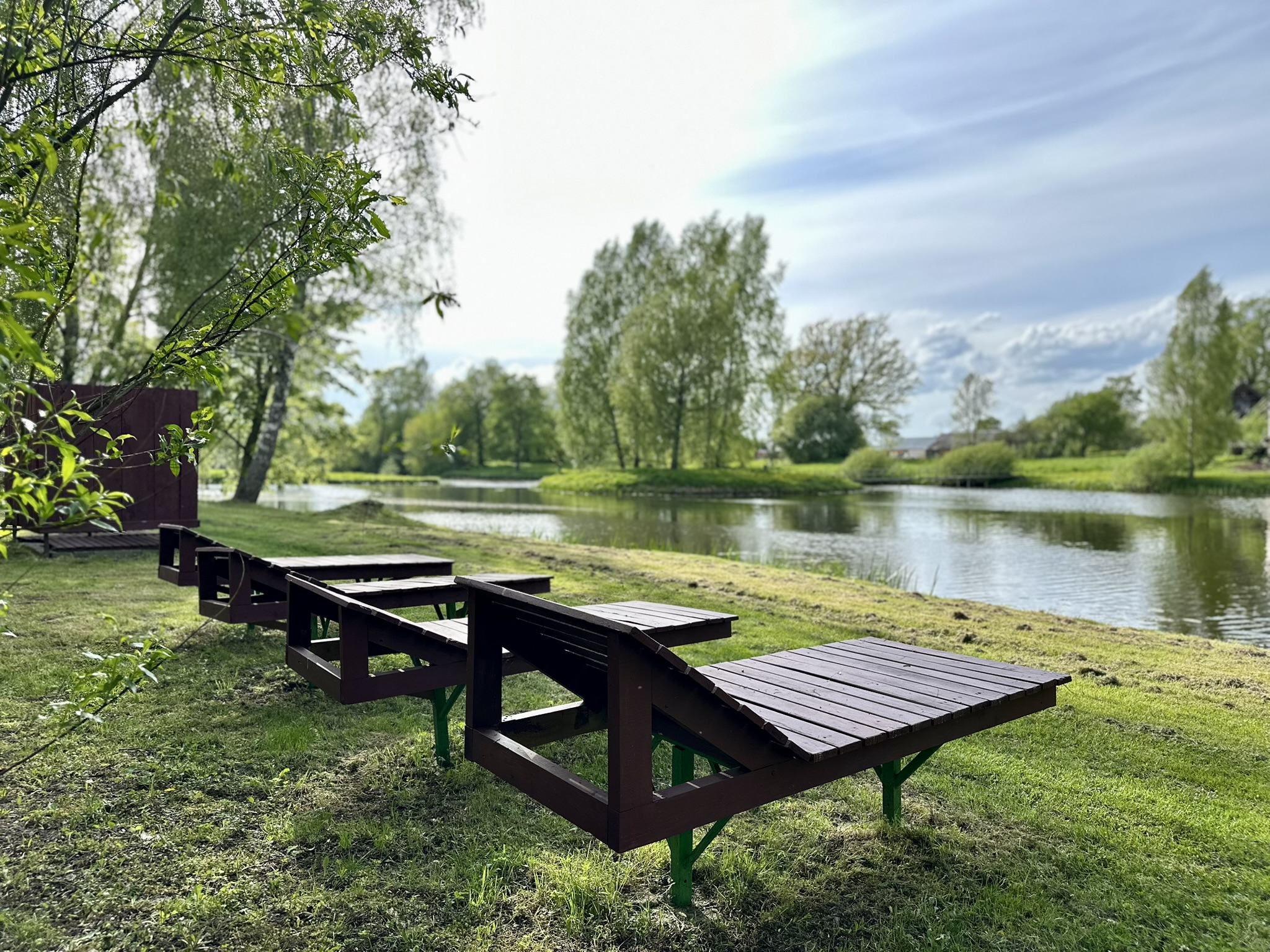
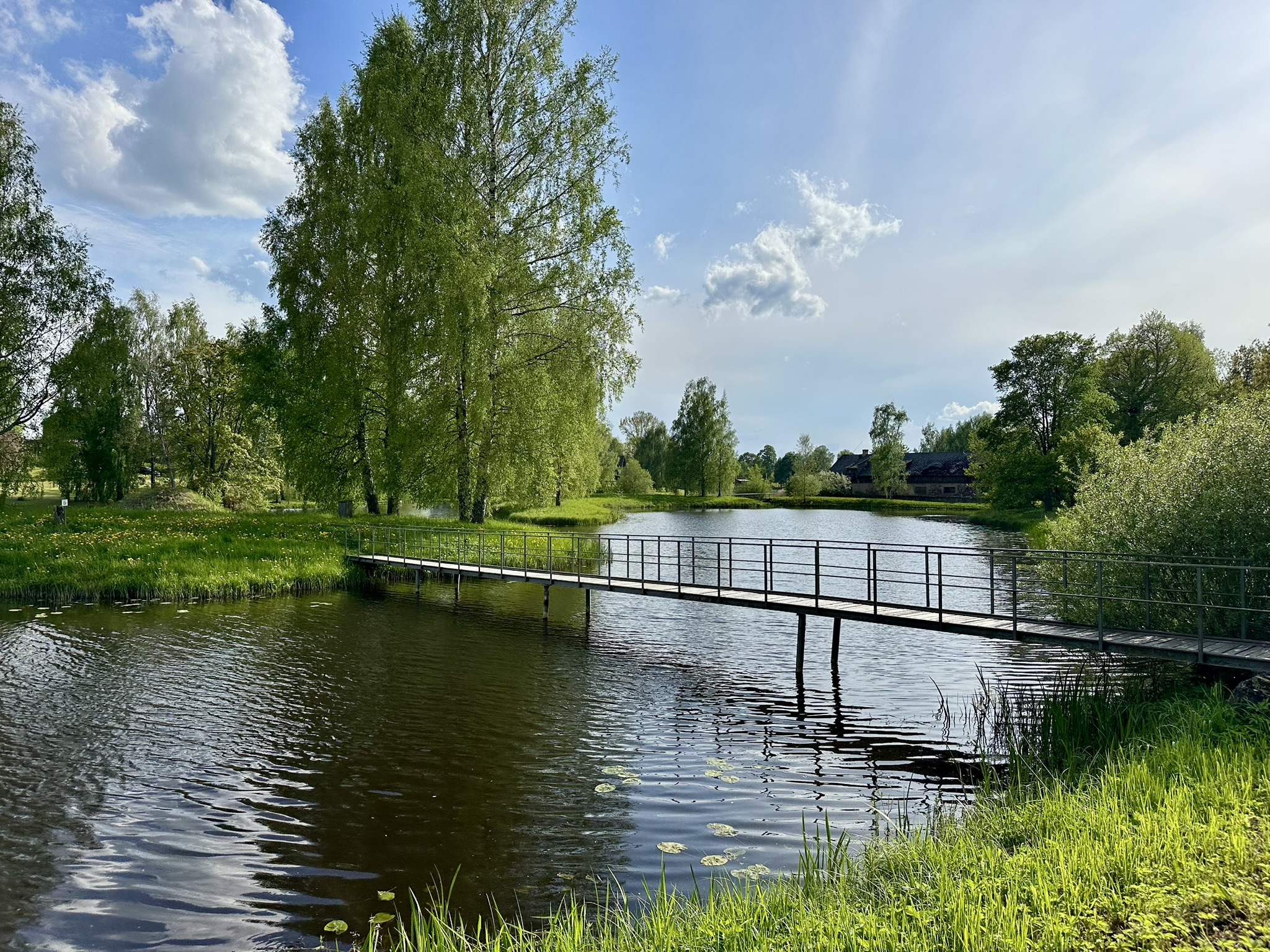
The south-western part of the mill lake is equipped with sports facilities and recreational infrastructure. The island and the shore near Ezerkalni are connected by a pedestrian footbridge. The terrain around Blome Mill Lake is not particularly steep. Several fishing spots, jetties, and a swimming area have been created along the lake’s shoreline.