

Cērtene Hillfort
Cērtene Hillfort is the oldest witness to Smiltene’s history, and its research history is among the oldest in Latvia. In terms of its fortification type and scale, it is considered a fortress-style stronghold, typical of those built in ancient regional centres.
On Cērtene Hillfort
- Cērtene Hillfort is located on the left bank of the River Cērtene, on a steep bank approximately 25 metres high.
- To make the hillfort inaccessible, a ditch up to 12 metres deep was dug around it. The excavated earth was piled both along the edges of the hillfort plateau (approximately 60–70 metres in diameter) and on the opposite sides of the ditch.
- Fortified castle foreparts are located on the eastern and south-western sides of the hillfort.
- Around 100 metres upstream, Cērtene Stream is crossed by a dam approximately 100 metres long, 8–9 metres high, and about 30 metres wide at its base – the largest hydrotechnical structure near Latvian hillforts.
- As early as 1794, Cērtene Hillfort was described and mapped by the renowned cartographer, Ludwig August Mellin. His plan was later republished in various works, as the hillfort attracted increased scholarly attention throughout the 19th century.
- 1882. In 1882, small-scale excavations were conducted under the leadership of Baltic German researchers Adalbert Bezzenberger (1851–1922) and August Johann Gottfried Bielenstein (1826–1907). These excavations are among the earliest archaeological excavations at Latvian hillforts.
- In his 1922 publication Burgenlexikon für Alt-Livland, K. von Löwis of Menar identified Cērtene Hillfort with the castle as “castrum Smiltiselle”, first mentioned in documents in 1359.
- 1926. In 1926, Cērtene Hillfort was surveyed and described by the hillfort expedition of the Monuments Board, led by Ernests Brastiņš. Trial excavations revealed no pottery shards or artefacts, but identified a 50–60 cm thick cultural layer, beneath which lay clean, light dune sand.
Tourism and recreation opportunities
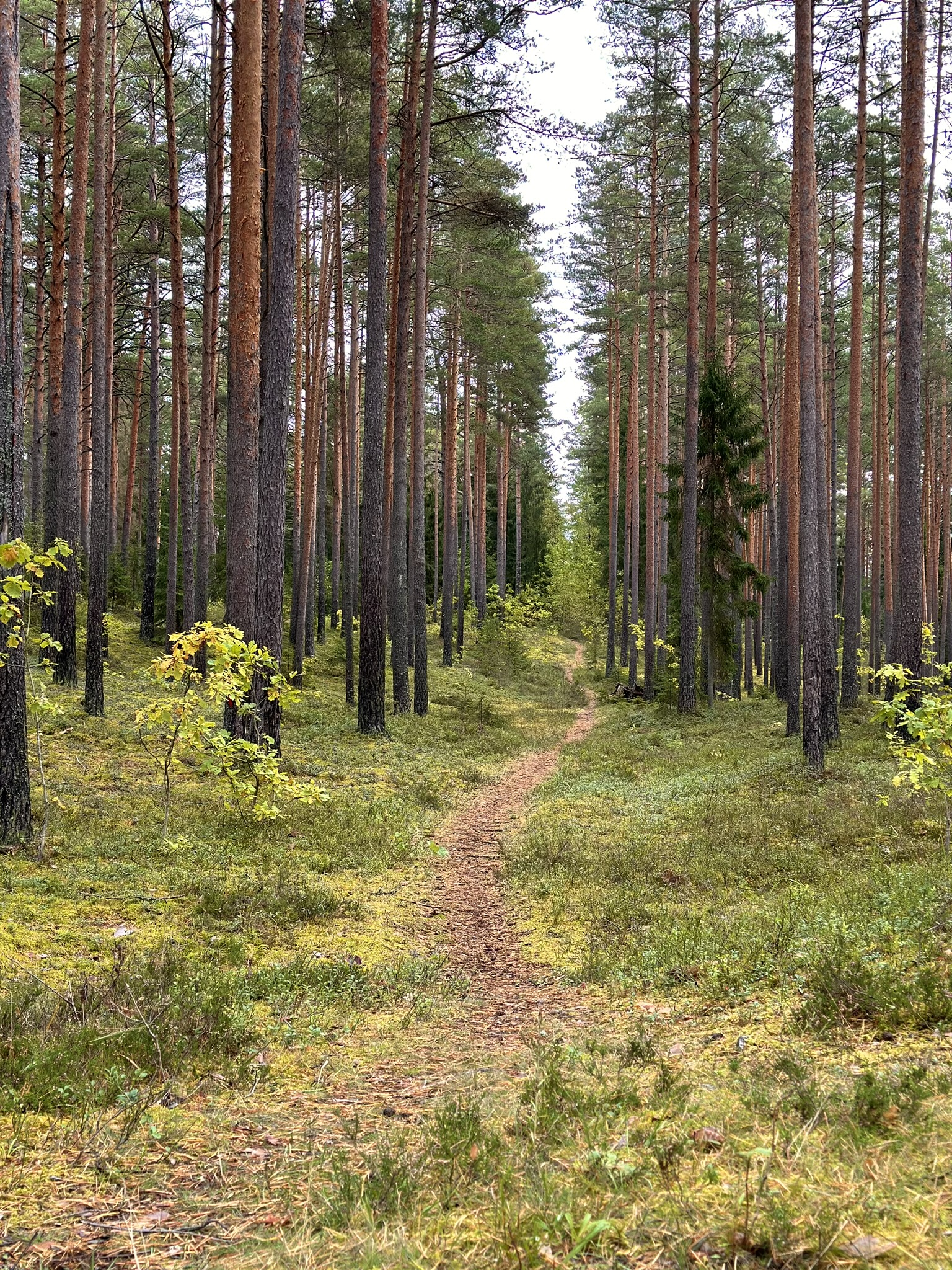
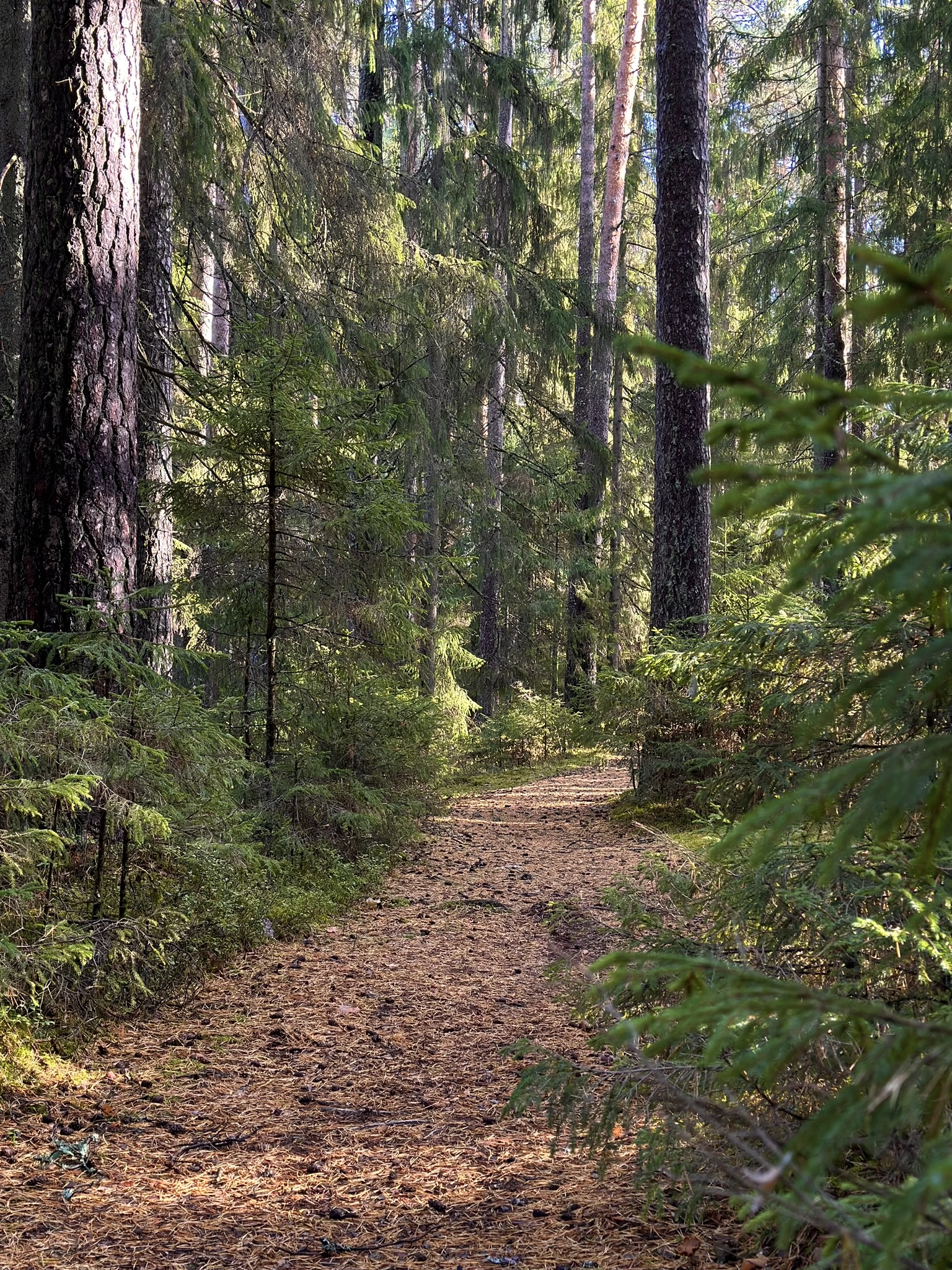
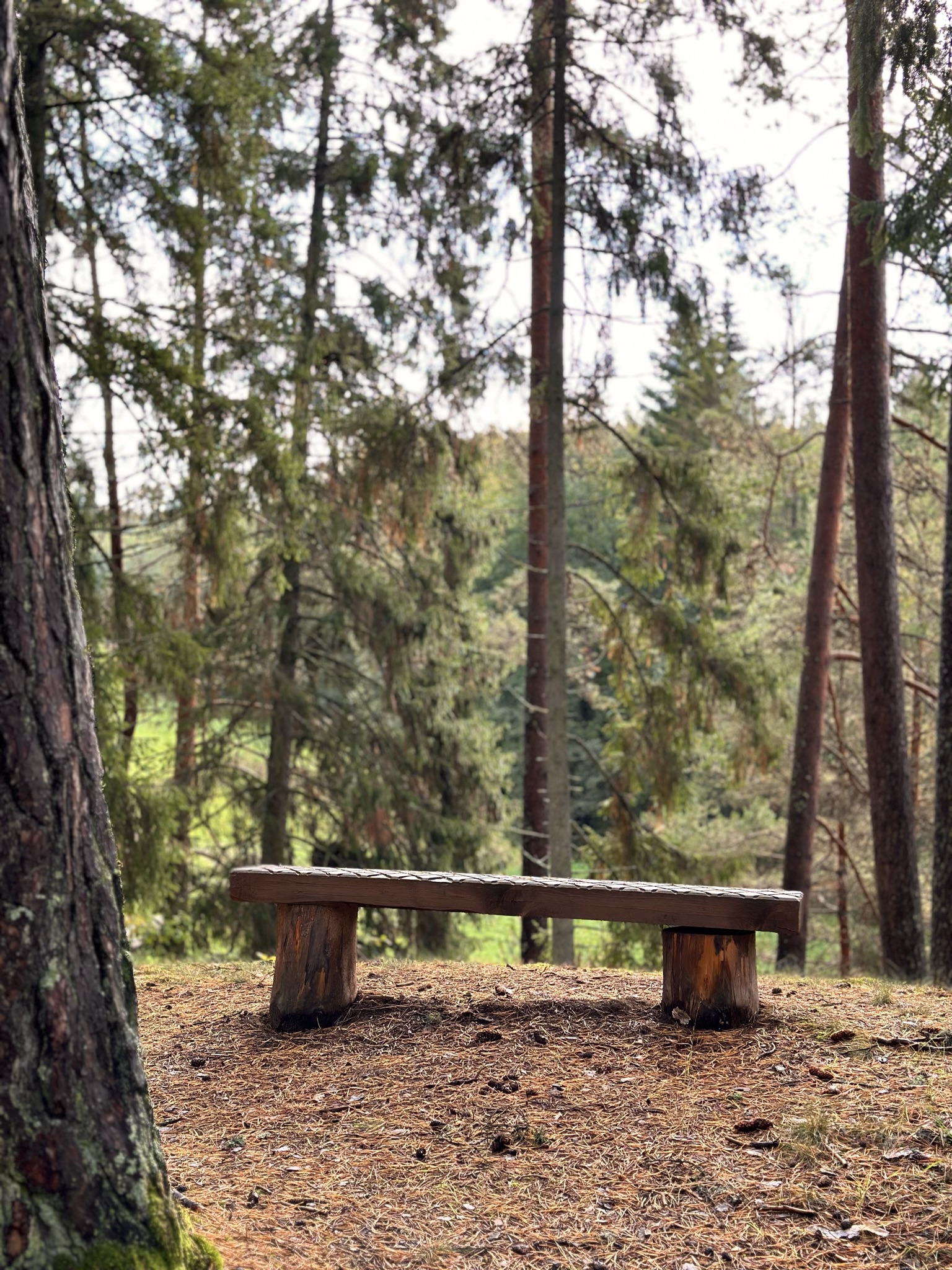
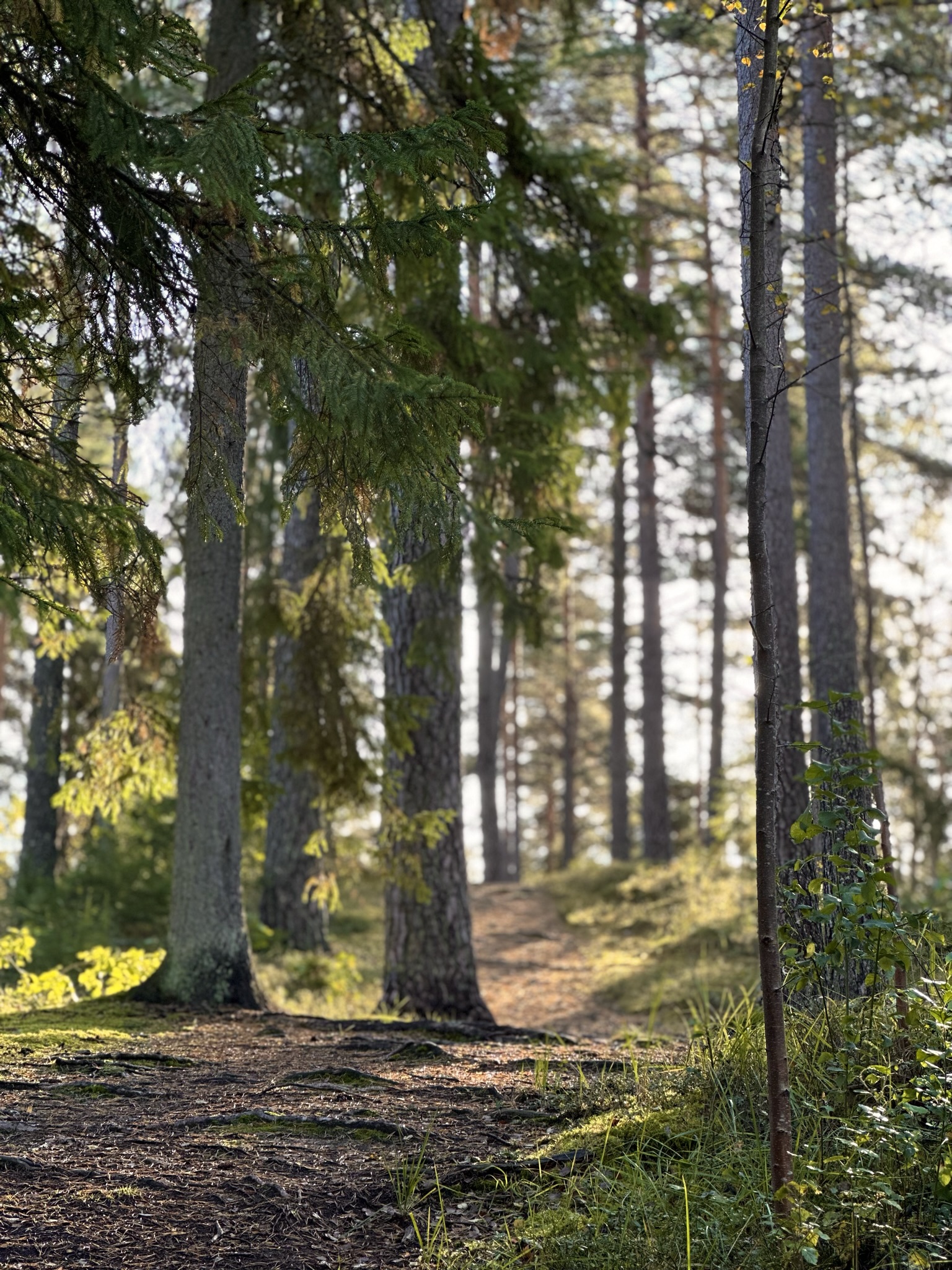
- The surroundings of Cērtene Hillfort are wooded, hilly, and interwoven with dense trail networks, suitable for both leisurely walks and active recreation.
- In winter, the area is especially popular with families – the many paths and trails are ideal for sledding. As motorised traffic in the Cērtene Hillfort area is prohibited, it is safe for winter activities. Afterwards, visitors can warm up and enjoy snacks at the picnic area by the fire pit.
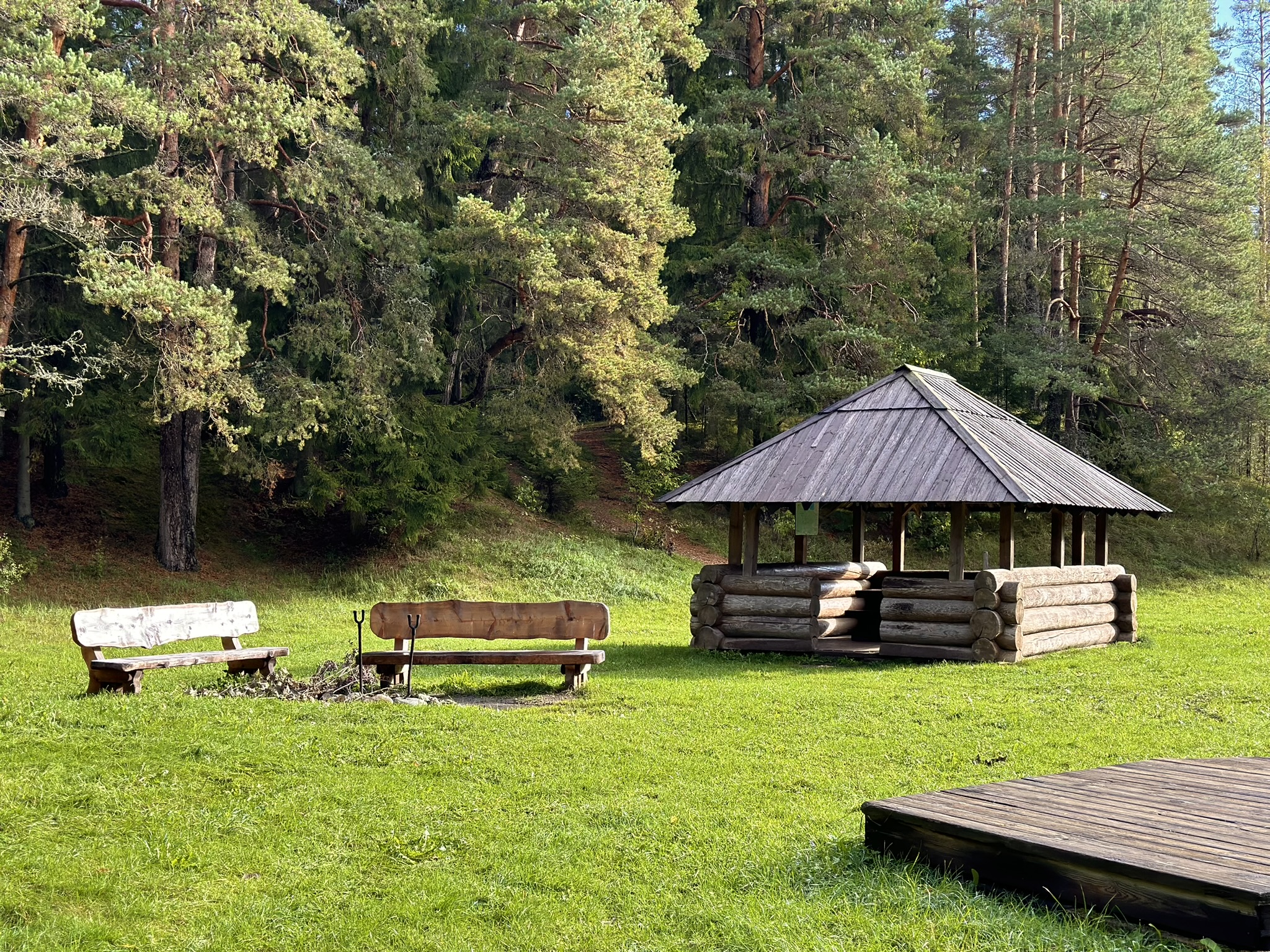
- At the foot of the hillfort, in “Cērtene Meadow”, visitors can use a gazebo with a table and benches, a fire pit, and a spacious recreation area.
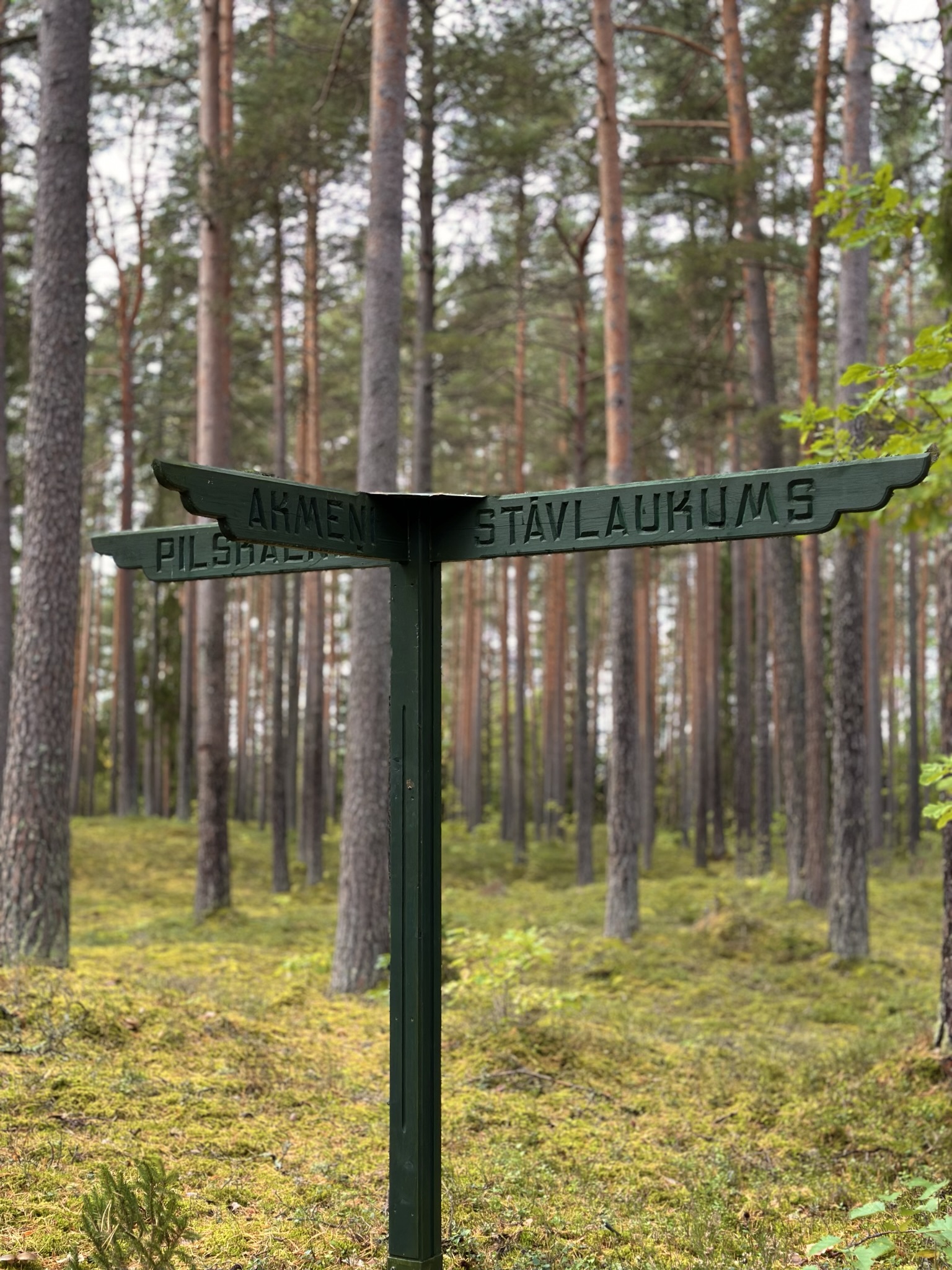
- Directional signs are installed at trail and path intersections.
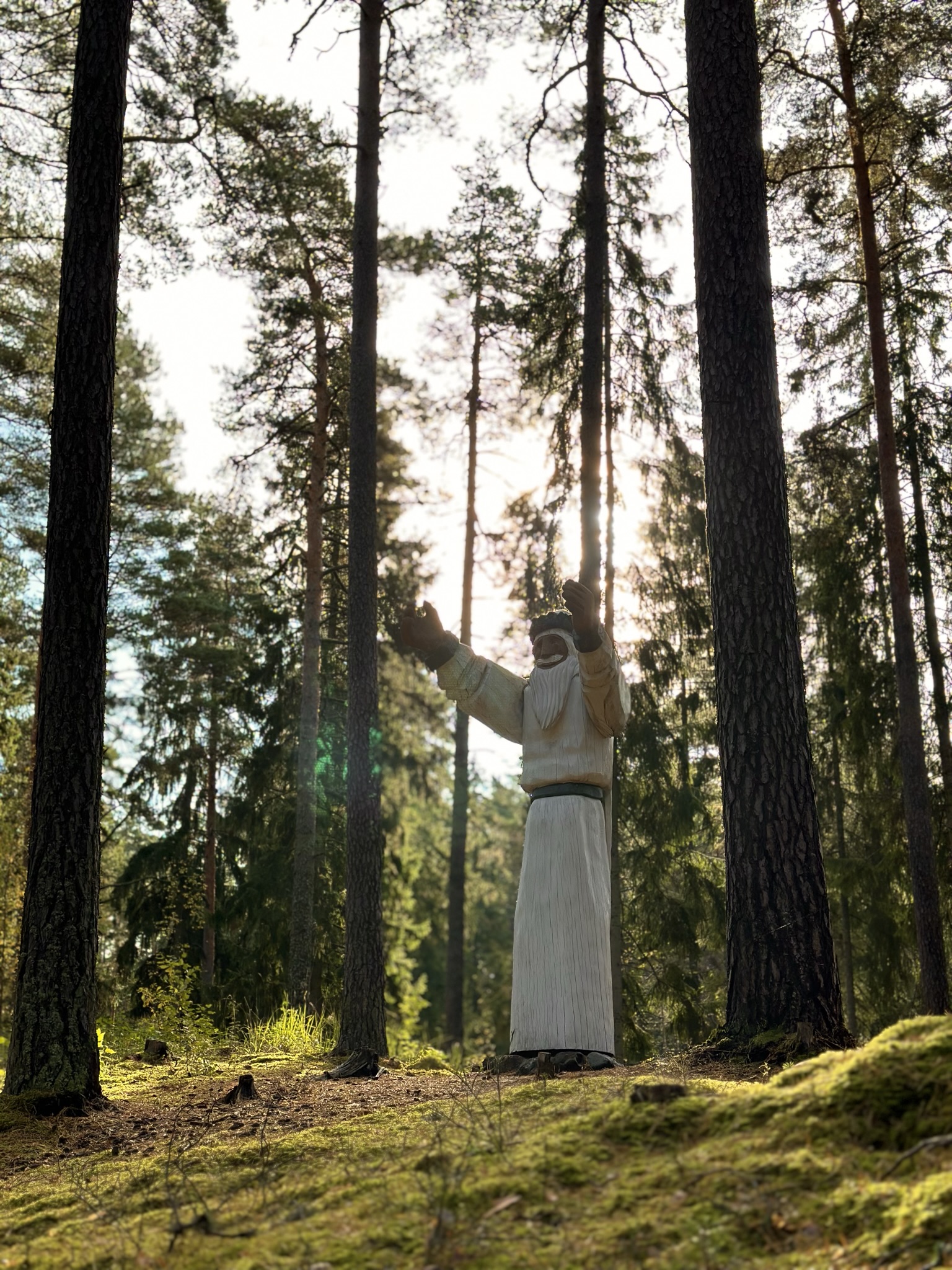
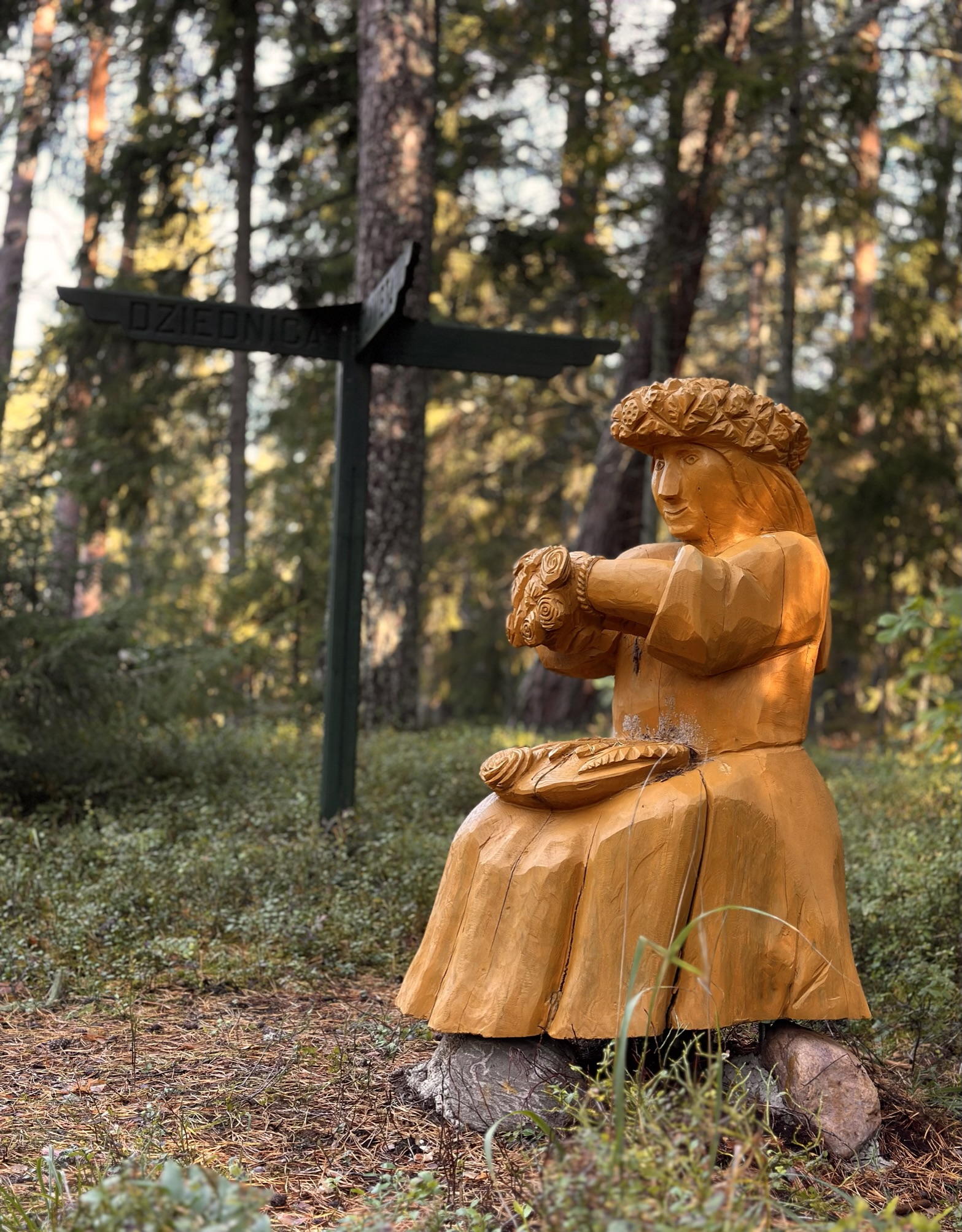
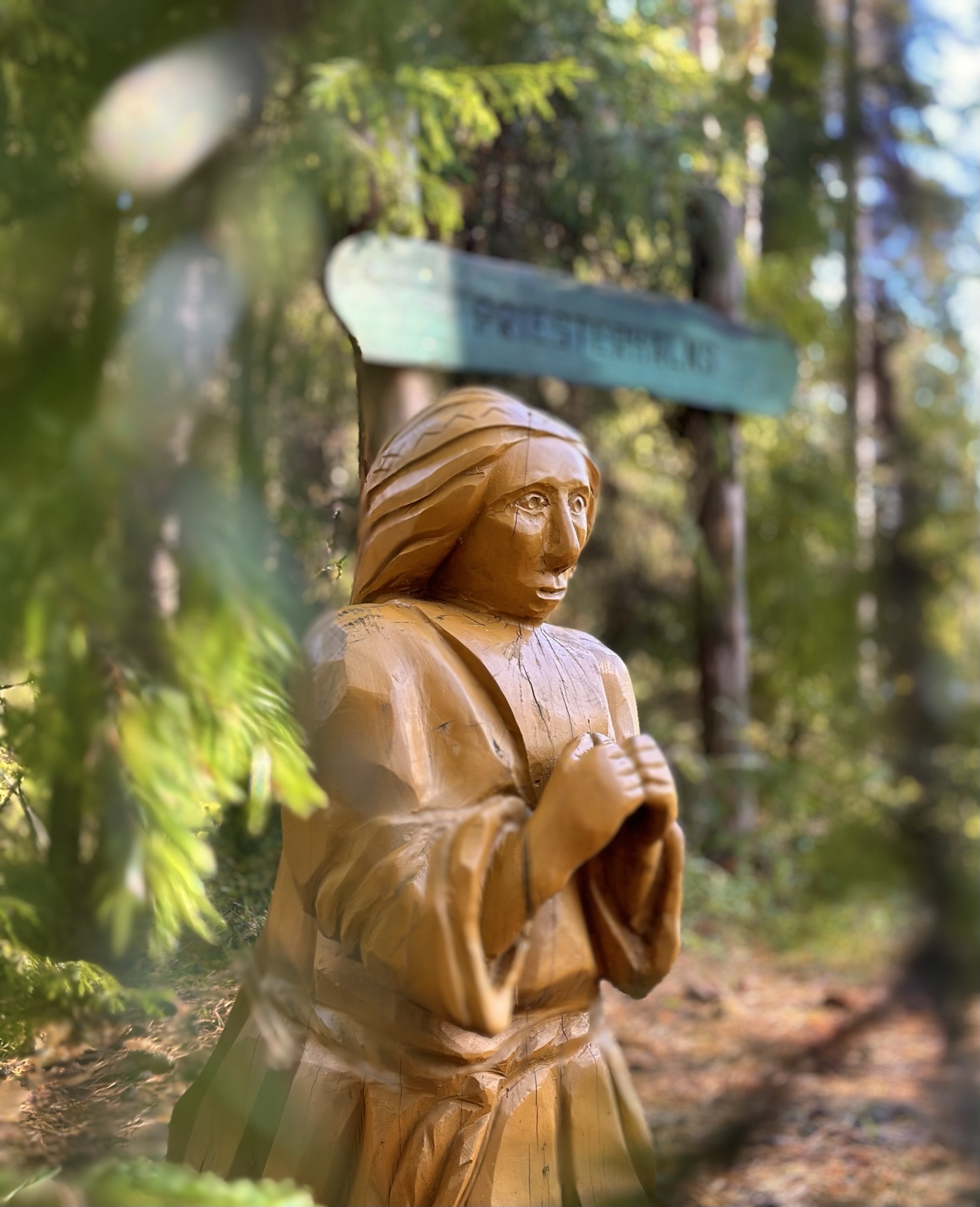
- Several sculptures, inspired by folk legends and created by a local craftsman, are placed throughout the area.
- A car park is available near the hillfort area, at the intersection of Velde Street and Drandu Street. An information board and hillfort area map are installed there as well.
- Access by car to “Hillfort Meadow” is possible, but visitors should note that the final section of the road crosses a meadow, which may become muddy in wet conditions.
- No officially marked walking trail exists within the hillfort area; however, the Smiltene Tourism Information Centre offers a 4 km GPX navigation route covering the most notable and scenic locations in the hillfort forests.
- The route navigation (GPX) file is available here.
The legend
In the periodical “Darba Karogs”, on 23 April 1988, within the article series “Ancient Tales and Legends of Tālava”, a folk legend about Cērtene Hillfort was published, recorded by Māris Birkenfelds:
“In 1984, a storyteller named Gorčika recalled a legend about Cērtene Hill, which she said she had heard from her grandfather around the year 1900 (no further details about the storyteller were recorded by M. Birkenfelds). It was said to have happened so long ago that no one could remember exactly when it happened. Long, long ago, there was once a castle on this hill, inhabited by people and slaves. Then, a great misery befell the land, as tramps appeared from afar – they fought, plundered, and burnt everything in their path. The son of a nobleman then rallied the people to battle. The men left their fields, gathered together, and set out to fight. Only children, the elderly, and mothers with their daughters remained at home and in the castle. The battle in the distant forests was fierce; many of the locals perished there, but in the end, the enemy was defeated. Yet, when the warriors finally returned, a dreadful silence reigned in their homeland – only the ominous cries of ravens and crows could be heard. The first to ride back to the hillfort was a nobleman known as Druvvaldis. He saw the burnt down castle and the slain people, and hurried back to his companions. He told his fellow warriors: “Take heart, brothers – we have nothing left now but our own land!” They all set out to fight once more, except for Druvvaldis, who stayed behind with a few companions to bury their loved ones. When the last of his helpers had departed, Druvvaldis remained there alone, to await his final hour. His spirit is said to dwell there still, following every visitor closely from behind. On the very night of the summer solstice, it is said that one may glimpse both Druvvaldis and the burning castle.”