

Gaujiena Manor
About the Gaujiena manor ensemble
- After 1702, Gaujiena came under Russian rule. During manor reduction, estates were confiscated, and everything belonged to the state.
- 1745. In 1745, the entire Gaujiena complex was gifted to the court marshal of Schleswig-Holstein, Baron Bernhard Reinhold von Delwig.
- Baron Delwig had four sons, all of whom were very energetic and gifted people, but also extremely reckless and wasteful. 1780. In 1780, the old marshal died, and the property was divided among three sons, as the eldest son, Thure Carl, had gone to Russia for service.
- 1818. In 1818, Adolf von Wulf acquired Gaujiena Manor.
- Around 1830, the manor owner’s house was built; in 1838, an apartment and service building for the manor people was built, with a ramp leading up to the second floor. The southern end of the building was adapted in 1886 for the needs of the Gaujiena Volunteer Firefighters’ Society, founded by the Wulf family.
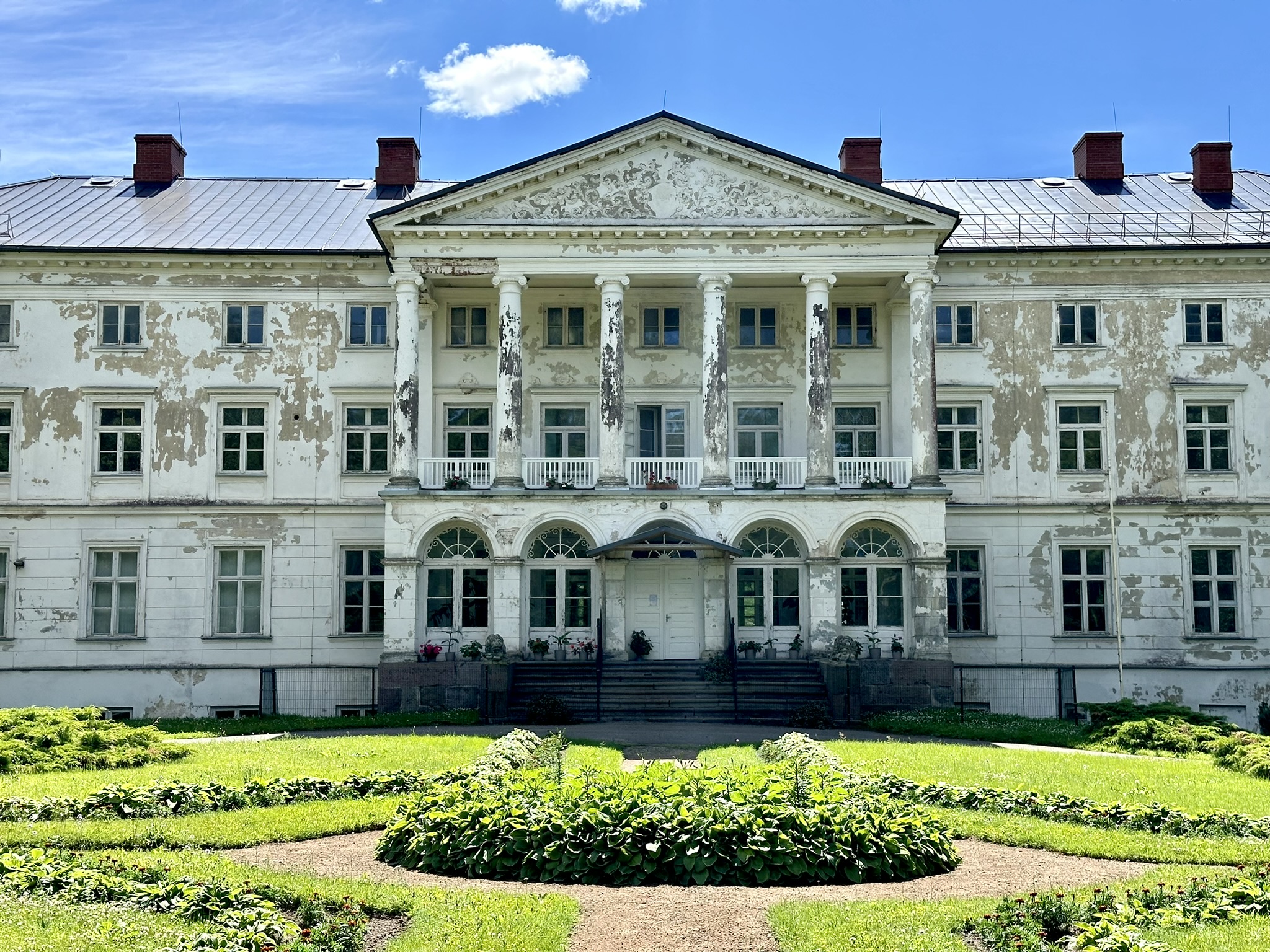
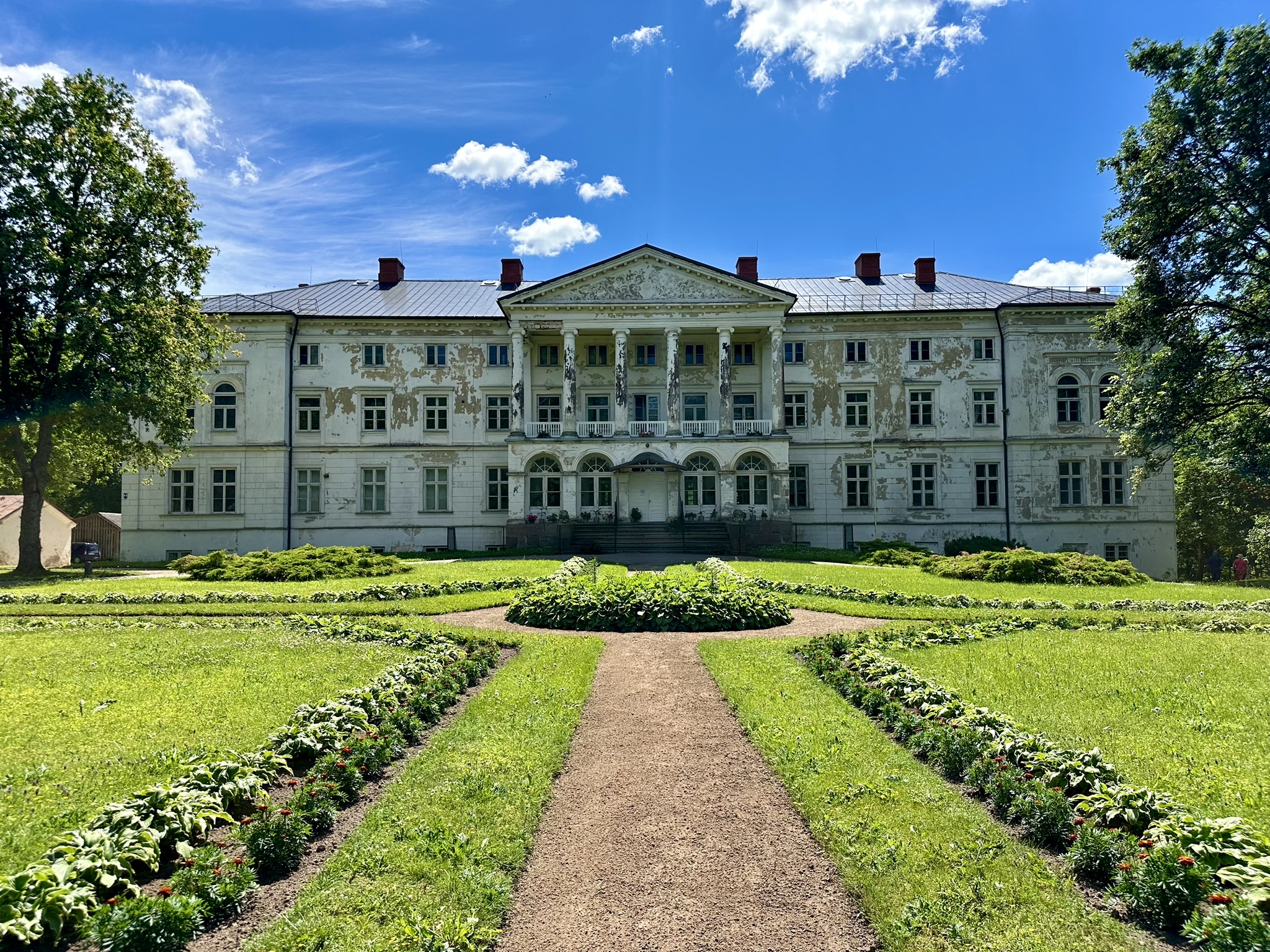
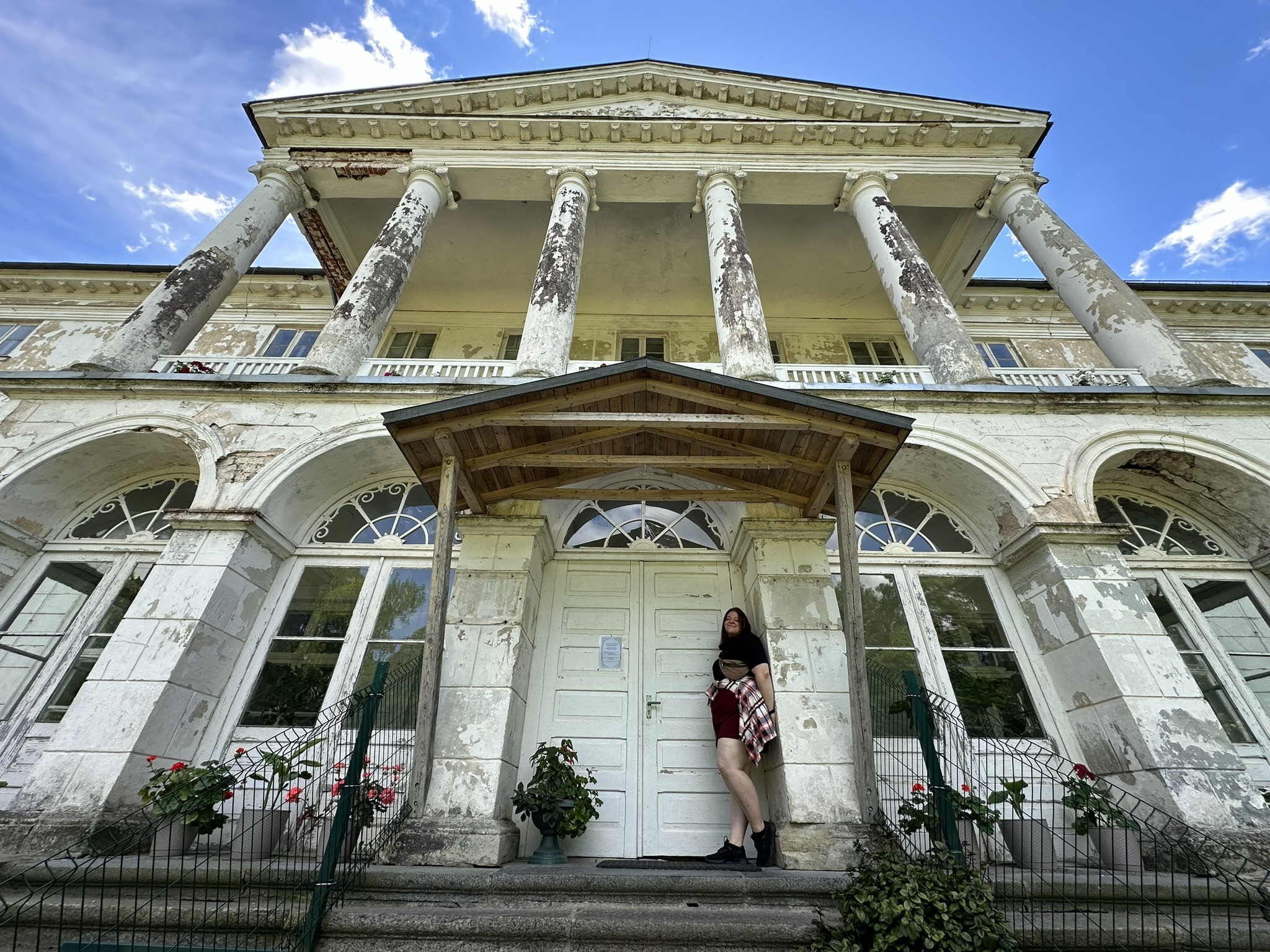
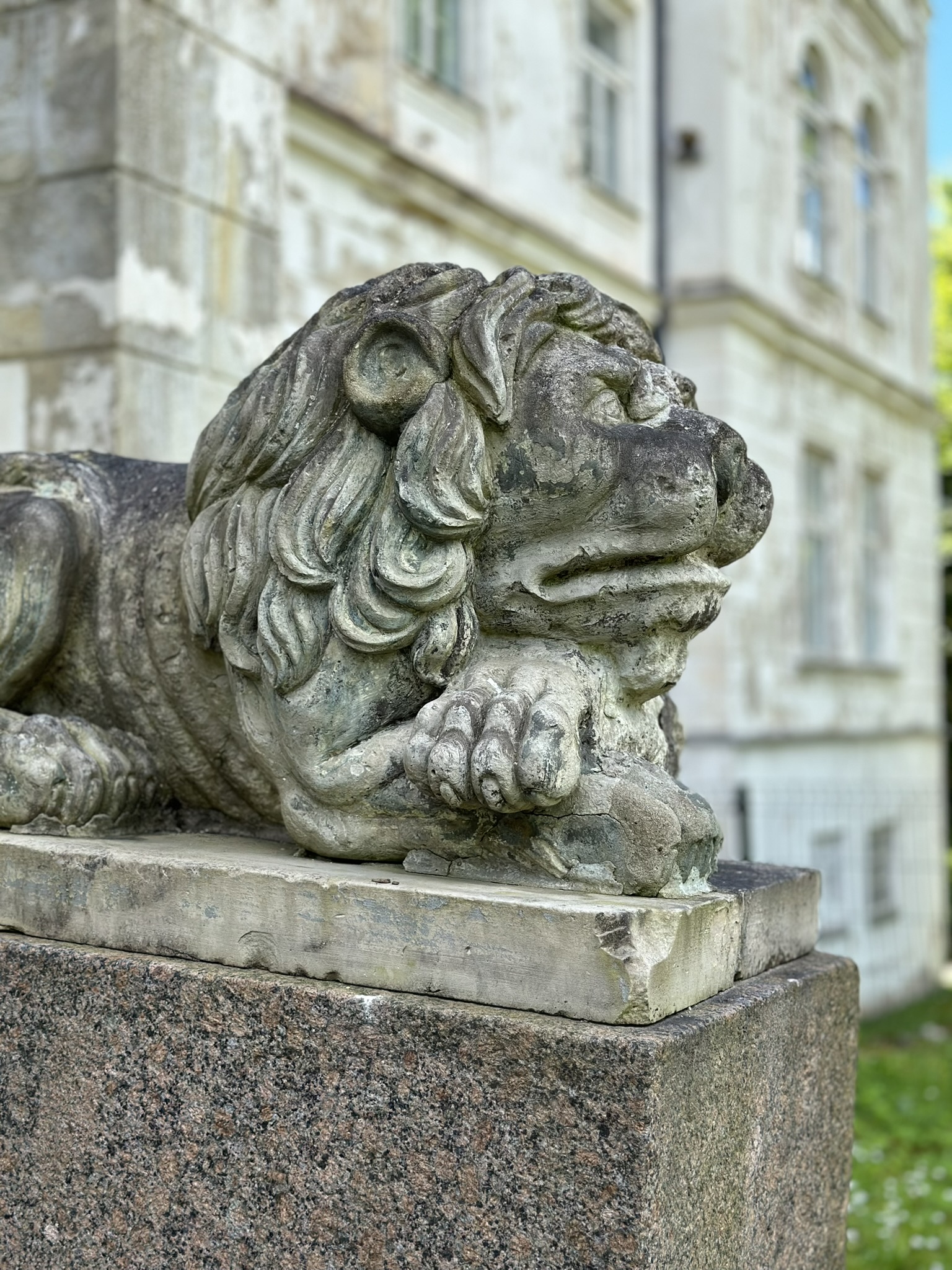
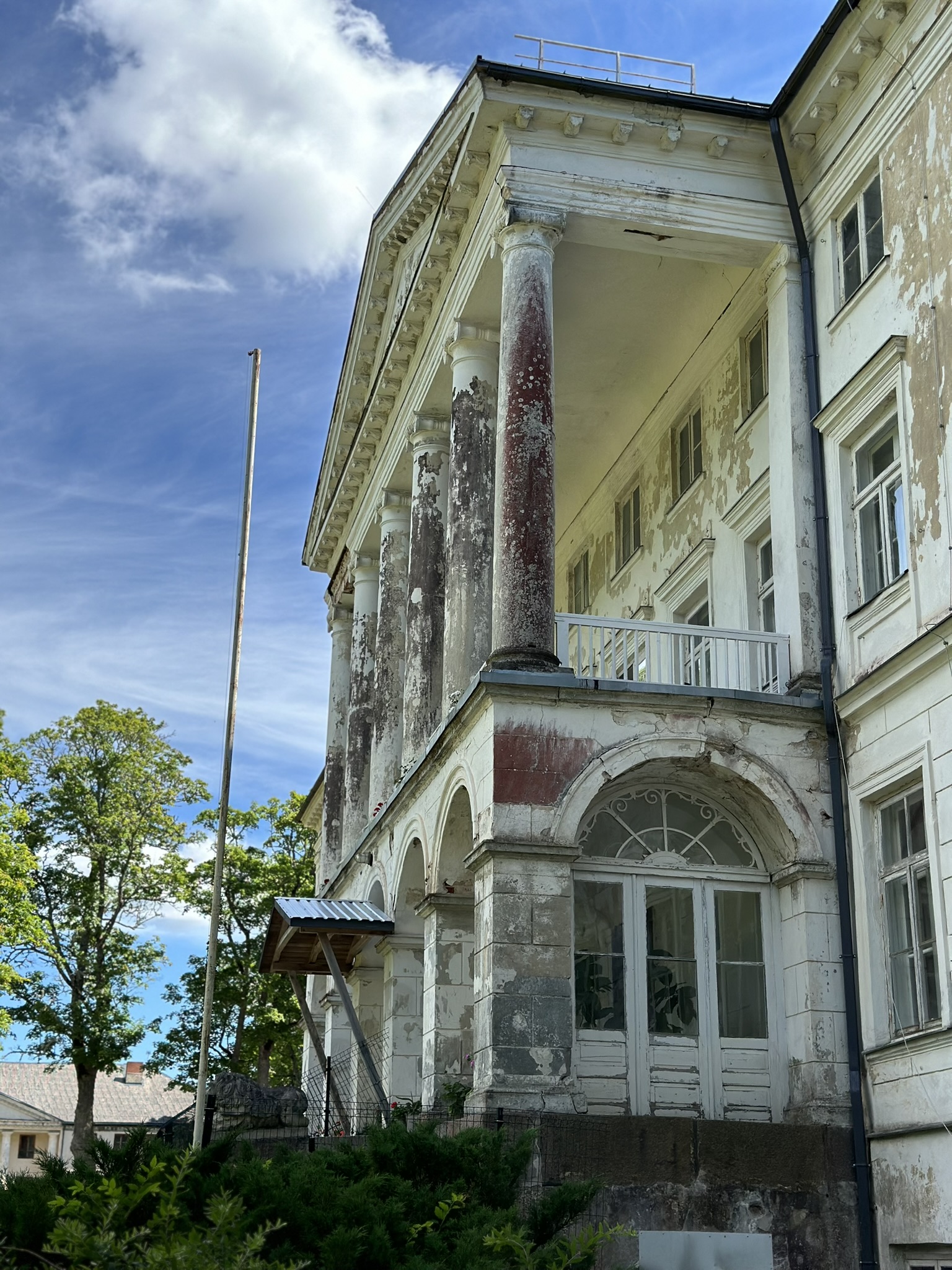
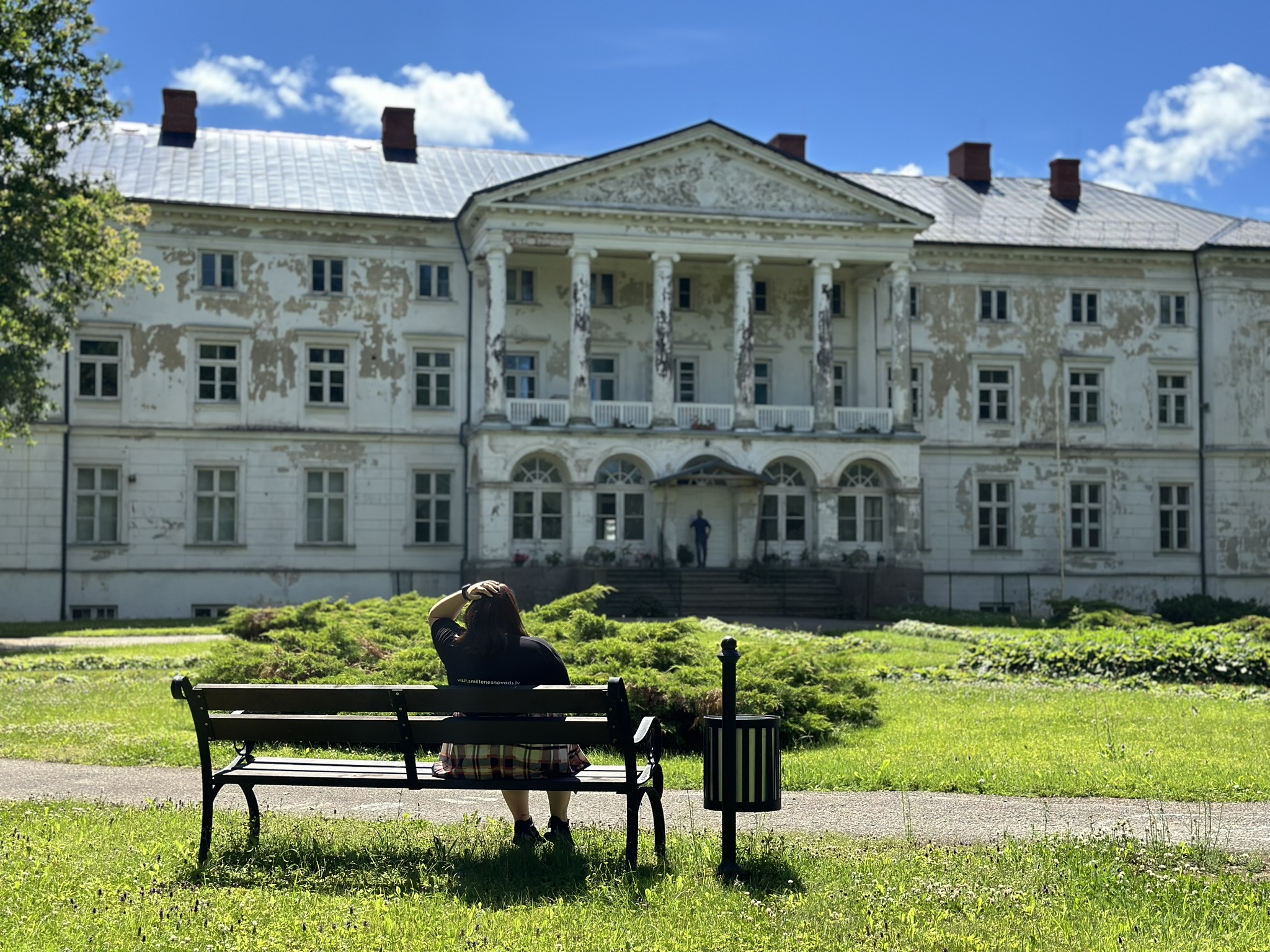
- In 1850, the new palace was built in the classicism style, with 52 rooms, as well as columns, walls decorated with pediments and pilasters, ceiling paintings, and parquet floors. The palace’s ceremonial staircase is guarded by two reclining lions.
- Construction of the palace was completed by Baron Julius von Wulf, who was known for having a great sense of humour. He considered Atzele, or Gaujiena, to be the centre of Europe, and therefore, nearby farmsteads were named after major European cities – Berlin, London, Wiesbaden, Paris, and others.
- 1872. On 7 September 1872, in the chapel (newly built and consecrated), the embalmed remains of Julius von Wulf – shot in Wiesbaden – were buried. The chapel was built by Julius’ wife, Charlotte von Wulf. Other members of the Wulf family were later buried there as well.
- The manor ensemble also includes a brewery, the brewer’s house, the gardener’s house, a greenhouse, an ice cellar, stables, and the stable master’s (coachman’s) house.
- In Gaujiena, on the right bank of the River Gauja, there are many springs, and the most notable one is near “Anniņas” (the former manor brewer’s house). Old residents of Gaujiena believe that this spring was an ancient Latvian sacred spring. Around 1850, Baron Julius von Wulf built a special room out of dolomite stones, and placed a lion’s head with an open mouth at the source of the spring, through which the water flows. Therefore, since 1850, this ancient sacred spring has been called “Lauvasmute” (“Lion’s Mouth”). The spring water is very clear, clean and tasty. For centuries, residents of Gaujiena have drunk this healthy water, and it has given them strength, health, wisdom, and inspiration for noble deeds.
- 1918. In 1918, with the restoration of Latvia’s independence, the von Wulf family left Gaujiena and moved to Germany.
- Today, the manor is owned by Smiltene Municipality and is not intensively inhabited.