

Gaujiena Church Hill
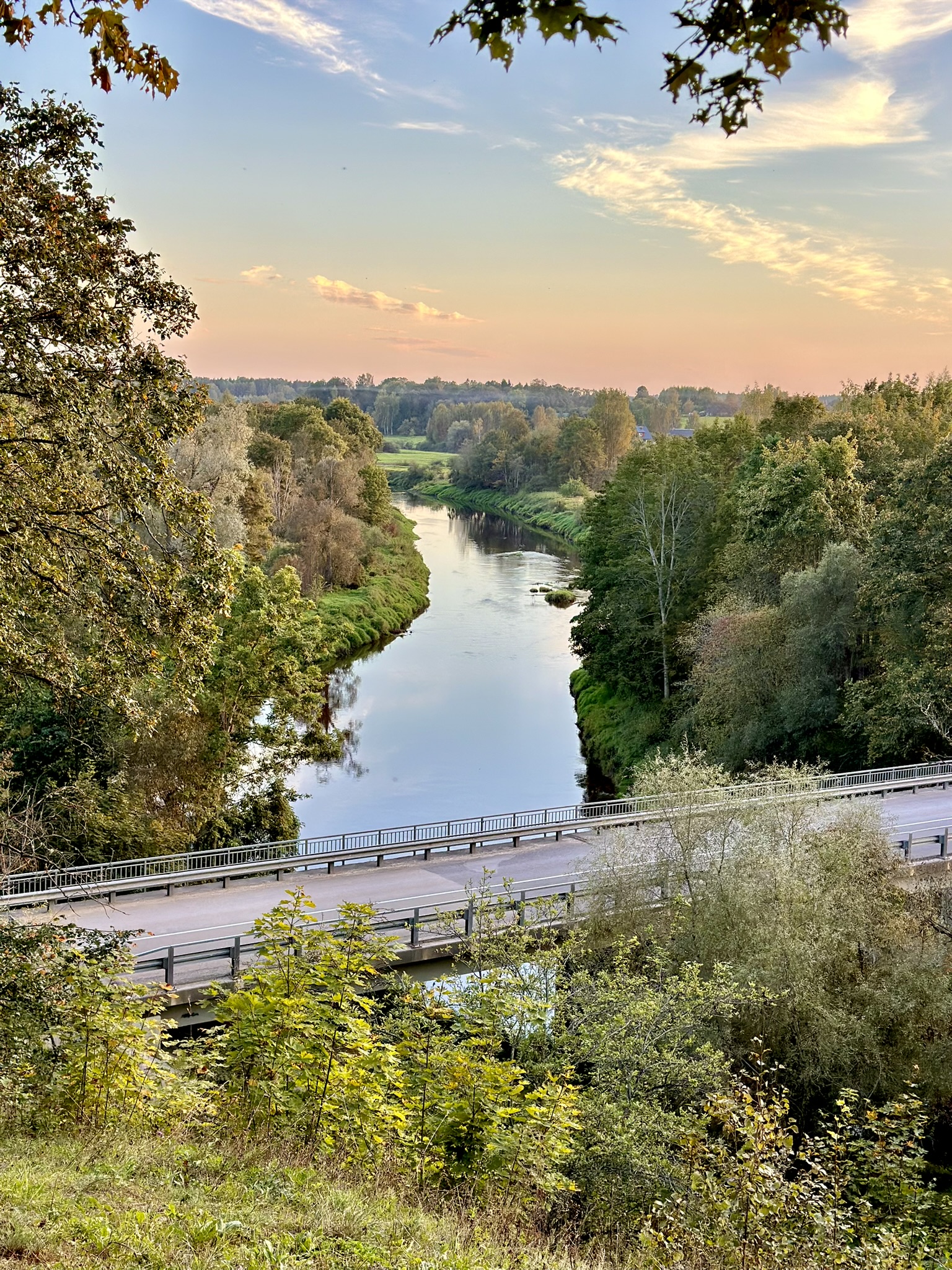
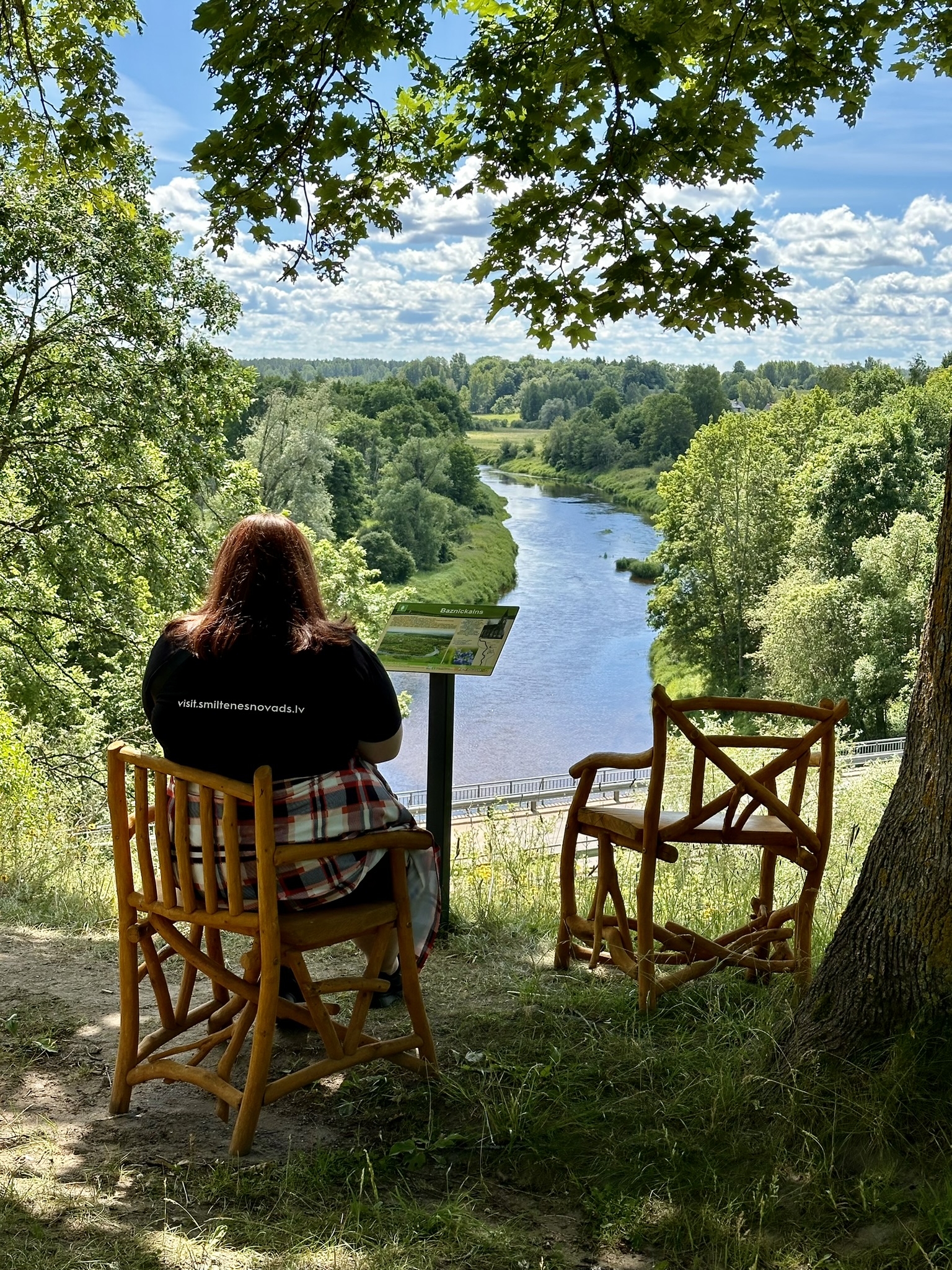
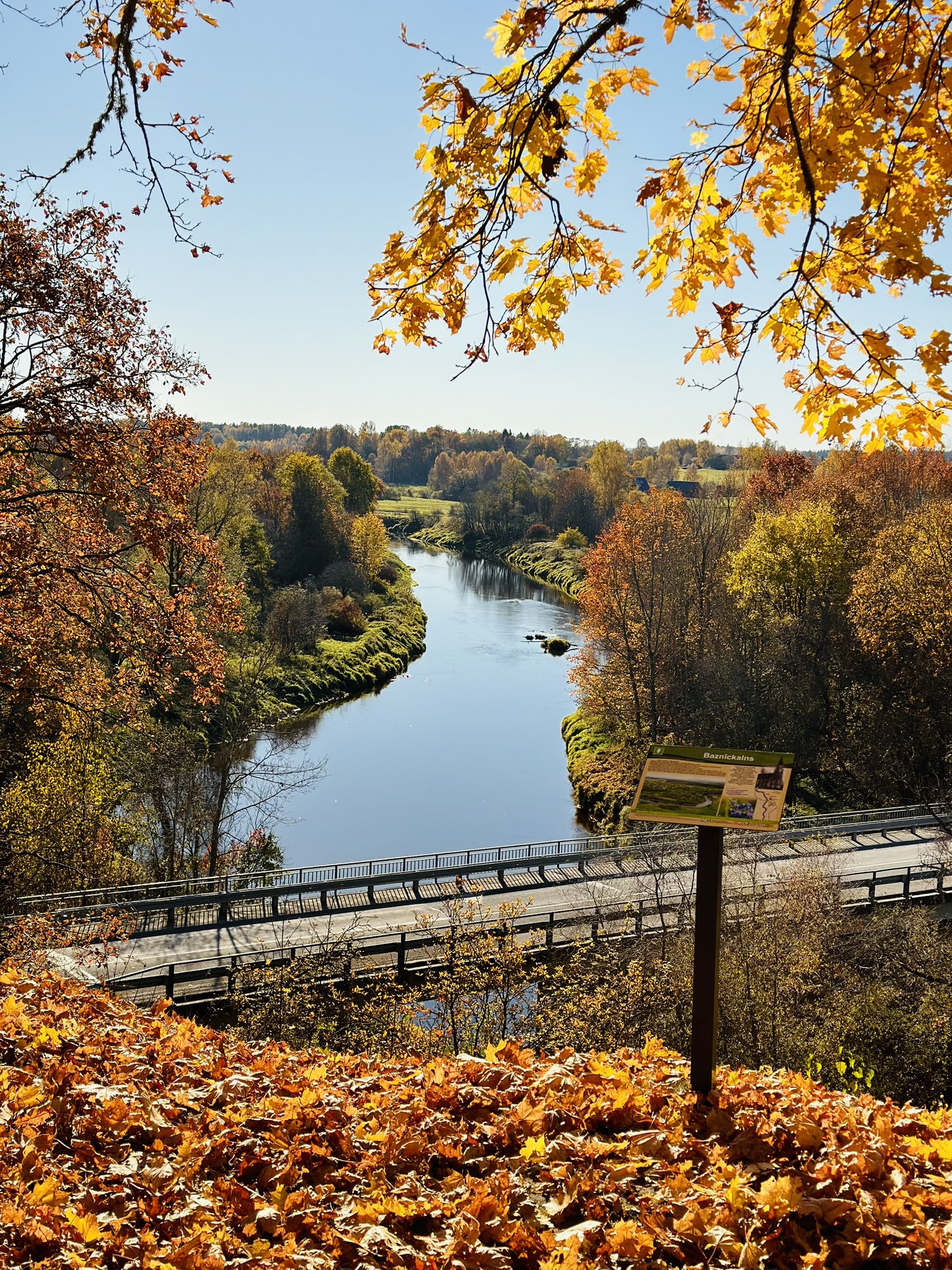
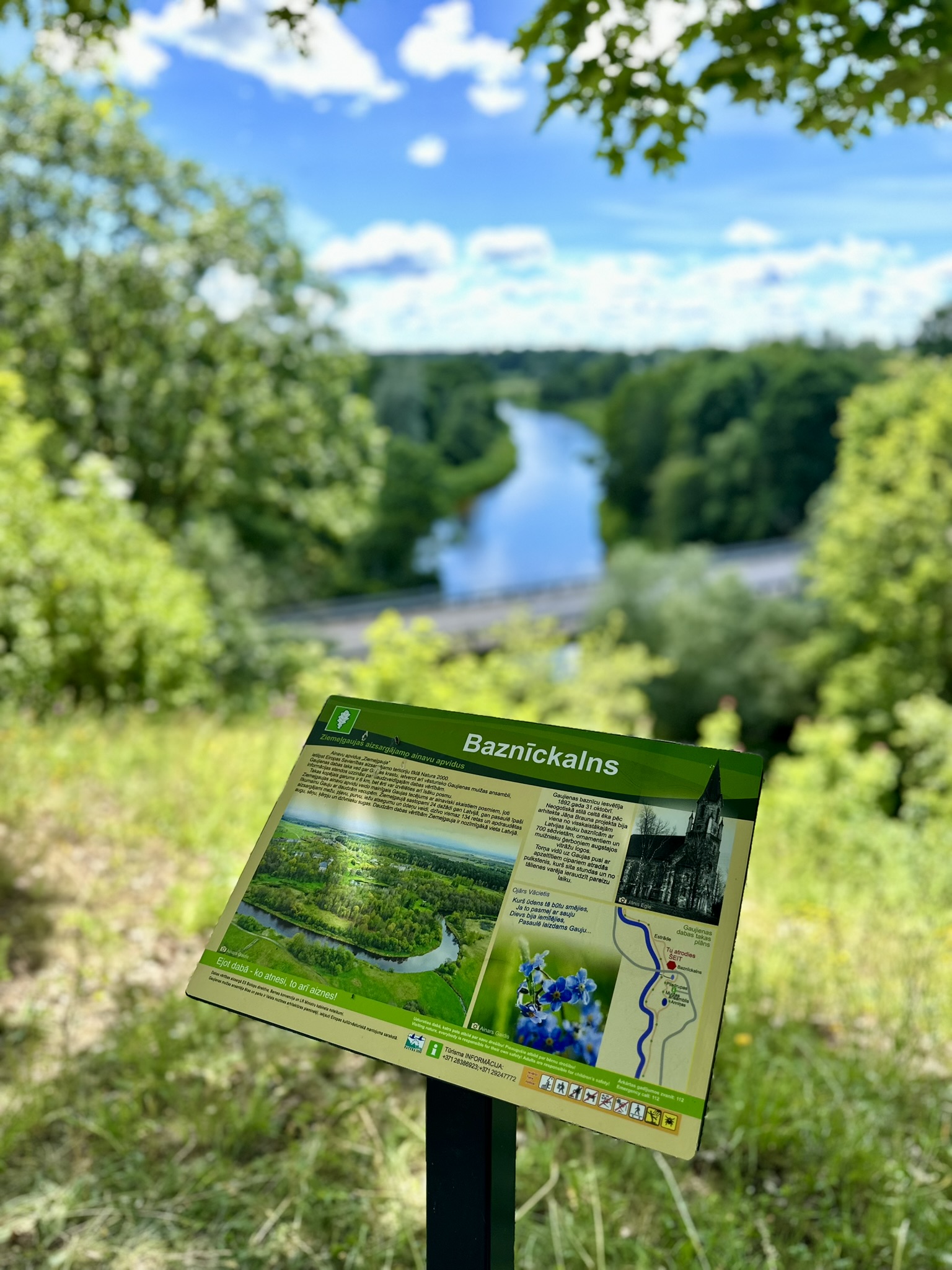
Today, Gaujiena Church Hill is a popular viewpoint throughout all seasons, especially in autumn, offering beautiful views over the Gauja Valley, the bridge, riverside pastures, and wide meadows. Over the centuries, five churches have stood on Church Hill – all of which were destroyed during wars, with each being rebuilt in turn.
On the history of churches on Gaujiena Church Hill
- The Lutheran church in Gaujiena is mentioned in historical sources as early as the beginning of the 17th century. In 1613, a wooden church was mentioned, and a little later, in 1631, a parsonage was also mentioned.
- In 1627, the first wooden church was destroyed.
- In 1699, the second wooden church was rebuilt, but in 1702, it was burned down by Russian troops.
- In 1727, the third wooden church was consecrated, serving until 1781, when the fourth wooden church was built.
- In 1892, a Neo-Gothic stone church was completed and consecrated. Its architect was Jānis Brauns. Ten stained-glass windows adorned the church, and the altarpiece consisted of two panels with copies of paintings by Raphael and Leonardo da Vinci. The church housed 14-stop organs, built in Frankfurt. In 1944, the church was blown up by the German army. This stone church resembled the Velēna church, which has survived to this day.
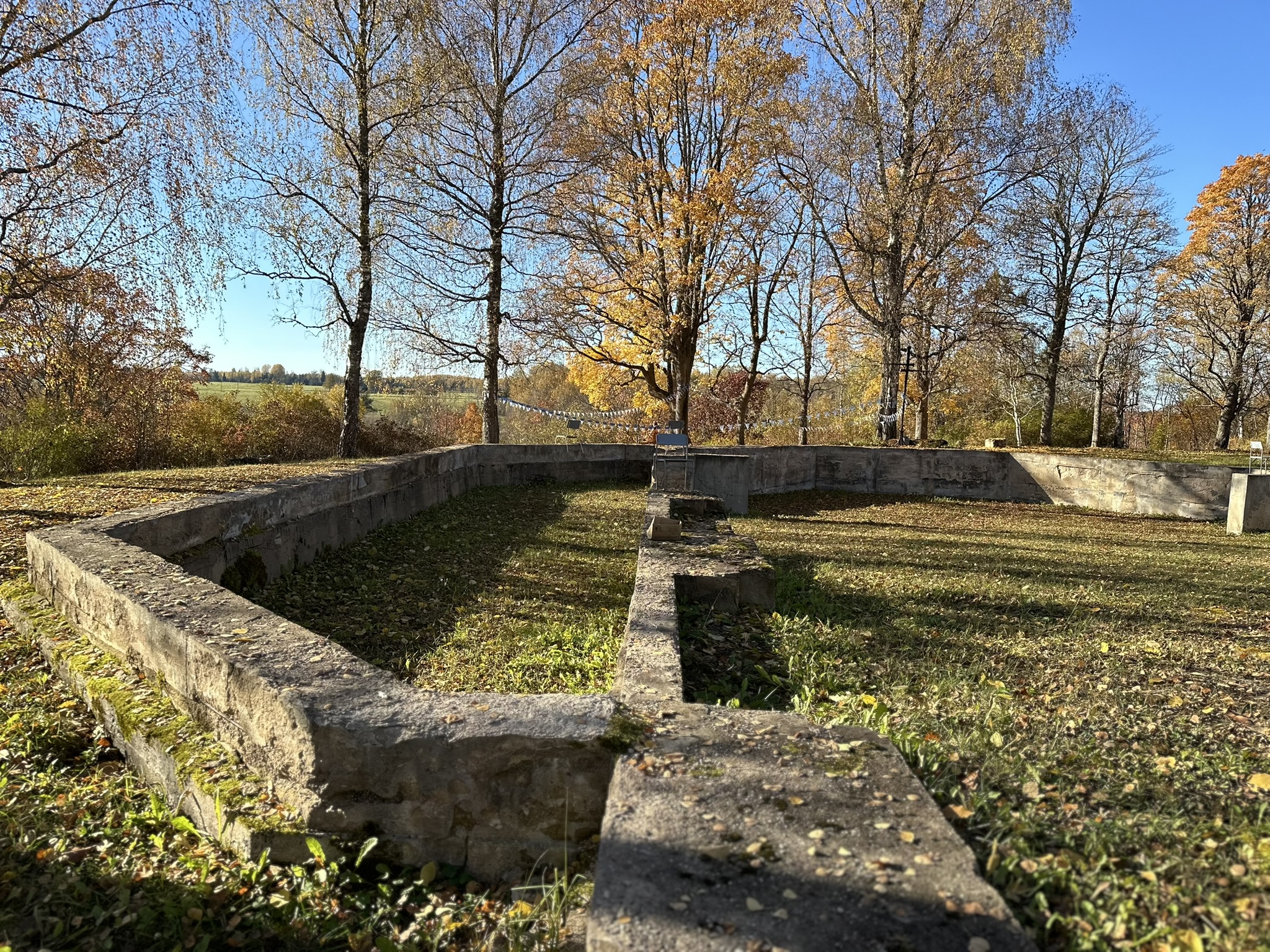
- There was once a plan to build a new church, but construction stopped. Now, unfinished church foundations stand on Baznīckalns, reminding everyone of the harsh fate of the Gaujiena churches.
Address
"Baznīckalns", Gaujiena, Gaujienas pagasts