

Rauna Mill
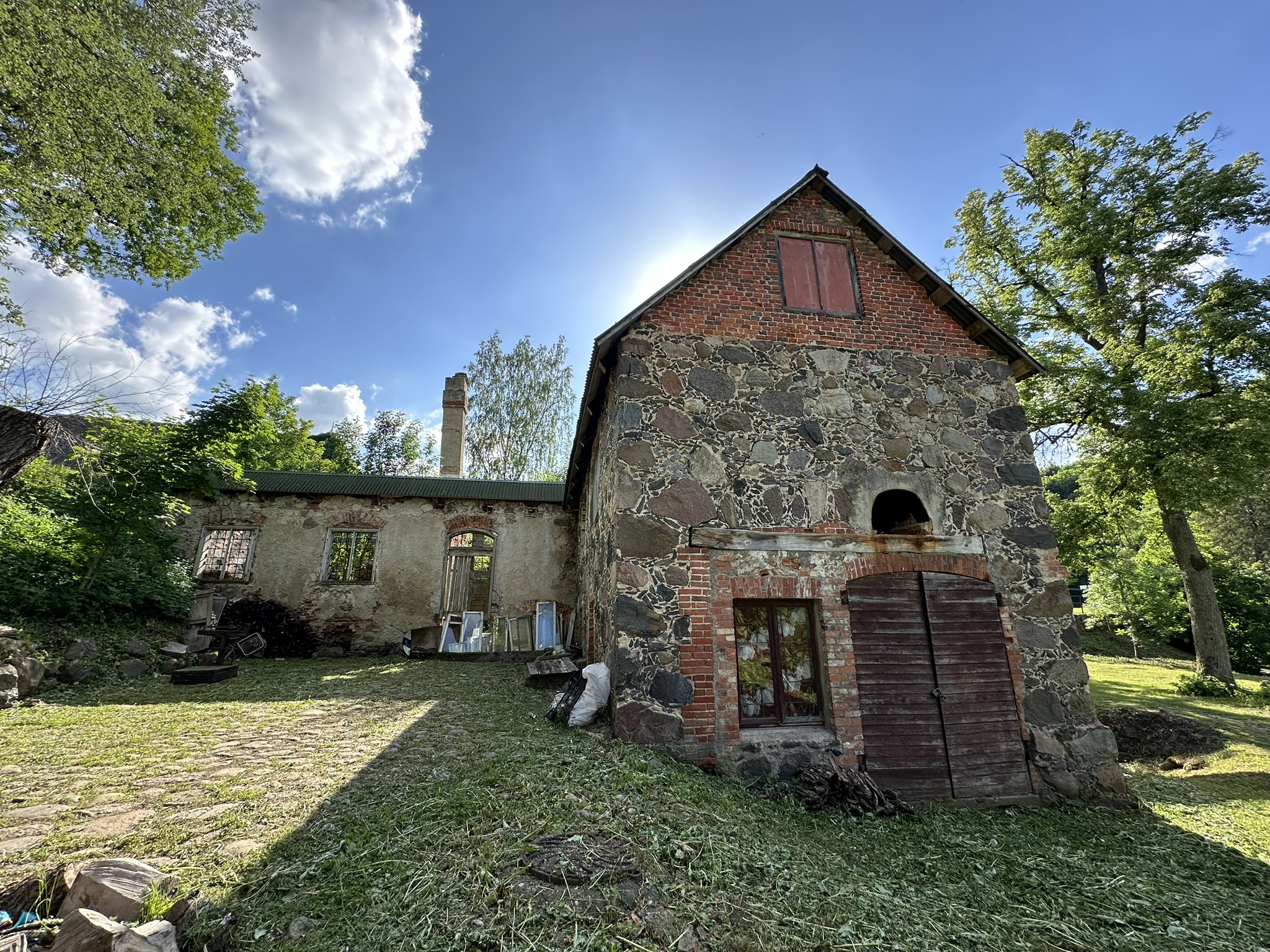
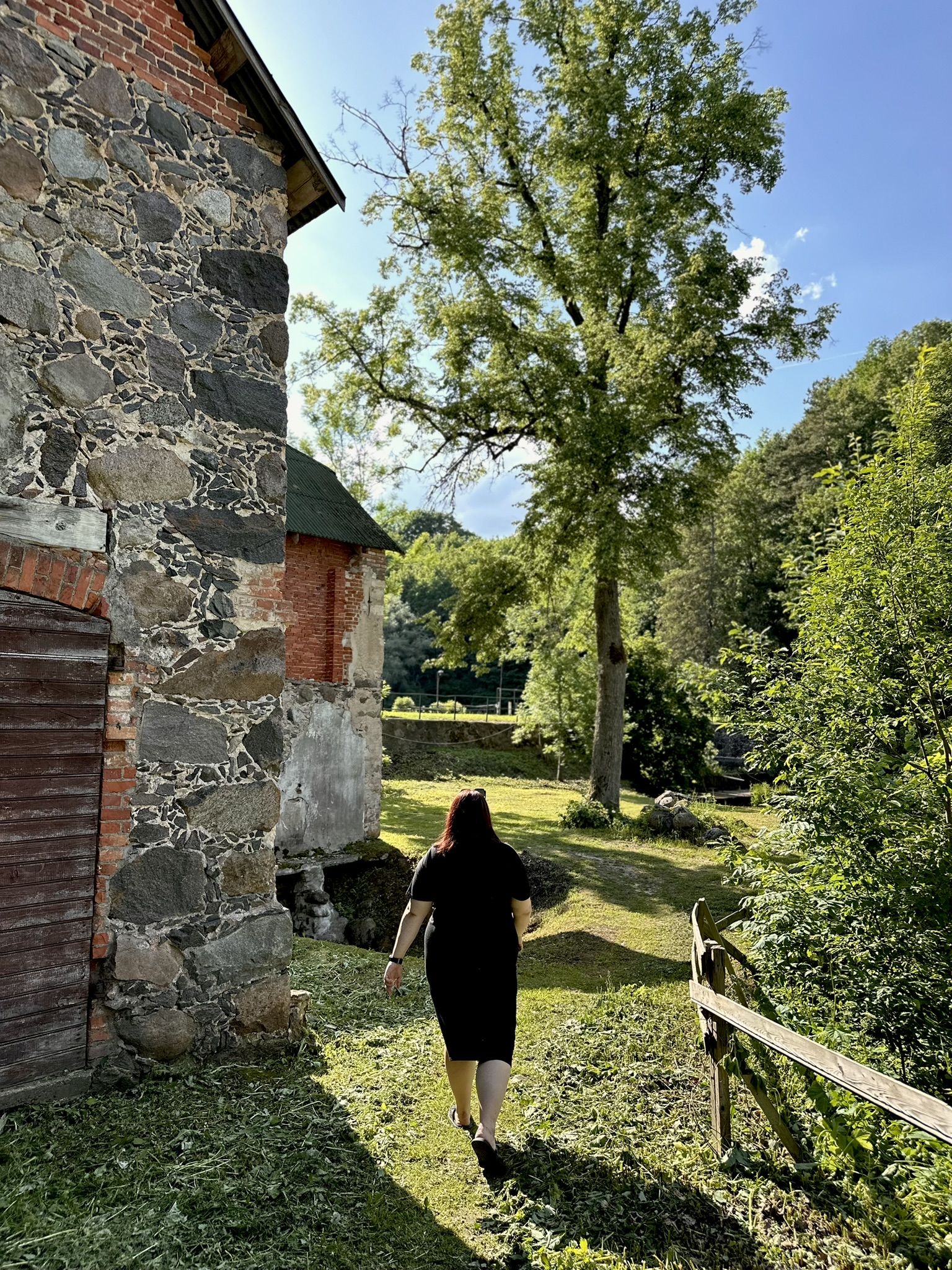
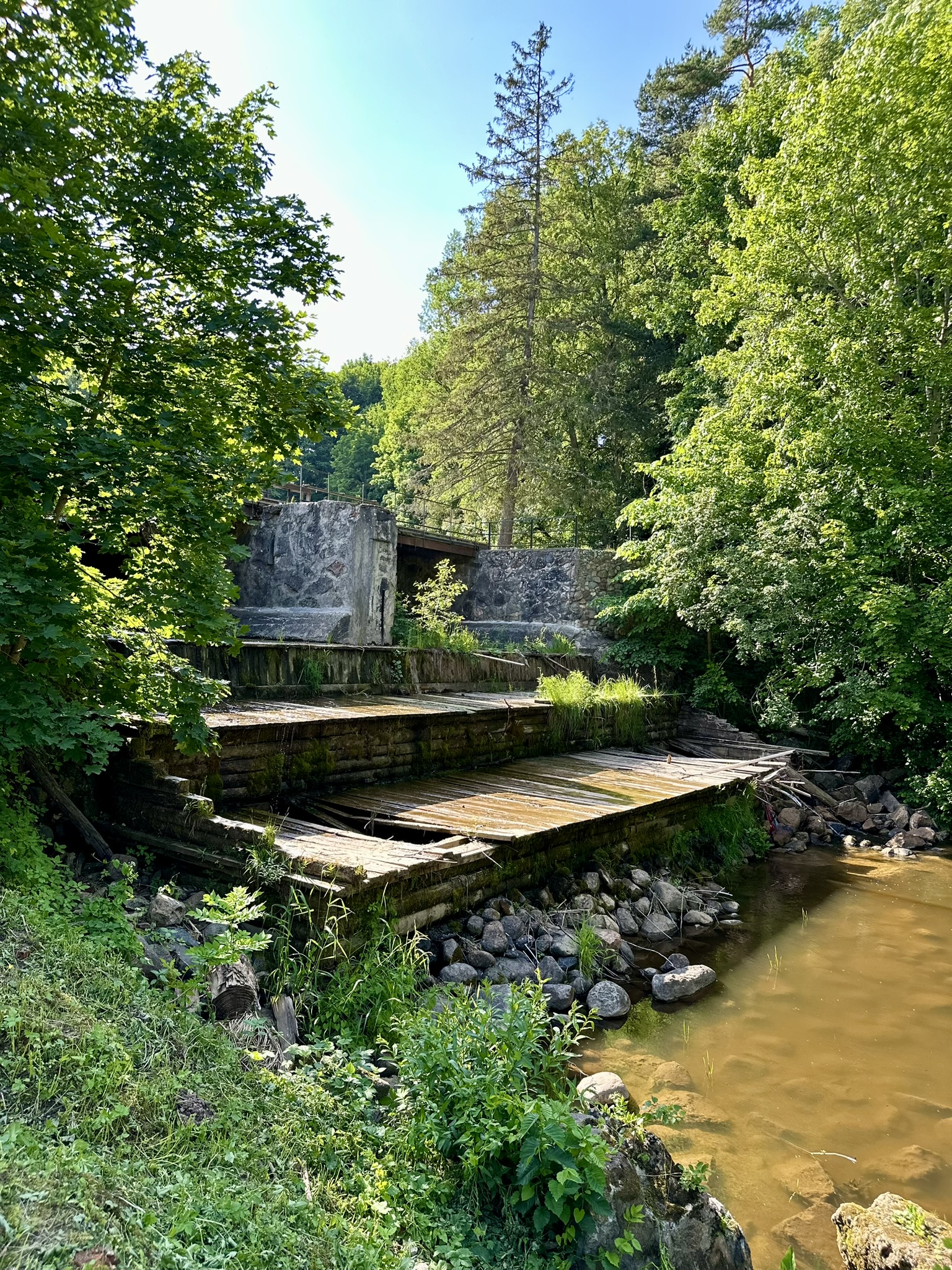
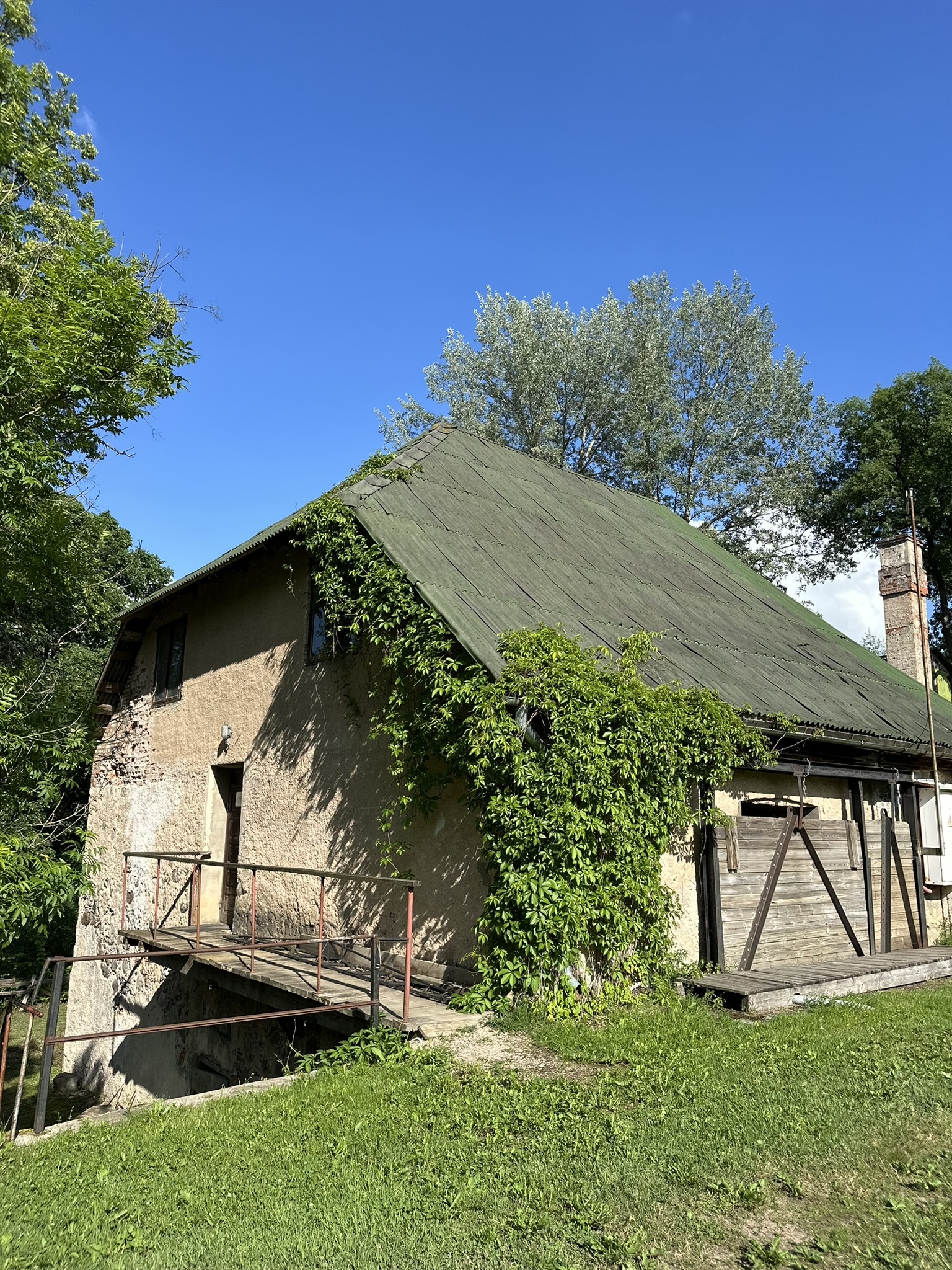
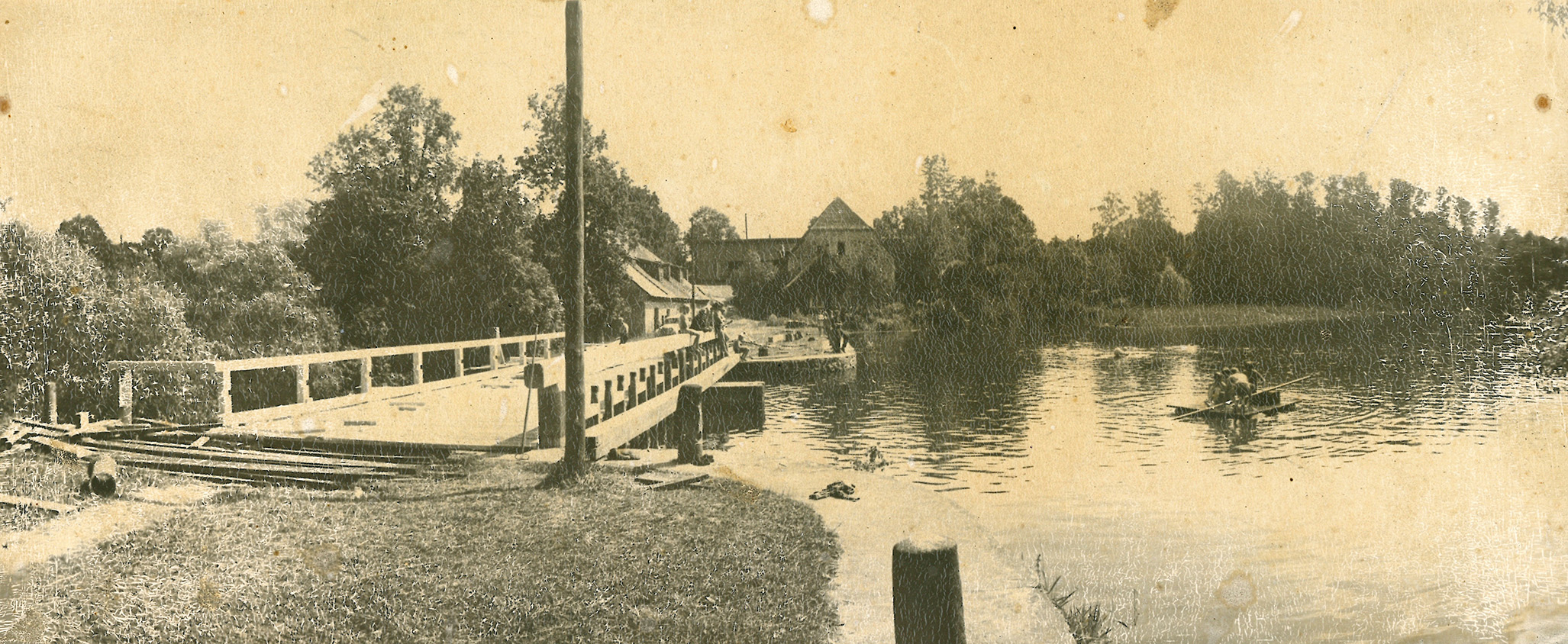
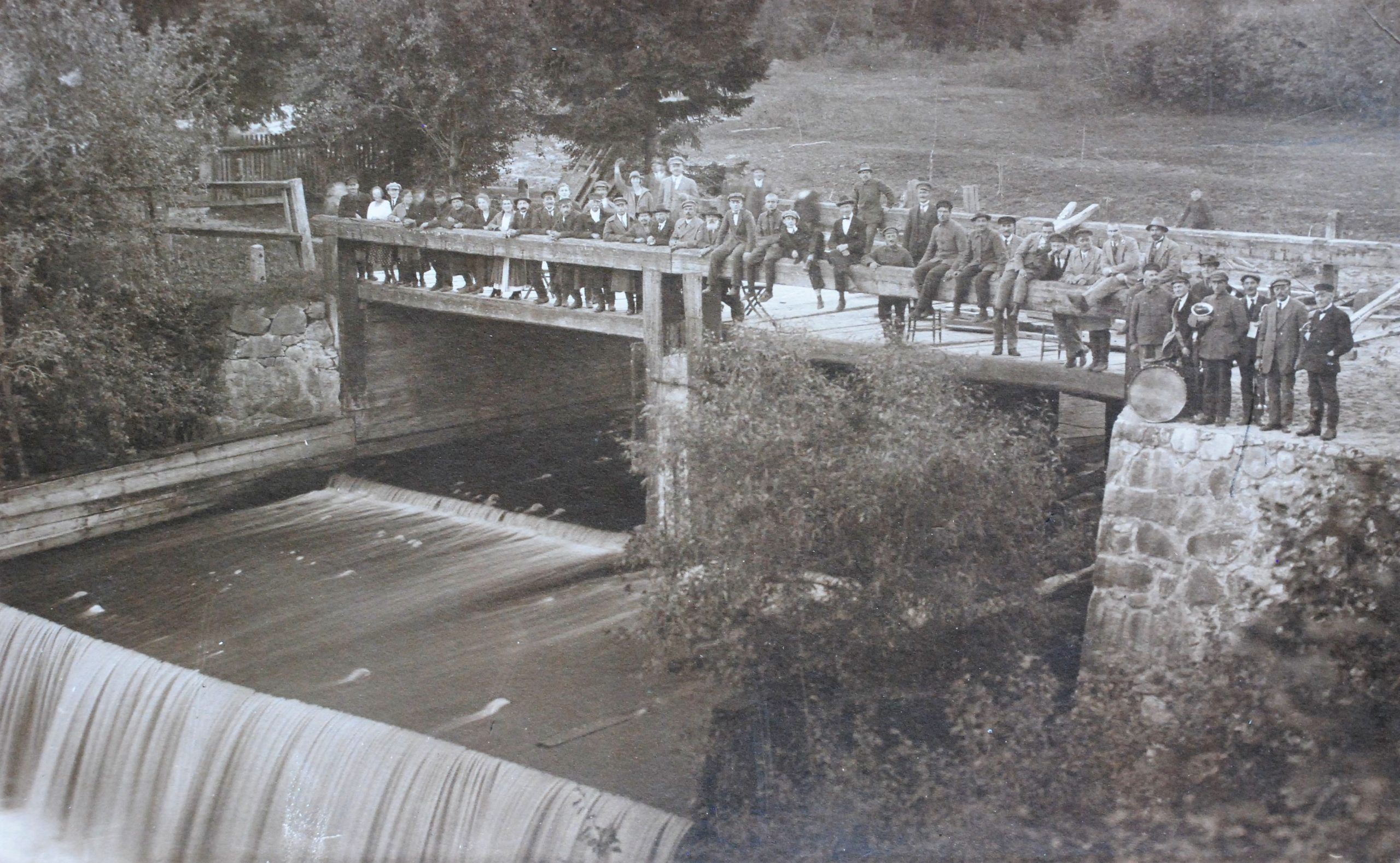
The Mill has been in operation in Rauna since the 16th century and is seen on the maps of Rauna of that time. From the mid-19th century to the early 20th century, the mill was the property of the owners of Rauna Castle Manor, the family of von Wulf. Initially, the mill dam was made of wood, but at the end of the 19th century, a river dam with three lips was built. To honour this event, a plaque was made, which can today be found at the side of Rauna Mill Dam. The names of the owner of Rauna Manor Estate, the tenant of Rauna Manor Estate and the flour miller, as well as the date of construction of the three-level dam, can be read on the plaque: “Emil Wulf/G. Loewen/J. Seewald/1887”.
Up to the early 20th century, the mill was powered by at least two water wheels, which were later replaced by a steam-operated mechanism. At this time, there were two flour mill workshops, wool carding and spinning equipment, and it was possible to perform fabric painting, felting and cutting as well. A small sawmill was also equipped at the mill. During World War I and until 1921, the mill was rented by a private entrepreneur, Konrads; during his tenancy, the economic activities at the mill deteriorated, and the mill ceased operating.
As a result of the agrarian reform, Rauna Agricultural Society obtained Rauna Mill in its property in November 1921. The society started to reconstruct the mill and became one of the largest industrial companies of the parish. In the 20s-30s of the 20th century, two fine flour milling, one pearl-barley production and one sifting workshop, as well as wool carding and spinning machines, were in operation.
From 1941 to 1942 a suction gas engine was installed in the mill, replacing the outdated steam engines. During the Soviet years, the mill was managed by the collective farm ‘Red October’. At this time, the mill was no longer powered by an electric motor, one flour mill, pearl-barley production equipment and a grain grinder for the production of fodder, and it was also possible to press apple juice. In 1968 the mill sluices were repaired, which later, in the spring of 1984, suffered severe damage floods. The area of the mill pond was improved and became a popular recreation place for the residents of Rauna, as well as guests.
Šodien dzirnavas ir valsts nozīmes arhitektūras piemineklis ar nosaukumu “Raunas ūdensdzirnavas”, kas pieder privātam uzņēmējam.
More information is available on the Rauna Castle Tourism Audio Guide website: pils.rauna.lv
Historical photos from the archive of the Rauna Cultural and Historical Heritage Centre.