

Raunas Staburags (Staburags Cliff of Rauna)
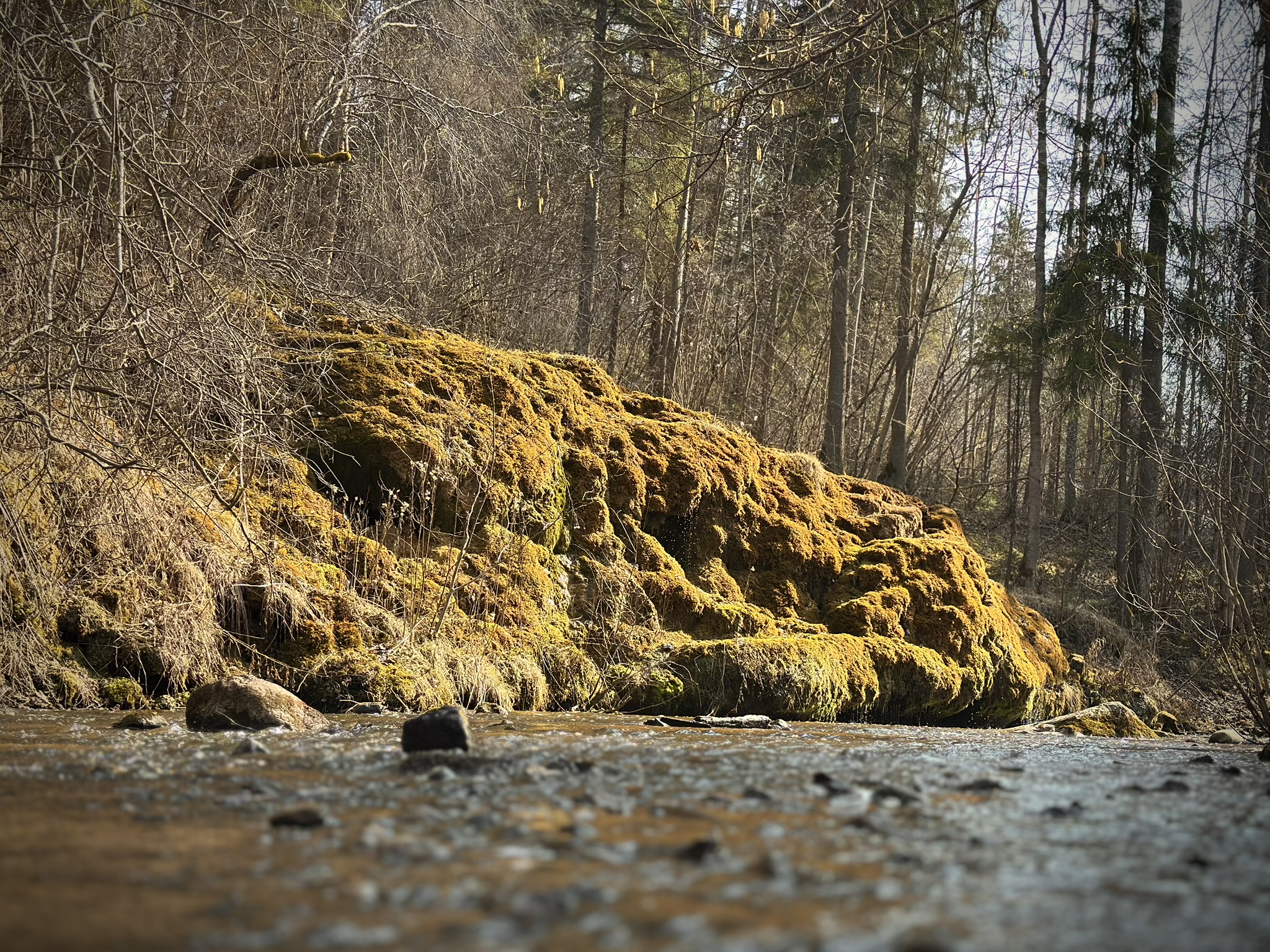
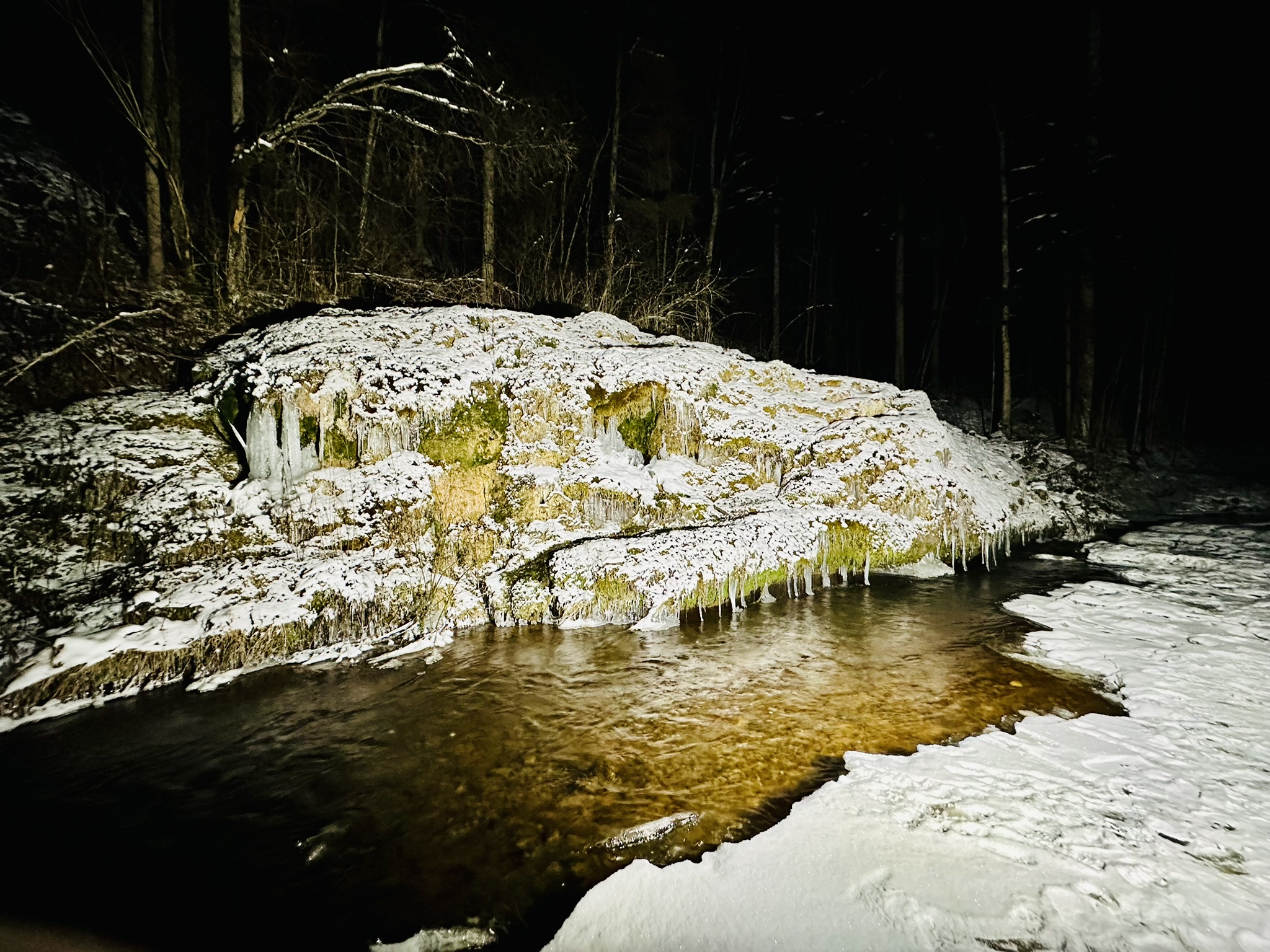
Raunas Staburags is located in the valley of the River Rauna, a short distance from the village of Rauna. It is a freshwater limestone formation unique in Latvia. Since the flooding of the Staburags cliff of the River Daugava in 1966, this is the only natural monument of its kind in Latvia.
- Raunas Staburags formed 8,000–10,000 years ago, as spring lime deposits settled and hardened within the upper soil layers.
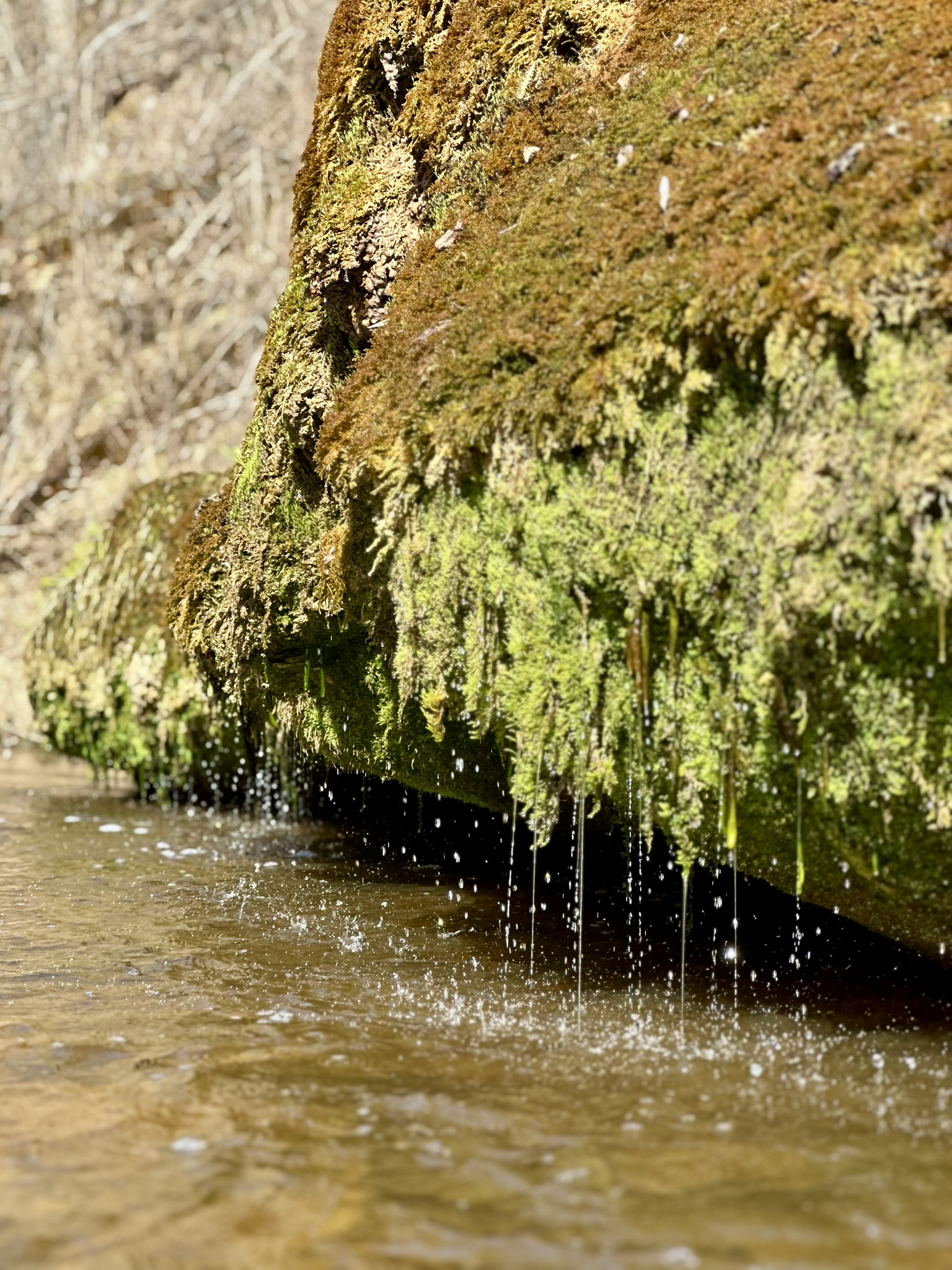
- The spring flowing over the cliff continues to shape it even today, increasing its height by approximately 0.4–0.8 mm per year.
- Nowadays, the formation is about 3.5 m high and 17 m wide, while the total length of the stepped cliff reaches 35 m.
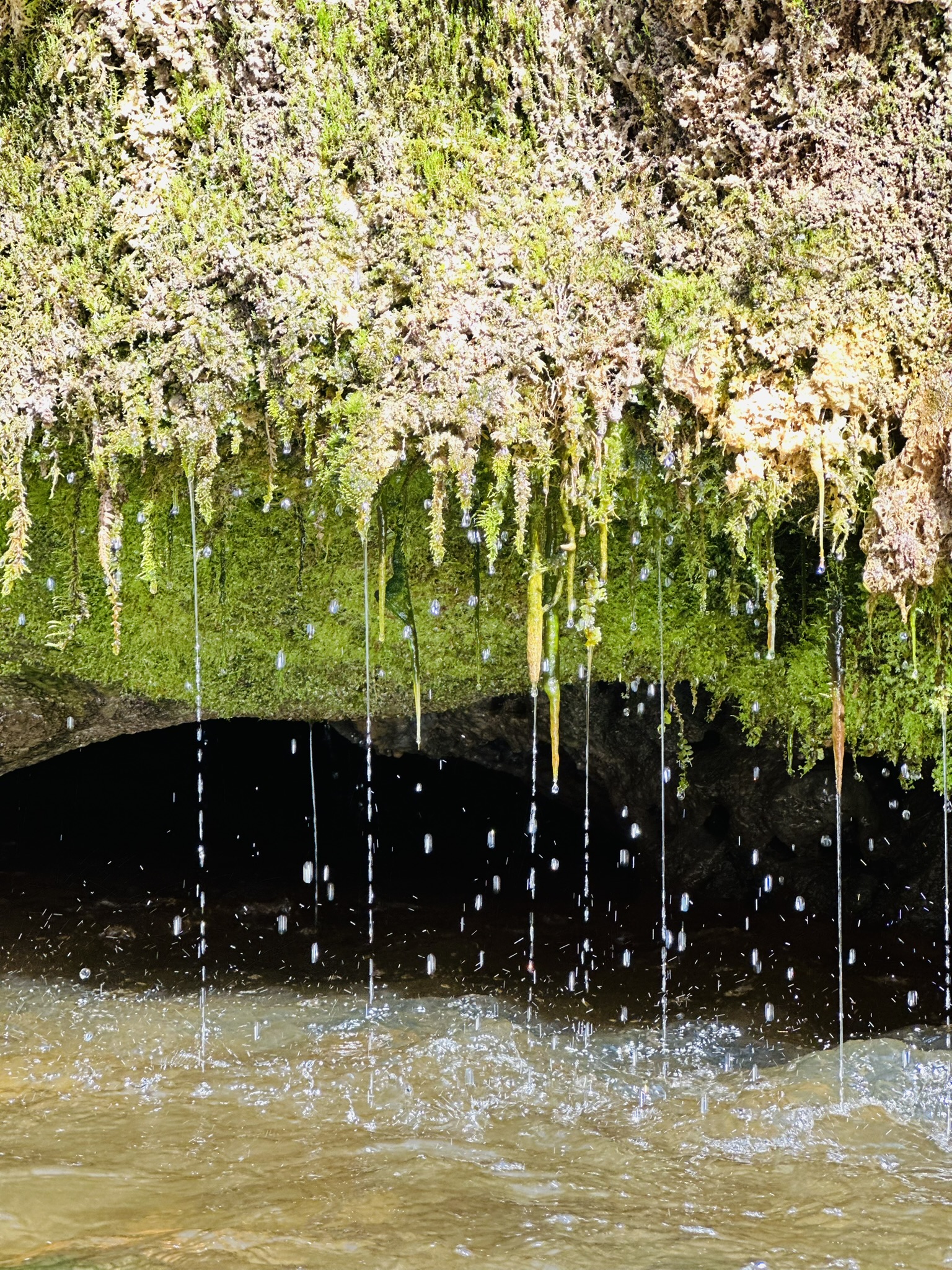
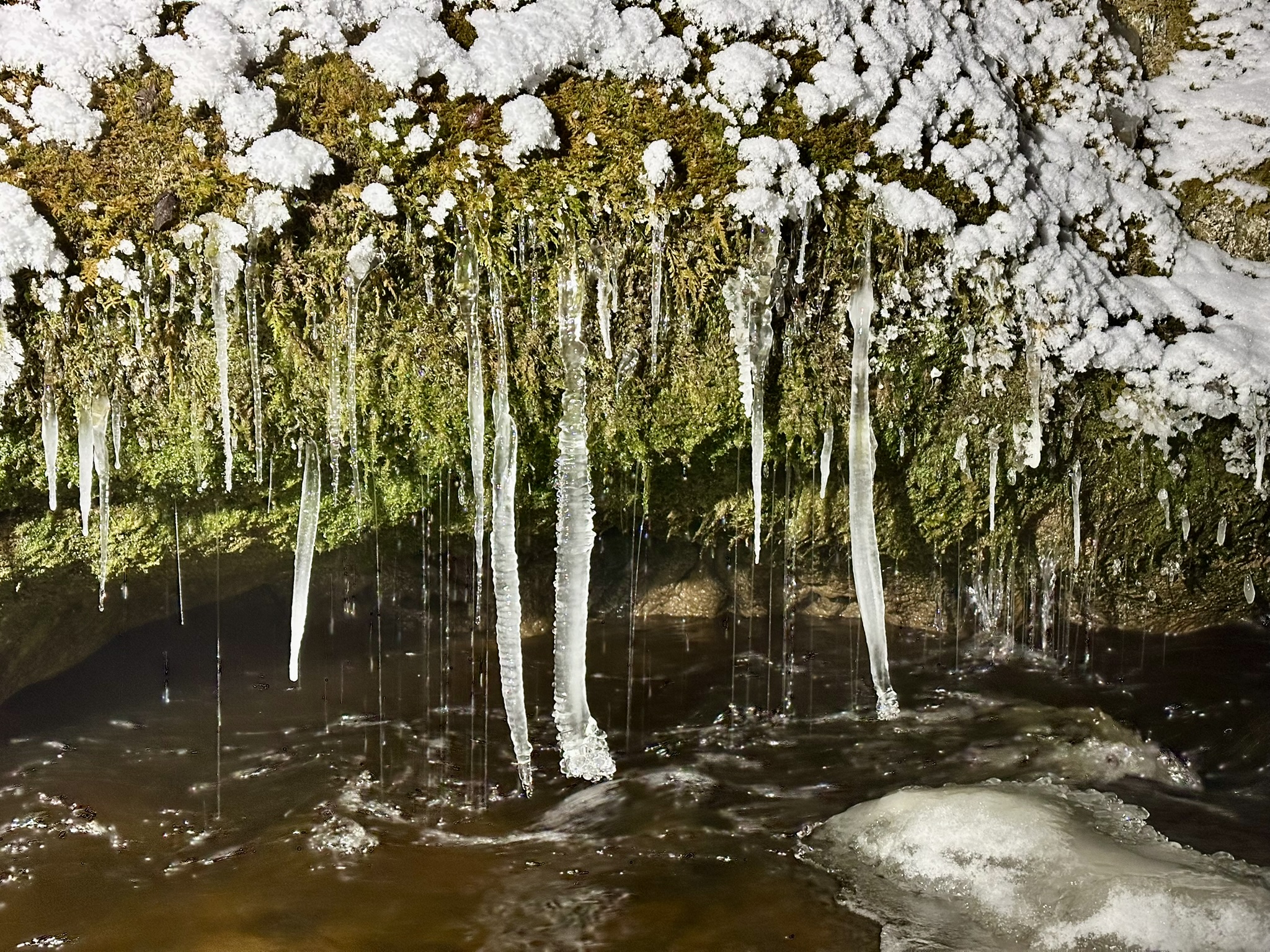
- It is covered by more than 100 protected species of mosses and algae.
- Raunas Staburags is included in the list of protected natural sites of European importance.
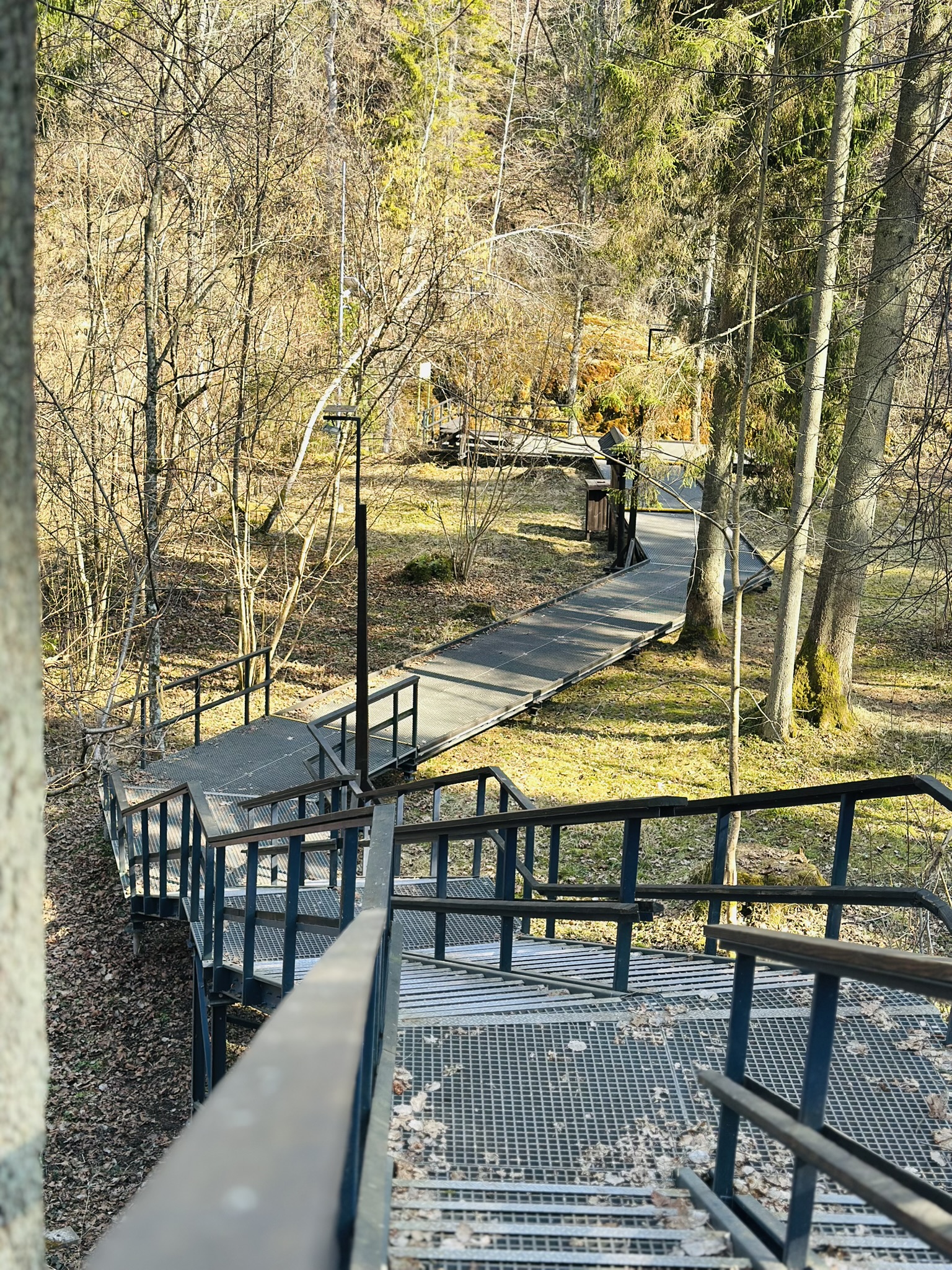
- A car park is located 300 m from the stairs leading to the cliff.
The final stretch follows a dirt road, which can be muddy in wet weather.
The natural monument offers a striking sight as water seeps through layers of moss and cascades down into the River Rauna. The area is especially scenic in winter, when the flowing water gradually freezes, and the Staburags becomes encased in ice. In spring 2024, the stairs were renovated to make the visits to Raunas Staburags more convenient.
Climbing onto the cliff (the tufa) is STRICTLY PROHIBITED, as it may damage the fragile limestone and the flora and fauna growing on it!
The legend
Legend has it that Rauna was once a large town, stretching from Marijkalns Hill on one side to the River Cimza on the other. Once upon a time, an old and wealthy devil decided to build a safe hiding place for his riches, so he dug a large and sturdy cave (Velnala – Devil’s Cave) in a white cliff. He took the soil that he had dug out, carried it over the river, and piled it into a big hill, creating Tanīsa Hill. Not far from Rauna, near Drusti, is Piltiņkalns, which may once have been an ancient hillfort. A legend of Raunas Staburags tells of a weeping giant who sat down here and fell asleep. Tears continued to flow even in his sleep, which is why Raunas Staburags resembles a crying giant who has fallen asleep.