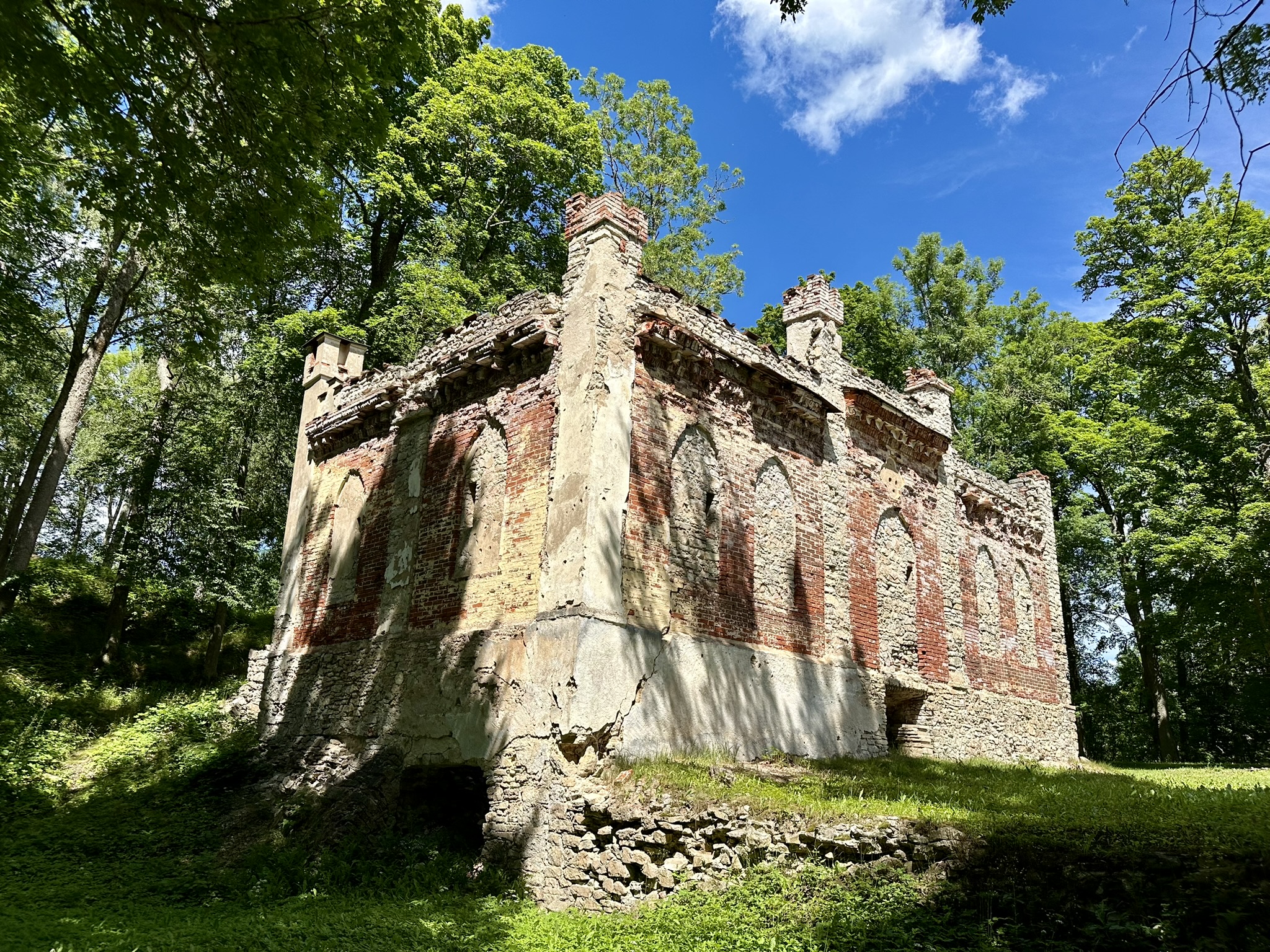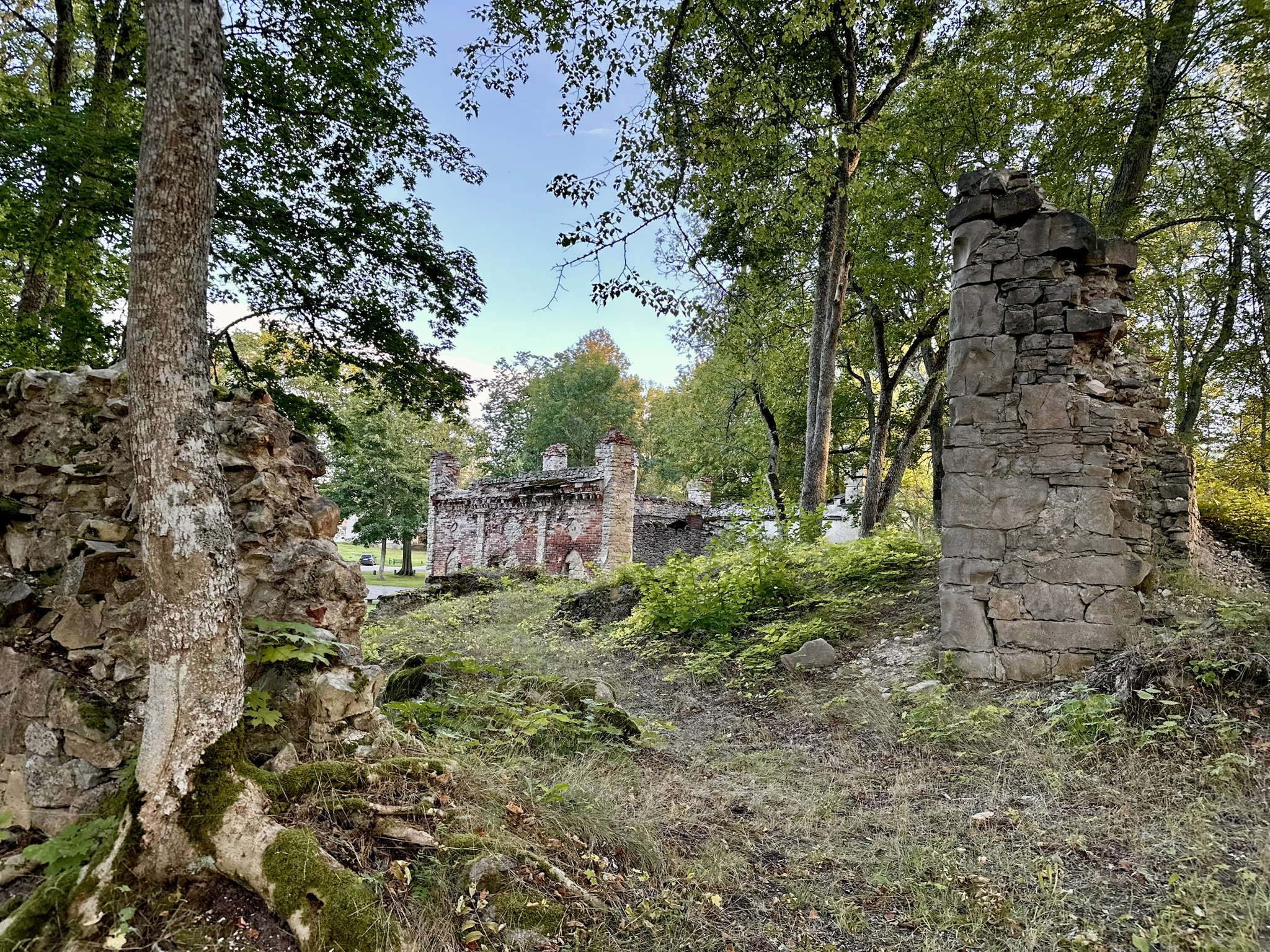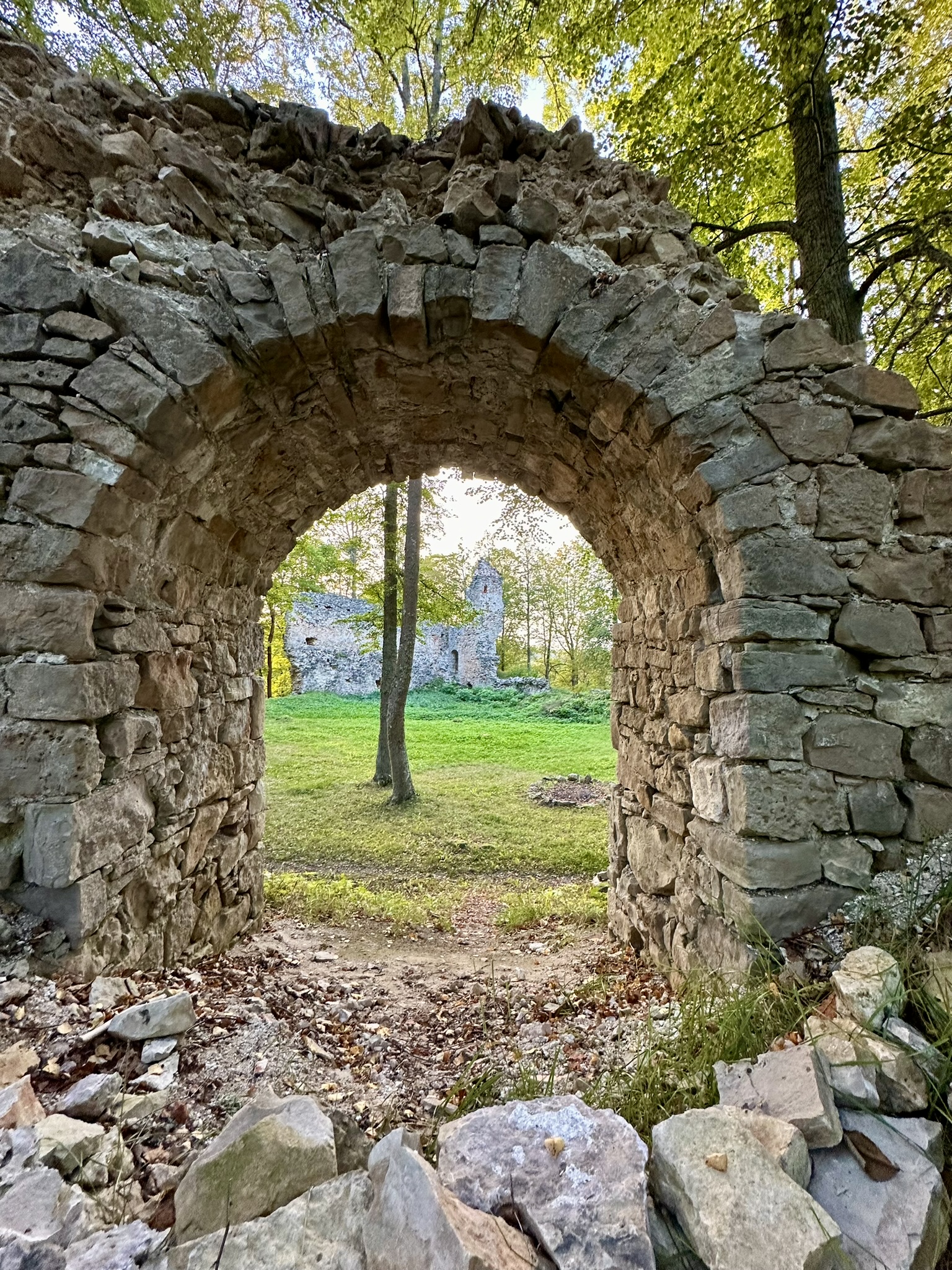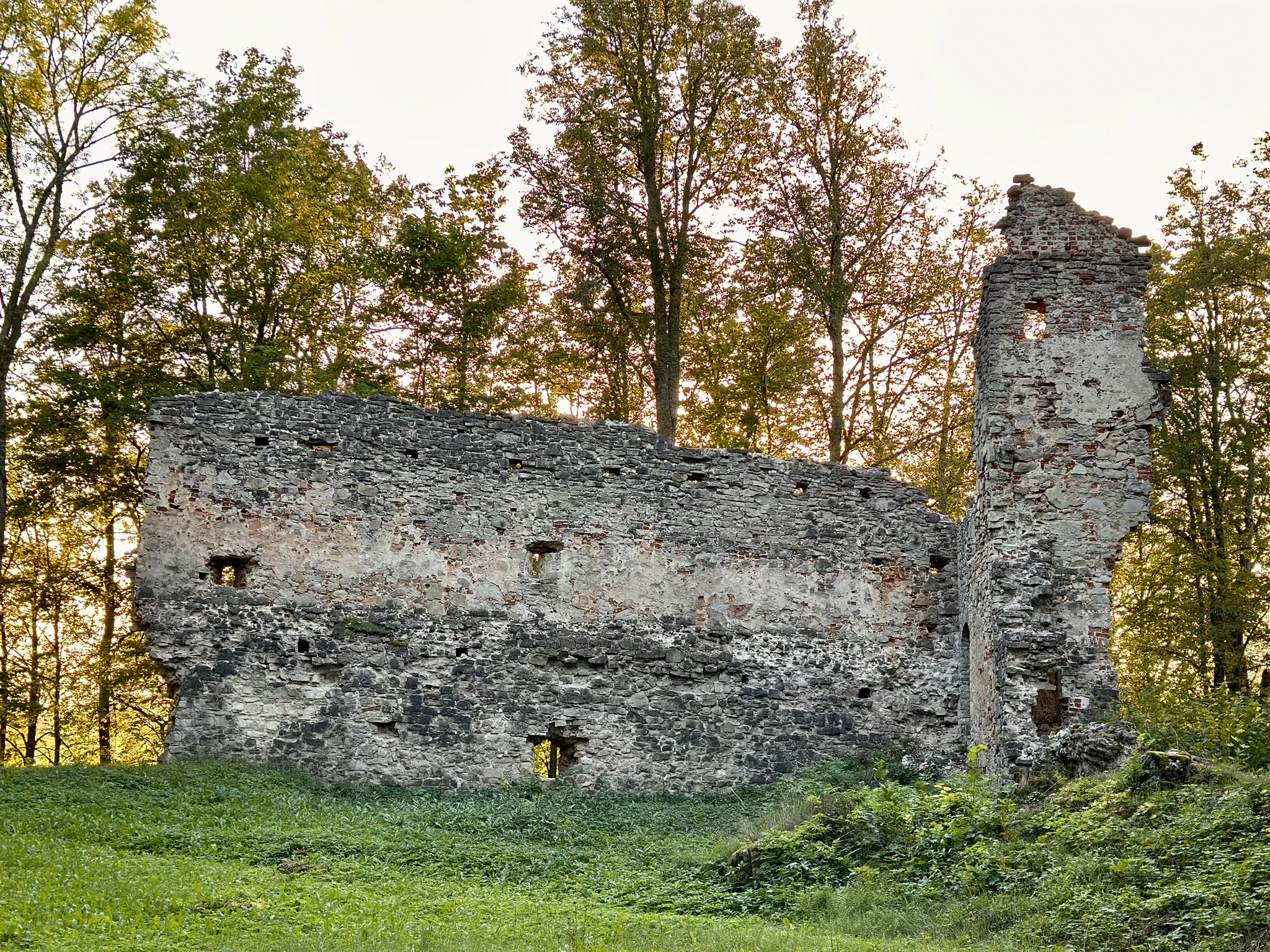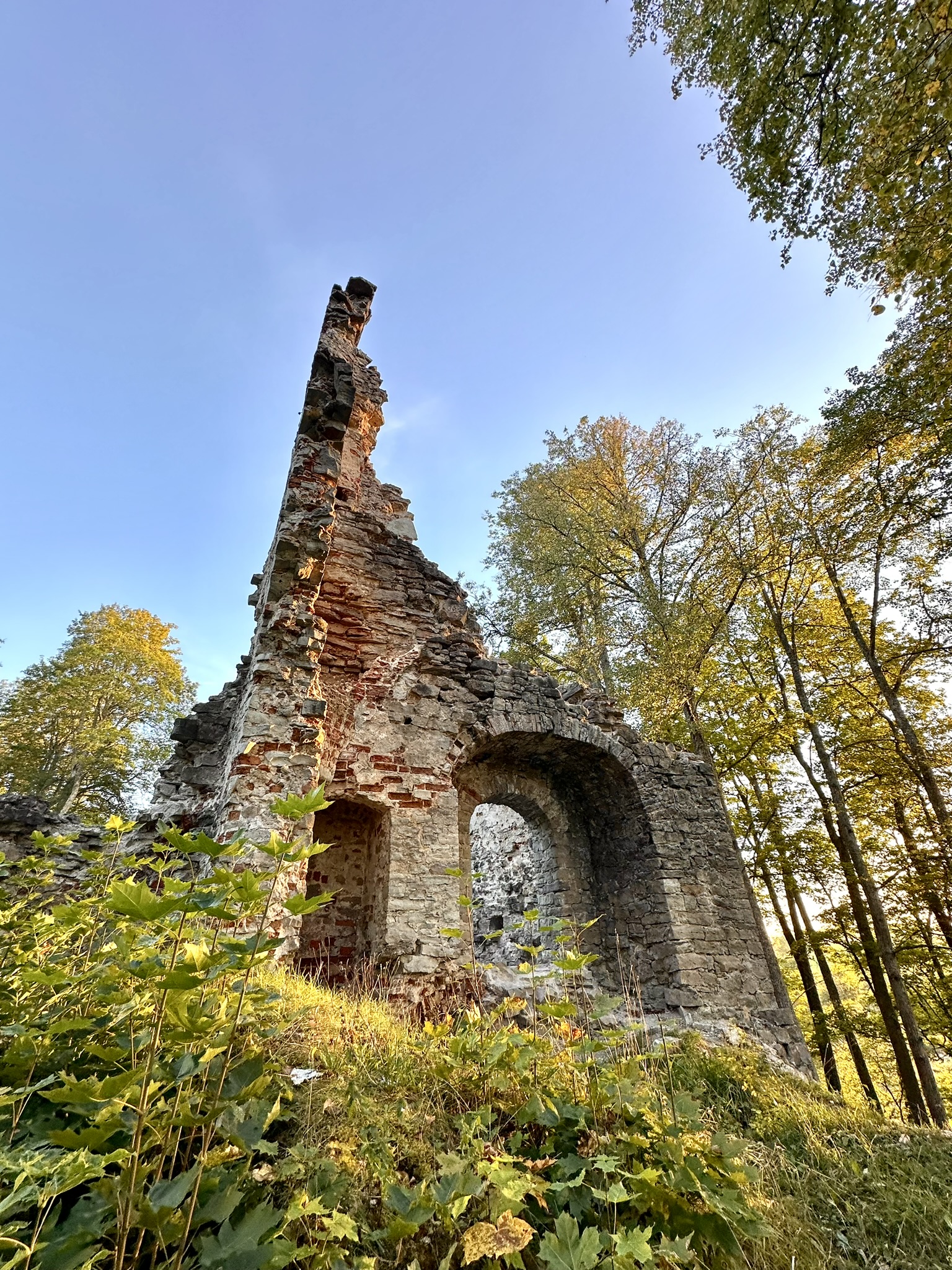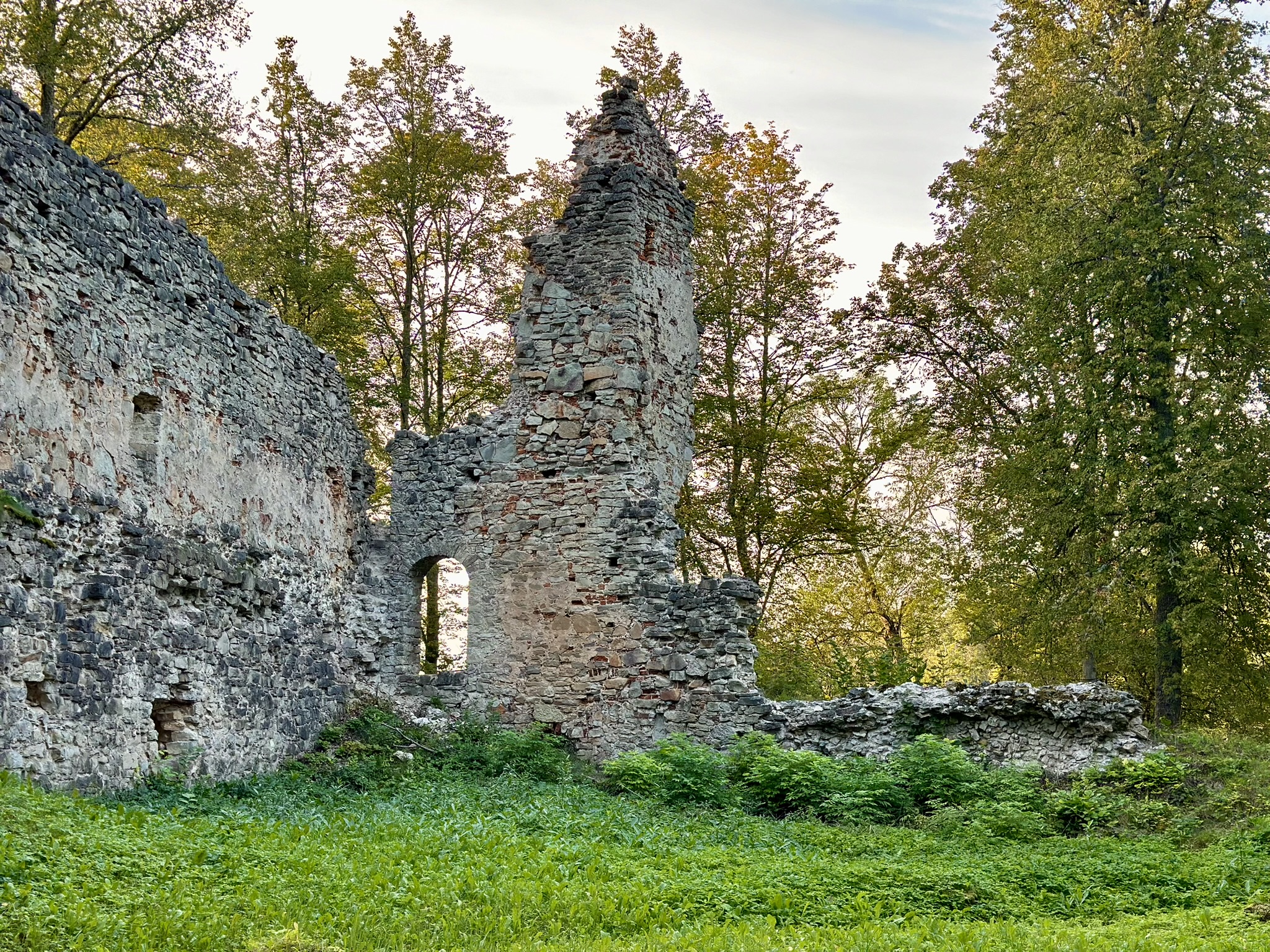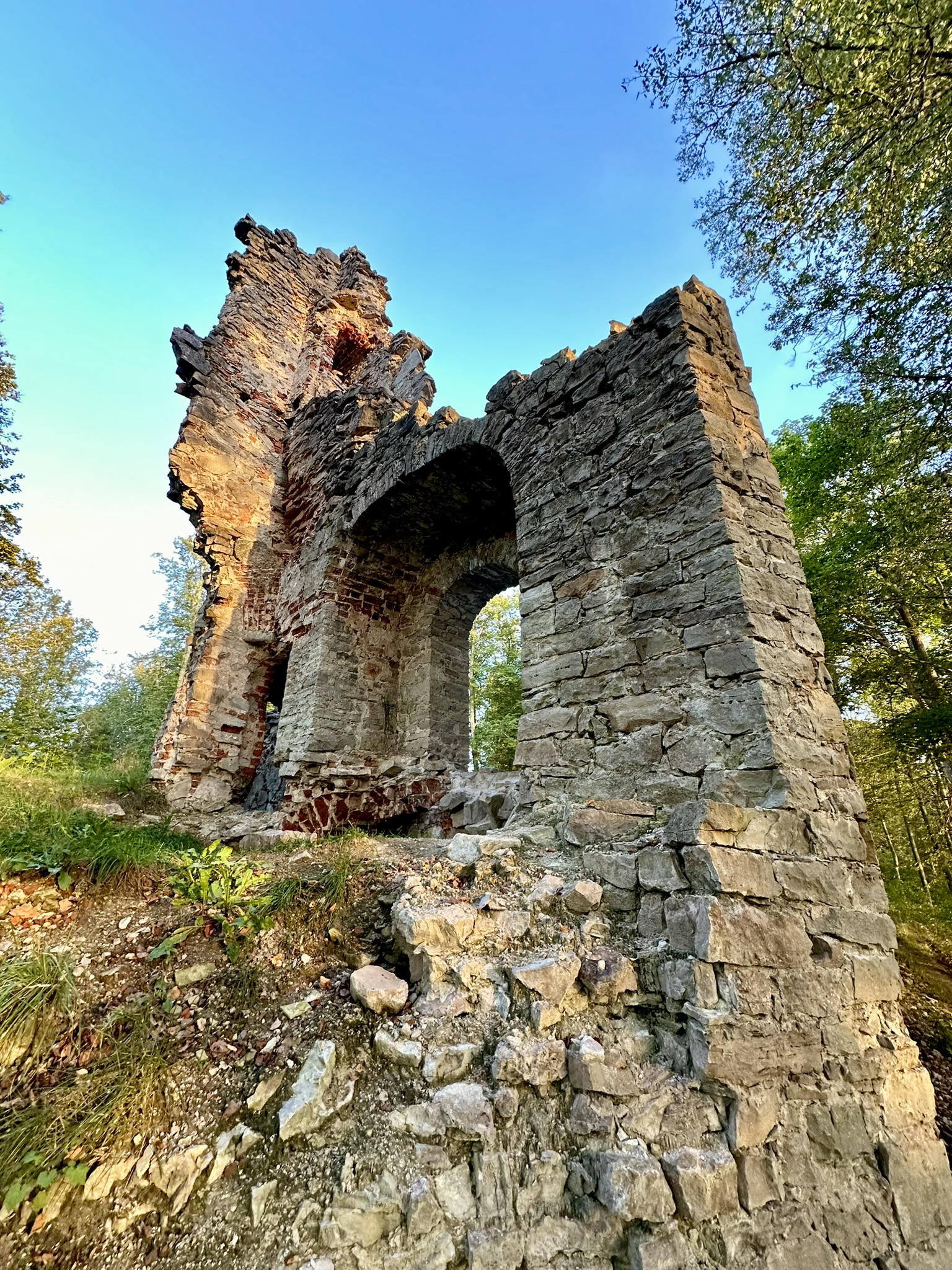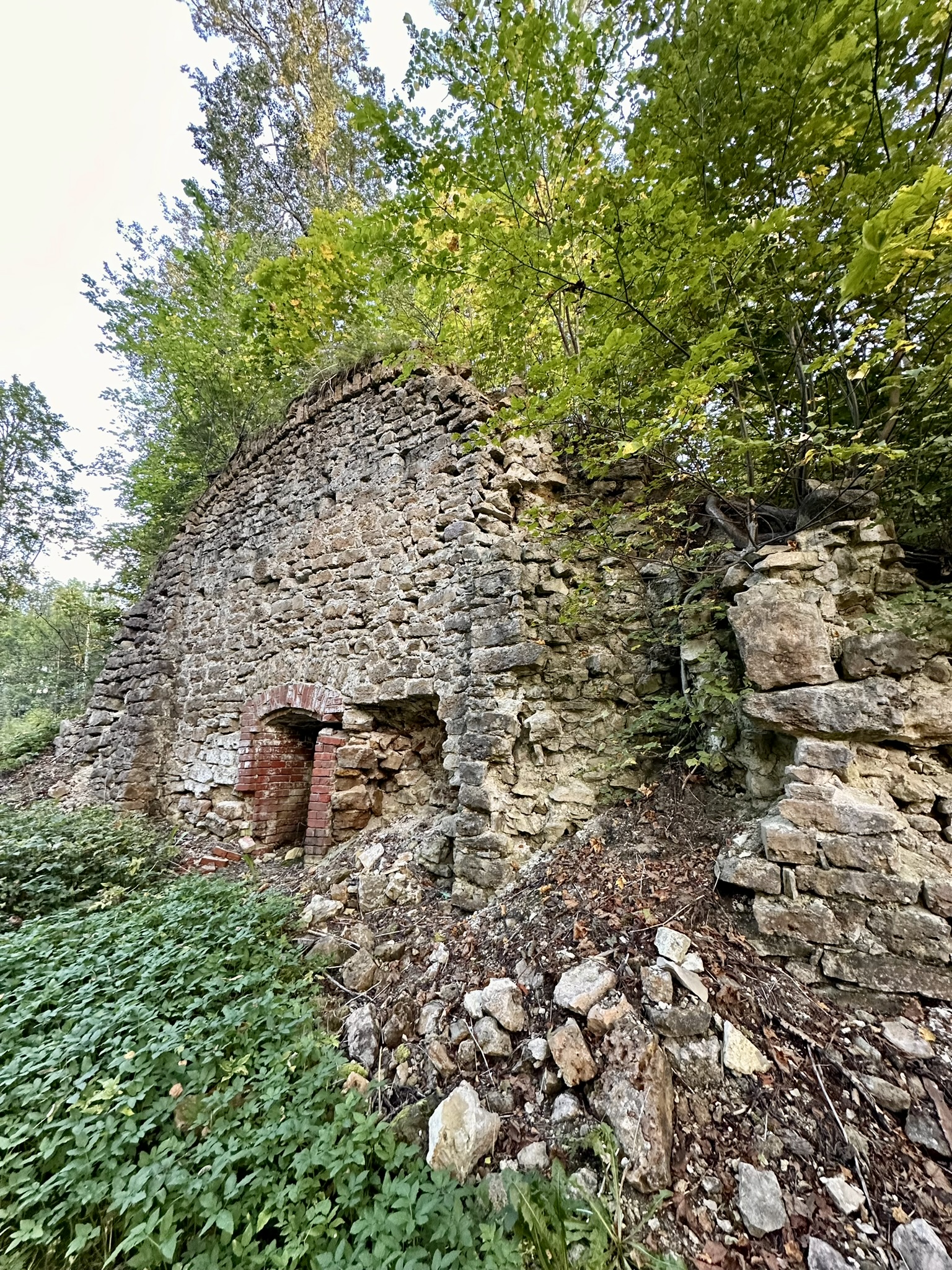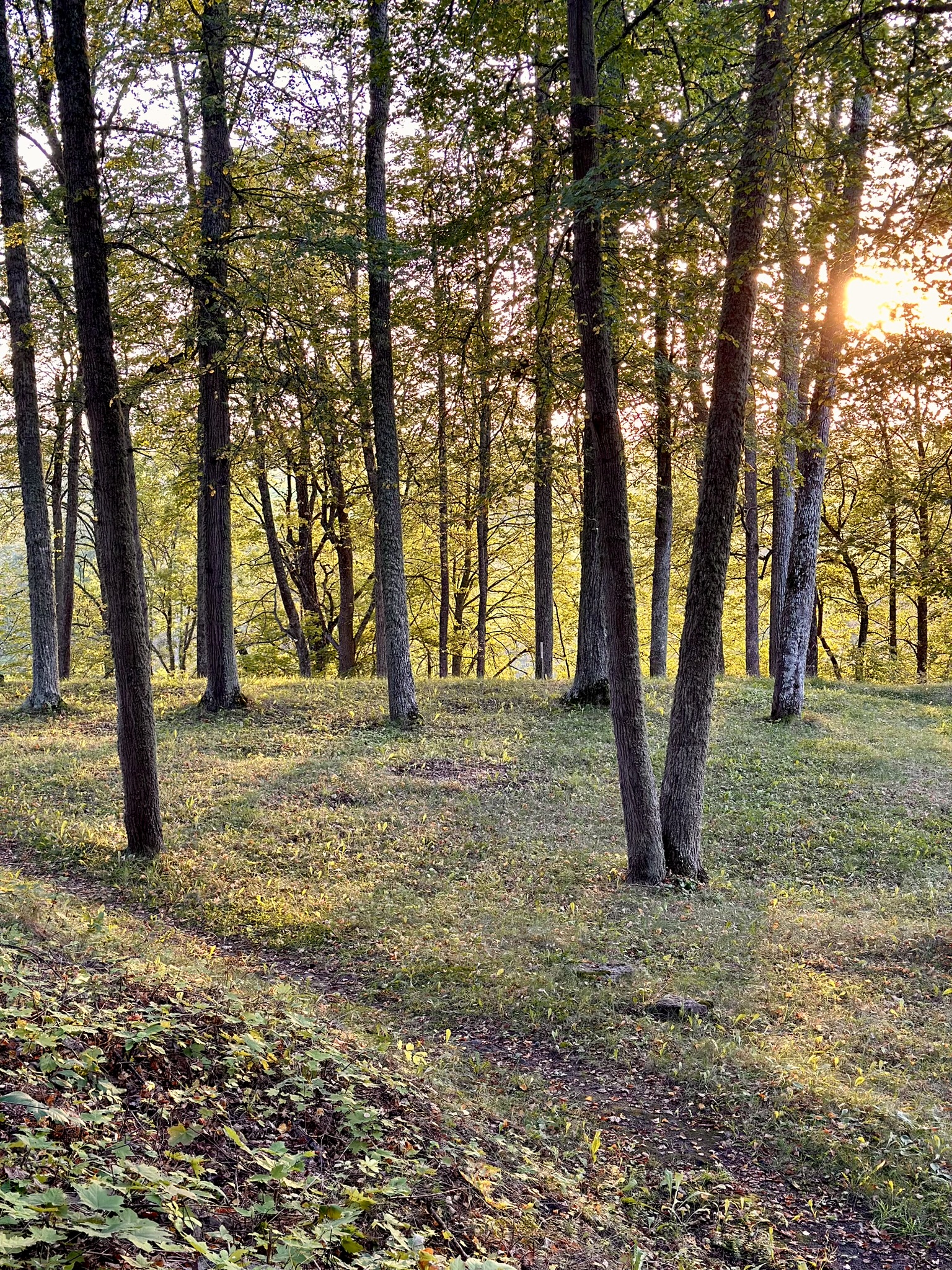


Atzele Hillfort and Medieval castle ruins in Gaujiena
The hillfort is one of the oldest historical landmarks in Gaujiena.
Approximately 1,000 years ago, the first inhabitants of the Gaujiena area settled here. In ancient times, north-eastern Latvia was divided into two political territories – Tālava and Atzele. The surroundings of Gaujiena were mainly inhabited by Latgalians, with smaller groups of Estonians and Livonians. Ancient Latvians built their castles in locations that were difficult to access, typically on sites with steep slopes.
- The name Atzele was first mentioned in 1111 in the Novgorod Chronicle, describing Prince Mstislav’s military campaign to Atzele, from which he returned with rich spoils.
- In the spring of 1224, after a siege and attacks, German troops captured and burned the Latvian wooden castle. The German army included many knights and preachers. They divided the conquered lands among themselves, and Atzele fell into the hands of the Sword Brethren.
- In 1236, German knights began constructing their stone castle on the site of the former ancient Latvian castle.
- Ancient Latvians built their log castles from timber. Around the castle was a large wall (rampart) made of vertically placed logs. The Crusaders built their castles from stone, usually from boulders. There weren’t many boulders in Gaujiena, but there were dolomite layers close to the surface. To build the castle, German knights forced Latvians into labor. One group was assigned to quarry dolomite, and others transported the dolomite to the hillfort. A high stone wall, 1.5 m thick, was built around the entire hillfort. Many craftsmen were brought from Germany to supervise the work.
- Special guard rooms were built into the castle’s defensive walls, where watchmen stood on duty around the clock to monitor for possible attacks.
- In 1560, during the Livonian War, the Gaujiena castle was destroyed by the Russians. Poland and Sweden intervened in the Livonian War until Poland emerged victorious, and Russia had to retreat.
- Between 1582 and 1600, during the rule of the Osobļinski family, the ruined castle was restored.
- In 1625, the Swedes won the war, and King Gustavus Adolphus of Sweden granted Gaujiena Manor to his Reichsmarshal Axel Banér, who later passed it on to his daughter.
- In 1700, the Great Northern War began, in which the Russians once again emerged victorious. Russian Tsar Peter I arrived here in 1702, and his military commander Sheremetev destroyed the castle so completely that it could no longer be restored.
Address
Gaujiena, Gaujienas pagasts